

United Airlines Flight Returns to Newark After Bird Strike Cracks Windshield

According to the FAA, the crew reported a cracked windshield and 'a possible pressurization issue' following the bird strike.
Published: 3/9/2026, 7:02:02 PM EDT
United Airlines Flight Returns to Newark After Bird Strike Cracks Windshield
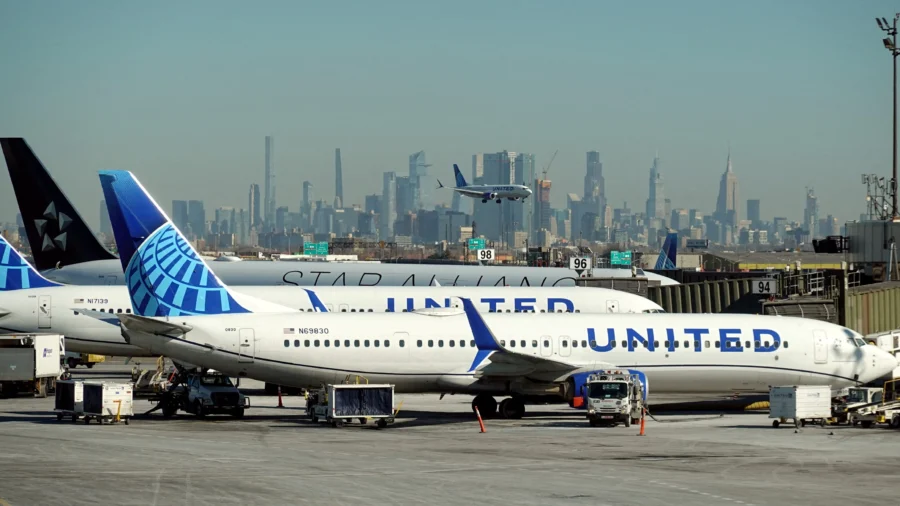
United Airlines planes land and prepare to take off at Newark Liberty International Airport in Newark, N.J., on Jan. 27, 2025. (Fabrizio Bensch/Reuters)

A United Airlines flight bound for Florida was forced to turn back to Newark Liberty International Airport on Monday morning after striking a bird shortly after takeoff, according to the Federal Aviation Administration.

United Flight 1207, a Boeing 737 MAX 8 carrying 138 passengers and six crew members, departed Newark at 8:18 a.m. ET en route to Florida's Jacksonville International Airport. The flight landed safely back at Newark just 30 minutes later, flight tracking data shows.
According to the FAA, the crew reported a cracked windshield and “a possible pressurization issue” following the bird strike. The agency said the plane “returned safely” to the Newark Liberty International Airport at around 8:40 a.m. local time on Monday and said that it will investigate the incident.

United Airlines confirmed the details in a statement to NTD News. “United flight 1207 safely returned to Newark following a bird strike,” the airline said. “Customers deplaned normally at the gate and we arranged for a new aircraft to take them to Jacksonville.”

A United spokesperson also noted that a follow-up inspection found “no pressurization issue or damage to the windshield,” despite earlier reports indicating a possible problem.

Bird strikes are one of the most common hazards faced by airline pilots, especially during the initial phases of flight when planes are taking off or landing.

According to the U.S. Fish and Wildlife Service, while such collisions account for only a fraction of overall bird deaths each year, they pose larger risks. The agency said that bird and other wildlife strikes cause more than $900 million in damage annually to U.S. civil and military planes and have been linked to more than 250 deaths worldwide since 1988.

From 1990 to 2013, the FAA’s Wildlife Strike Report Database logged 142,675 wildlife strikes in the United States, 97 percent of which involved birds.

To curb those threats, airports rely on a mix of habitat changes, scare tactics and, in some cases, killing certain species. The agency says those efforts can include making airport grounds less attractive to birds, driving flocks away with dogs, falcons or loud sounds, relocating nests, and using radar-based tools that help pilots gauge bird activity along flight paths.

Monday’s scene is the second plane-related incident at Newark Liberty in recent weeks. On Feb. 18, a JetBlue flight heading to Palm Beach, Florida, made an emergency return to the same airport after the crew reported engine trouble. In that case, all passengers were evacuated using slides after the pilots reported smoke in the cockpit. The FAA said no injuries were reported in that incident, which remains under investigation.

“The safety of our customers and crewmembers is always our first priority,” JetBlue said in its earlier statement.