


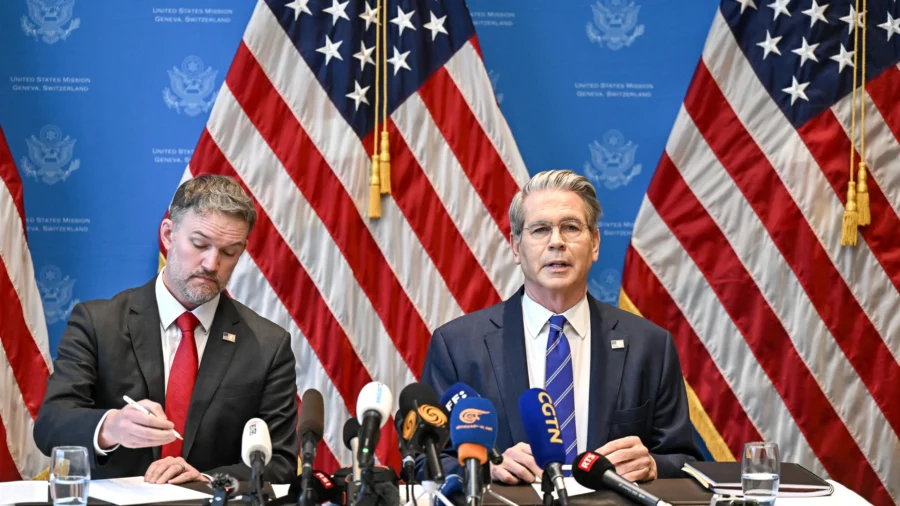
The United States and China said on May 12 that they have agreed to a deal to slash reciprocal tariffs for 90 days.
Speaking after talks with officials from the Chinese communist regime in Geneva, U.S. Treasury Secretary Scott Bessent told reporters that the two sides had agreed on a 90-day pause on measures and that they will move their tariffs down.
"Both countries represented their national interest very well," Bessent said.
"We both have an interest in balanced trade, the U.S. will continue moving towards that."
Trade Representative Jamieson Greer said the U.S. reciprocal tariff rate will fall by 115 percentage points to 30 percent.
He added that China’s rate will also be cut by 115 percentage points, to 10 percent, and that Beijing will lift its countermeasures.
Trump also said the levies are a response to China’s “intellectual property theft, forced technology transfer, and other unreasonable behavior.”
Other measures the United States has put in place previously, whether that is tariff measures from 2018 or tariffs under other statutory authorities, remain unchanged for now, Greer said.
“The Chinese and the United States agreed to work constructively together on fentanyl,” he said.
It said that the U.S. goods trade deficit with China was $295.4 billion in 2024, “the largest with any trading partner.”
The White House said that the agreement works toward addressing “these imbalances.”
In a statement, China’s Ministry of Commerce said the high tariffs have “severely damaged normal bilateral trade and disrupted the international economic and trade order."
In the next few weeks, Bessent said, he expects they will meet further to work on a more fulsome agreement.
"What we do want is a decoupling for strategic necessities, which we were unable to obtain during COVID,” Bessent said.
The United States will create and protect its steel industry, he said, adding that it will work on critical medicines and semiconductors.
Markets reacted positively to the deal.
The U.S. dollar strengthened by 1.6 percent following news that tariffs had been suspended, pushing its value higher against the pound, euro, and yen.
The yield on 10-year Treasuries rose to around 4.44 percent.
Meanwhile, oil prices surged, with both WTI and Brent crude seeing increases in reaction to the news of easing trade tensions.
Gold prices, previously helped by previous safe-haven demand, dropped by 3 percent.
"Near-term prices are likely to stay volatile. But higher tariffs are still weighing on economic growth and likely force central banks to cut further interest rates later this year. Also central banks might use this price setback to add exposure."