


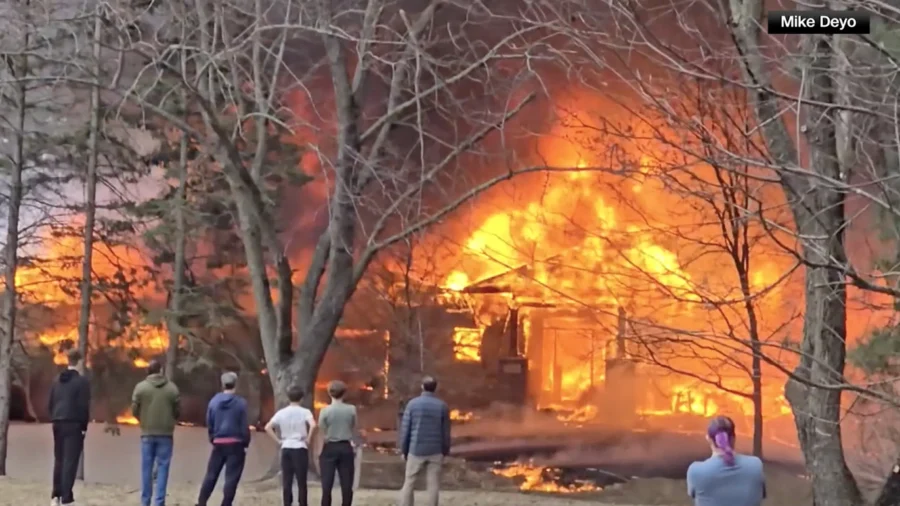
The U.S. Bank executive who died when his plane crashed into a home in suburban Minneapolis on March 29 succumbed to blunt force injuries, according to a ruling by the Hennepin County Medical Examiner's Office on Tuesday.
Terrance Robert Dolan, 63, of Edina, Minnesota, was identified as the sole occupant of the single-engine Socata TBM7 aircraft that went down on Saturday in Brooklyn Park, according to the medical examiner's office. Dolan, who served as vice chair and chief administration officer at Minneapolis-based U.S. Bank, had been with the company for over 26 years and was appointed to his latest role in 2023.
The National Transportation Safety Board (NTSB) is currently investigating the cause of the crash. Dolan was reportedly returning to Minnesota from Naples, Florida, with a stop in Des Moines, Iowa, before heading to the Anoka County-Blaine Airport, which is located near the crash site.
A man inside the house managed to escape the resulting fire, but the house was completely destroyed, Brooklyn Park spokesperson Risikat Adesaogun said.
The NTSB has said that staffing in the air traffic control tower was “not normal” when the collision occurred, and that there were communication lapses between air traffic control and the aircraft.
In response, FAA acting administrator Chris Rocheleau addressed Congress on March 28, acknowledging the need for improvement in identifying safety threats. "We have to identify trends, we have to get smarter about how we use data, and when we put corrective actions in place, we must execute them," Rocheleau stated.
The FAA has announced immediate policy changes, including requiring all aircraft flying near Ronald Reagan National Airport to broadcast their locations. Additionally, an artificial intelligence-led review of airports with similar helicopter–airplane congestion is expected to be completed within weeks.