


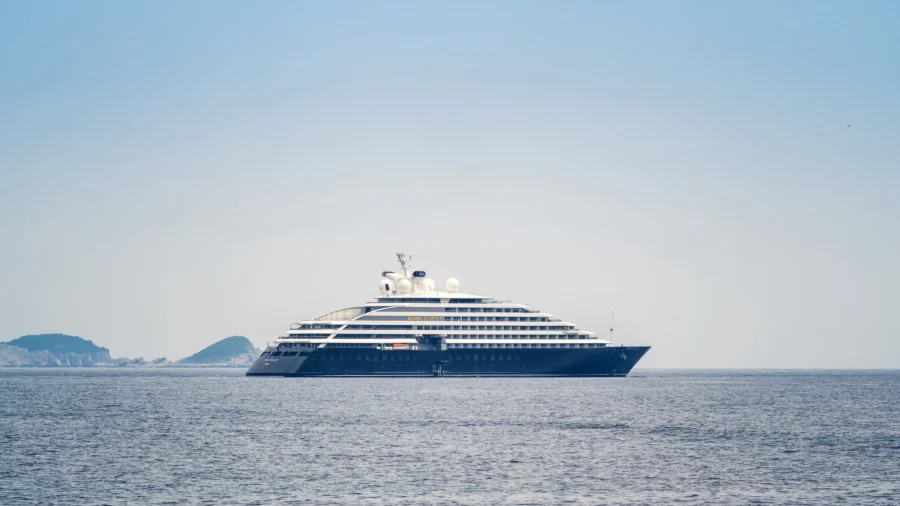
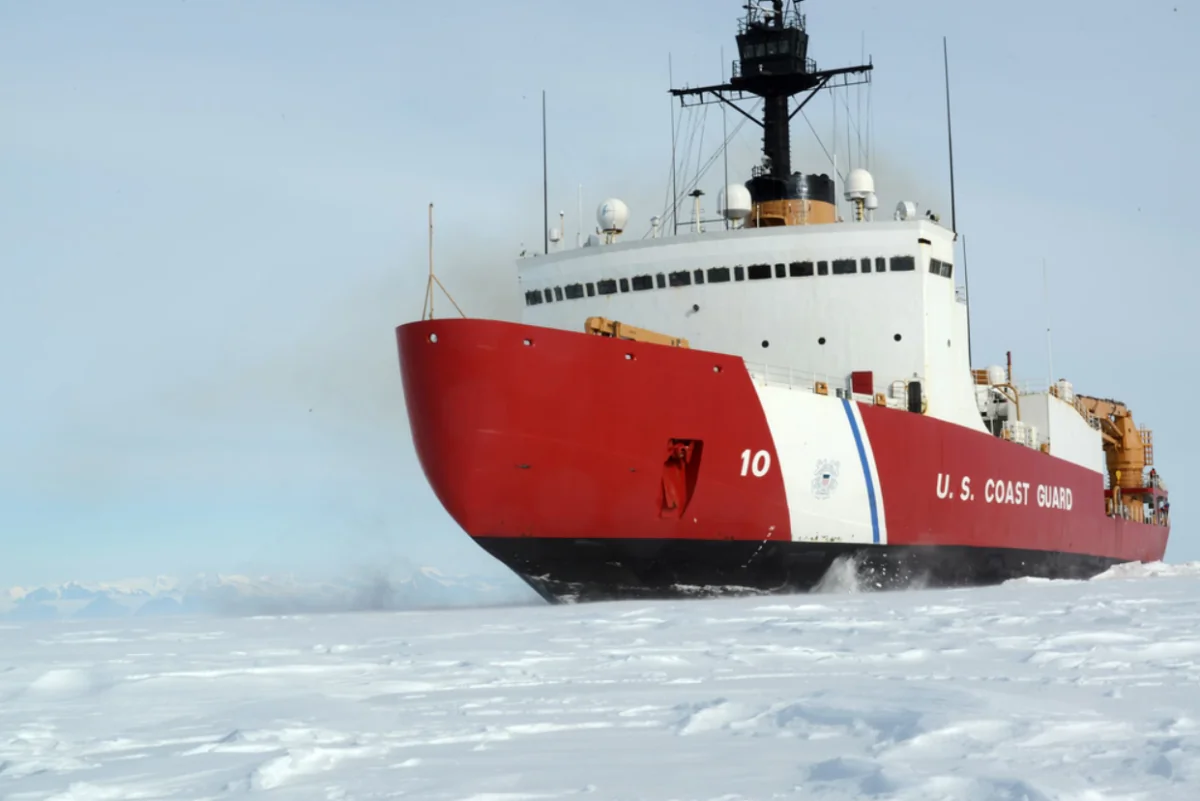
The U.S. Coast Guard's icebreaker Polar Star rescued an Australian cruise ship trapped in Antarctic pack ice Saturday, coincidentally occurring on the coast guard vessel's 50th anniversary of service.
The Scenic Eclipse II, owned by Australian cruise operator Scenic Group, contacted the Coast Guard cutter around 11 p.m. local time Friday after becoming stuck in ice approximately eight nautical miles from McMurdo Sound in the Ross Sea.
Polar Star's crew executed two close passes to break the luxury vessel free from the frozen grip, then escorted it roughly four nautical miles to open water. The rescue came on the same day the icebreaker celebrated five decades of commissioned service, having first launched Jan. 17, 1976.
"While Scenic Eclipse II was never in need of rescue services, the coordination between both vessels ensured we could navigate the changing pack ice safely and efficiently," Capt. James Griffiths, Scenic Group's general manager of ocean operations, said in a prepared statement to the media. "This is a great example of the practical, respectful cooperation that exists in the polar regions, where safety, seamanship and shared responsibility always come first."
The Scenic Eclipse II departed Hobart, Tasmania, on Jan. 6 and is scheduled to conclude its voyage in Dunedin, New Zealand, on Jan. 29.
Operation Deep Freeze
The incident with Scenic Eclipse II occurred while Polar Star was already conducting icebreaking operations in the Southern Ocean supporting Operation Deep Freeze 2026, the U.S. military's annual mission to resupply Antarctic research stations. The Coast Guard cutter departed Seattle in November for its 29th deployment to Antarctica, according to a Coast Guard press release.Operation Deep Freeze provides critical logistical support for the U.S. Antarctic Program, managed by the National Science Foundation. The mission encompasses strategic airlift, search and rescue, cargo handling, bulk fuel supply, and other transportation requirements, enabling scientific research in one of Earth's most remote regions.
Polar Star's primary role involves carving navigable channels through miles of dense Antarctic ice, allowing essential fuel and cargo deliveries to sustain research stations and operations.
"I am constantly amazed at this crew's tremendous energy and enthusiasm," said Capt. Jeff Rasnake, Polar Star's commanding officer. "Despite the many challenges associated with getting and keeping this ship on mission, they remain eternally positive and committed to meeting the high standards we've set for ourselves."
Despite its age, the vessel continues demonstrating unmatched heavy icebreaking capability, routinely operating in conditions few ships can navigate.
"At 50 years old, Polar Star remains the world's most capable non-nuclear icebreaker," said Cmdr. Samuel Blase, Polar Star's executive officer. "That's a testament to the crews that have maintained it over the decades."