

The United States has reduced tariffs on select Taiwanese auto parts, wood products, and civil aircraft components, delivering a narrow but legally binding part of a U.S.–Taiwan economic arrangement while leaving open the larger question of how Washington will treat semiconductor imports from the island.
The changes, published in the Federal Register on May 28, cap certain Section 232 duties on Taiwanese automobile parts, timber, lumber, and wood derivative products at 15 percent. The notice also removes derivative Section 232 steel, aluminum, and copper duties from civil aircraft components made in Taiwan.
The changes apply retroactively to goods entered for consumption, or withdrawn from warehouse for consumption, on or after May 1.
The notice implements tariff provisions of a Jan. 15 memorandum of understanding (MOU) between the American Institute in Taiwan and the Taipei Economic and Cultural Representative Office in the United States. It does not implement the broader Agreement on Reciprocal Trade signed on Feb. 12, which the notice says “has not yet entered into force.”
Narrow Relief Takes Effect
Under the Federal Register notice, certain Taiwanese auto parts and wood-related products will face no more than a 15 percent combined duty under Section 232. If a product’s existing U.S. Column 1 duty rate is already at least 15 percent, no additional Section 232 duty will apply. If the existing duty is below 15 percent, the combined duty and Section 232 tariff will be set at 15 percent.For civil aircraft components from Taiwan, the notice removes derivative Section 232 steel, aluminum, and copper duties. The provision applies to civil aircraft components and excludes military and unmanned aircraft components.
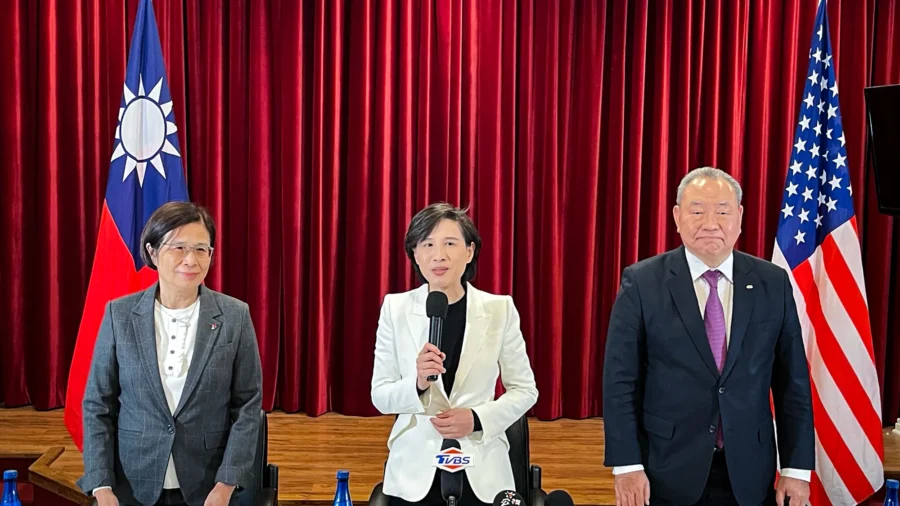
In a press conference on May 28, Taiwanese Vice Premier Cheng Li-chiun said the non-semiconductor measures were written into the Taiwan–U.S. investment MOU signed on Jan. 15 and took effect retroactively on May 1 after two months of communication between Taipei and Washington. She said the new treatment lowers tariffs on Taiwanese auto parts and wood-related goods to no more than 15 percent and removes Section 232 derivative duties from certain aircraft components.
Semiconductors Still Unresolved
The tariff relief does not settle Taiwan’s central concern: whether the United States will impose future Section 232 tariffs on semiconductor imports, and what exemptions or preferential treatment Taiwanese companies would receive if those duties take effect.Cheng noted that the United States has not yet imposed Section 232 tariffs on Taiwanese semiconductors or related products. She added that Taipei is actively using a government-to-government channel with the U.S. Department of Commerce to negotiate tariff-exemption quotas and exemption lists for Taiwanese companies investing in the United States.
Taiwan has made clear to Washington that if the United States decides to apply Section 232 tariffs on semiconductors, both sides should first finalize negotiations on company-specific duty-free quotas and exemption lists. This would ensure Taiwanese technology firms are not subjected to high tariffs before their preferential treatment is confirmed, Cheng said.
January MOU, February Agreement
The January MOU concerns Taiwan–U.S. investment. The Federal Register notice says Taiwanese semiconductor and technology enterprises will make new direct investments totaling $250 billion to expand advanced semiconductor, energy, and artificial intelligence production and innovation capacity in the United States. It also says Taiwan will provide credit guarantees to support corporate credit lines of up to $250 billion for additional investment by Taiwanese companies.Section 232 Authority
The May 28 notice relies on Section 232 national-security tariff authority and Executive Order 14346, which President Donald Trump issued on Sept. 5, 2025. The order authorized Commerce Department and USTR officials to implement tariff-related elements of trade and security agreements through Federal Register notices.Taiwan Industries Watch Next Step
Cheng said the tariff reductions will help Taiwanese exporters compete more effectively in the U.S. market, particularly suppliers of auto parts, wood products, and aircraft components. She noted that Taiwan’s auto-parts industry employs about 71,000 people and that lowering the tariff rate to 15 percent will strengthen the sector’s competitiveness.Taiwanese Economics Minister Kung Ming-hsin stated that the tariff adjustments will benefit Taiwanese firms across the affected sectors. He added that some auto-parts stocks had already reacted positively to the announcement, and that the new lower rate narrows Taiwan’s tariff gap with competitors such as Japan and South Korea while widening the gap with China.
Cheng added that Taiwan will continue pressing for tariff-exemption quotas and preferential treatment for Taiwanese companies investing in the United States should Washington proceed with Section 232 tariffs on semiconductor imports.