


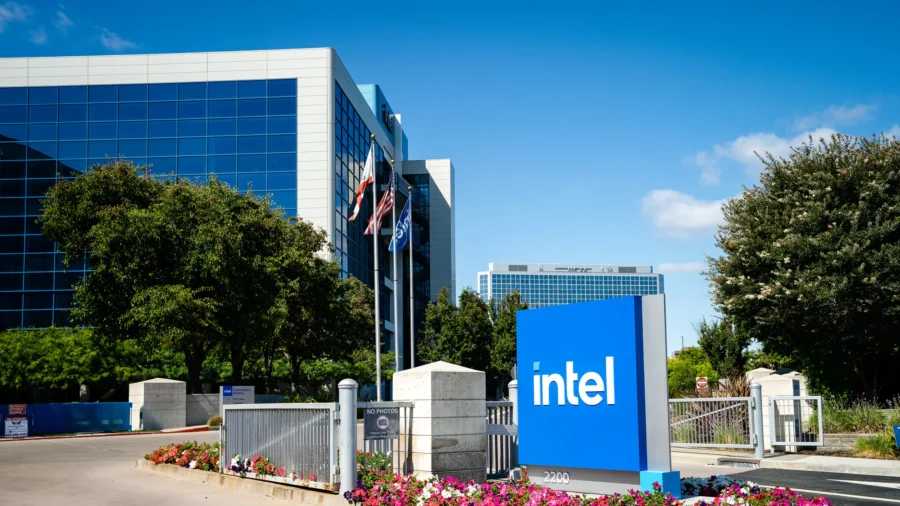
President Donald Trump said on Dec. 2 that the U.S. government made $40 billion from its deal with chipmaker Intel.
The president, speaking during his Cabinet meeting, told reporters that the head of Intel visited him to discuss problems the company had been facing.
"I said, 'Look, we'll fix your problem, but I think the United States is entitled to 10 percent of your company,'" Trump stated. "And the chairman looked at me, and he goes, 'You have a deal.'"
After briefly conferring with Commerce Secretary Howard Lutnick, Trump revealed that the United States has made $40 billion in three months.
"Does anybody write about it? Nobody writes about, but that's okay."
Intel CEO Lip-Bu Tan met with the president at the White House in August to discuss government support for domestic chipmaking.
Days later, the administration announced that the federal government had purchased more than 433 million shares of Intel at $20.47 each, representing a 10 percent stake in the company.
Intel's stock has rocketed since, soaring about 100 percent to nearly $43 a share. Its market cap is firmly above $200 billion, up from about $100 billion before the agreement.
In July, the Department of Defense acquired a 15 percent stake in the rare-earth mining and processing firm MP Materials. A 10 percent stake was negotiated with Lithium Americas and Trilogy Metals this fall.
Lutnick took a shot at the previous administration's CHIPS and Science Act, calling it a "$60 billion giveaway" and stating that the United States presently has $300 billion in commitments for semiconductor manufacturing.
"That's going up to $750 billion in the next 60 days," Lutnick told the press.
Overall, the administration has touted trillions of dollars in manufacturing investment from domestic and foreign corporations.
‘Capex Boom’
All of this investment is “turning into a capex boom,” says Treasury Secretary Scott Bessent.Capital expenditures—money companies spend to purchase, upgrade, or maintain long-term physical assets—are up 15 percent this year, according to the Treasury secretary.
He attributed this to the president’s landmark One Big Beautiful Bill Act.
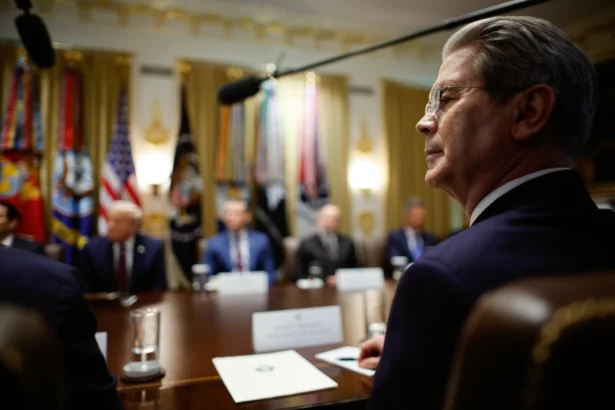
"In history, when capex is up, jobs will follow," Bessent said during the Cabinet meeting.
"I think next year is going to be a fantastic year—taxes, deregulation, energy, certainty," he continued. "So not only we’re going to have great growth, but it's going to be low inflationary growth."
"Next year is going to be the year for Main Street as all this kicks in."
Since the first-quarter contraction, the U.S. economy has rebounded substantially.
GDP grew 3.8 percent in the second quarter.