


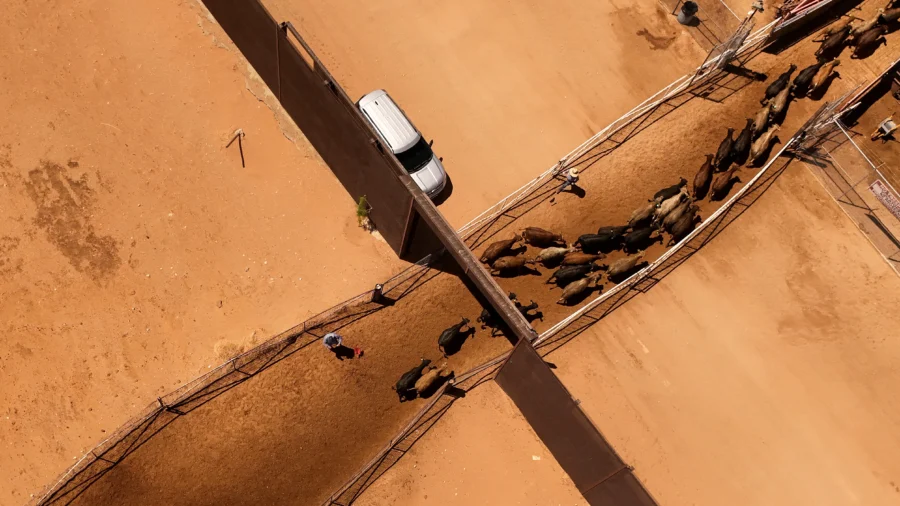
WASHINGTON—The U.S. Department of Agriculture (USDA) said on Friday it is lifting a ban on imports of Mexican cattle that it imposed more than a year ago to keep out the flesh-eating livestock pest New World screwworm.
The halt of imports drove U.S. beef prices to record highs, hurting consumers and putting pressure on President Donald Trump's administration to lower costs. The ban also ultimately failed to keep out screwworm, which has moved north through Central America and was detected in June on Texas farms and in New Mexico.
The United States plans to resume importing Mexican cattle at a port of entry in Douglas, Arizona, in 30 days, and then eventually open two additional ports of entry in New Mexico, the USDA said in a statement, adding it is now safe to start the reopening.
The USDA said it would open southern cattle ports in phases, adding that the phased reopening was contingent on Mexico's adherence to a plan to control the screwworm.
Screwworms are parasitic flies whose females lay eggs in open wounds and mucous membranes on any warm-blooded animal. Once the eggs hatch, hundreds of screwworm larvae use their sharp mouths to burrow through living flesh, eventually killing their host if left untreated.
Mexican President Claudia Sheinbaum said she had instructed local authorities to expedite preparations for the resumption of livestock exports to the United States. Exports are due to resume in the last weeks of August, she said on social media.
In Texas, the United States' biggest cattle-producing state, closing the border has forced the $100 billion U.S. beef industry to contract.
Texas Agriculture Commissioner Sid Miller praised the Trump administration's decision to allow a limited resumption of cattle importation from Mexico but voiced continued concern about the ongoing disruption to the U.S. cattle industry due to the screwworm.
"Resuming cattle importation from Mexico is the right move for ranchers and American consumers, but it's a decision that should have been made sooner. While I'm pleased to see this important trade relationship restored, the prolonged closure has already taken a toll on producers, disrupted supply chains and created uncertainty that could have lasting consequences for the cattle industry," Miller said in a statement.
But Miller said the USDA's current approach to the screwworm threat has not gone far enough.
"While there have been important steps in the right direction, the pace and scale of the screwworm response have not matched the threat," Miller said.
Meat Institute President and CEO Julie Anna Potts said the industry group supports "a careful, phased reopening of the border that reflects both vigilance and confidence in our response plans."
"Importing cattle from Mexico allows beef packers to better meet consumer demand given the tight supply of US cattle," Potts said.
Resuming imports will increase risks for more U.S. infestations, added Bill Bullard, CEO of the U.S. cattle producers' group R-CALF USA.
"As long as the border is open, it will incentivize the northward movement of cattle from southern Mexico, where the pest is endemic, to the United States," Bullard said.
U.S. beef prices set record highs this year as domestic cattle supplies dropped to a 75-year low because of the import ban and drought conditions that drove American producers to slash their herds.
Tight supplies raised cattle costs for meatpackers, including Tyson Foods, which closed a massive processing plant in Nebraska this year. Rival JBS also said it will close a Pennsylvania beef plant.
The Texas Cattle Feeders Association, which represents the cattle feeding industry in Texas, Oklahoma and New Mexico, said the United States can resume imports safely with the correct protocols in place.
"We think the science supports it," said Josh Winegarner, the association's director of government relations. He added that the halt had given the USDA time to work on its protocols and response to screwworm.
Ports of entry in Arizona and New Mexico are farther away from screwworm infestations in Mexico, and resuming imports into those locations is considered less risky than restarting imports into Texas, according to livestock traders.