


CBP halts Giant bicycle imports as watchdogs accuse Apple supplier Foxconn of wage theft and overwork in China.
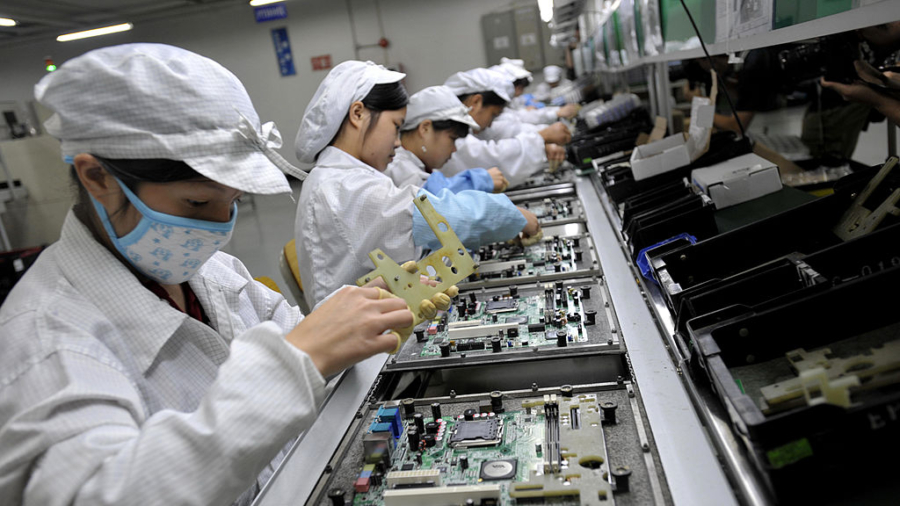
September is ending on a low note for China, with two reports coming out in the final weeks of the month citing labor violations at a Foxconn factory making Apple products and bike brand Giant.
Giant had Customs and Border Protection (CBP) impede imports of bikes and bike parts made in their Taiwan factories. Although CBP did not say whether Taiwan was using parts made in China to assemble full bicycles bound for the United States, they did blame Taiwan, a separate country, for alleged forced labor there. Giant is a Taiwanese company.
China accounts for the majority of bicycles sold in the United States, with some estimates putting it at close to 90 percent. Taiwan comes in a distant third after Cambodia.
Then there’s Foxconn, a Taiwanese tech giant that does a lot of manufacturing work for American computer companies like Dell and Hewlett-Packard in China.
CLW first notified Apple of the conditions at the Foxconn factory in 2019.
Their latest report was based on worker interviews conducted largely undercover in the first quarter to see if Foxconn had made any corrections.
- Hourly wages were as low as $1.69 an hour.
- Long hours persist, with most workers clocking in 60 hours to as high as 75 hours.
- 50 percent of Foxconn Zenghou factory workers are “dispatch” workers, similar to workers employed by temporary employment agencies in the United States. The legal limit is 10 percent.
Between January and June, nearly all frontline production workers were paid 12 yuan to 13 yuan per hour, covering around 60,000 workers. That equates to around $1.69 per hour, given current foreign exchange rates. In July and August, Foxconn added another 10,000 to 20,000 short-term student workers, whose pay levels were roughly the same, according to the report. Student workers are not included in the 50 percent dispatch figure. The percentage of employment agency contractors is five times greater than what China's labor law allows.
“Chinese law sets a 10 percent cap on dispatch labor, but Foxconn has long exceeded this,” Li Qiang, founder of New York-based China Labor Watch, told NTD in an interview. “The reason lies in a political trade-off: Apple not only creates jobs in China but also brings technology transfer and high-skilled engineering positions. In exchange for Apple’s investment and technology, the Chinese government tolerates Foxconn’s illegal overuse of dispatch labor. Apple relies not only on cheap labor but also on cultivating China’s high-tech workforce,” said Qiang, a Chinese labor activist who has been living in the United States for around 25 years.
The people they interviewed repeated some of the claims made in the CLW report, but many of them also said that conditions at the Foxconn facility were better than those at nearby manufacturers. They cited things most Americans would take for granted, such as air conditioning, hot water, and affordable cafeteria food.
On temp workers, some dispatch workers interviewed by the FT said they liked the signing bonus offered to them–between 4,800 yuan ($674) and 9,800 yuan ($1,376) despite low hourly pay and no benefits.
Compared to 2019, the base hourly wage at the Foxconn Zenghou factory remains at 12 yuan, according to the CLW report. It is not easy to get reliable labor market information from China, especially from non-state organizations. This June, China Labor Bulletin, the 21-year-old Hong Kong-based labor rights group created by Tiananmen Square protest leader Han Dongfang, ceased operations, likely due to pressure from Beijing.
"Most of the issues CLW describes in the report occur more commonly than not in the Chinese electronics industry," Dmitri Kessler, founder of the Economic Rights Institute in the UK, said in an email exchange with NTD.
Kessler also noted, without blaming Foxconn, the tendency for foul play at the employment agencies that send dispatch workers to Chinese factories.
“I know of one incident where Chinese government officers were the investors in a recruitment firm. And they, mafia style, used violence to prevent a Taiwanese electronics firm from hiring people without going through them,” he said, adding that Beijing often uses unflattering reports about China written by foreign non-profit organizations as a means to “foster support for the government by Chinese citizens. It is the excuse they use for repressing dissent within the country.”