


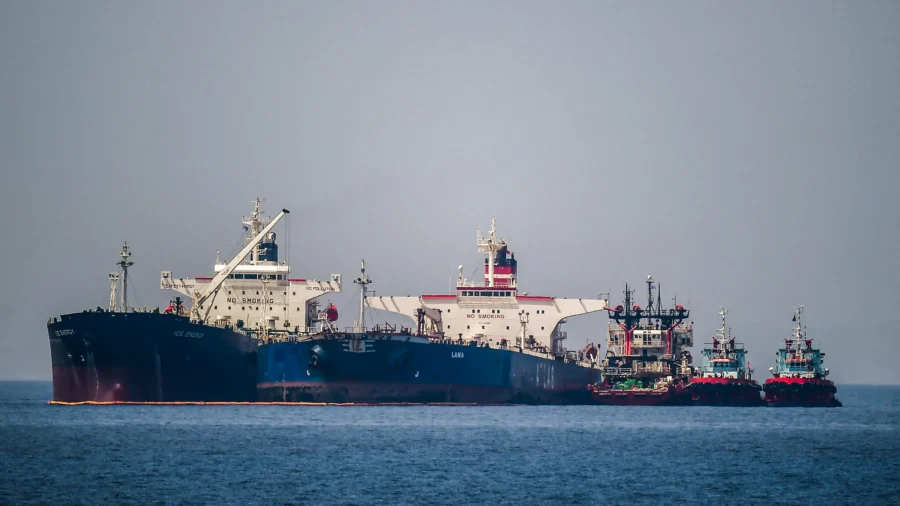
The U.S. Treasury Department issued a license on March 12 temporarily permitting countries to buy Russian crude oil and petroleum products that are currently stranded at sea.
The license, valid until April 11, authorizes the delivery and sale of Russian crude oil and petroleum products that had already been loaded onto ships as of March 12, according to a document released by the Treasury Department’s Office of Foreign Assets Control (OFAC).
Treasury Secretary Scott Bessent wrote on X that the United States issued the 30-day license to “promote stability in global energy markets” and help keep prices down amid the ongoing conflict with Iran.
“This narrowly tailored, short-term measure applies only to oil already in transit and will not provide significant financial benefit to the Russian government, which derives the majority of its energy revenue from taxes assessed at the point of extraction,” he stated.
“The temporary increase in oil prices is a short-term and temporary disruption that will result in a massive benefit to our nation and economy in the long-term.”
The escalating conflict in the Middle East has caused many tankers to stop transiting the Strait of Hormuz, a vital maritime chokepoint for global oil and gas shipments.
Brent, the international benchmark for crude prices, jumped to $101 per barrel in the overseas market on March 12.
Each country will release its emergency stockpiles into the market over a time frame, with some nations taking additional actions beyond these releases.
“This will take approximately 120 days to deliver based on planned discharge rates,” U.S. Energy Secretary Chris Wright said in a statement on March 11.
“Unlike the previous administration, which left America’s oil reserves drained and damaged, the United States has arranged to more than replace these strategic reserves with approximately 200 million barrels within the next year—20% more barrels than will be drawn down—and at no cost to the taxpayer,” he added.
The agency said that oil producers in the Middle East region are “reducing or shutting in production” because ships are unwilling or unable to load cargoes.
Last week, the United States granted India a 30-day waiver to purchase Russian crude oil already in transit. Washington earlier raised tariffs on India over its imports of Russian oil, as it seeks to cut off funding for Russia’s war in Ukraine.