


Lithium is a key component of lithium-ion batteries and is used in electric vehicles, computers, military equipment, consumer electronics, electric tools, aerospace alloys, and energy-grid storage systems.
“The USGS projects that world production capacity for lithium will double by 2029, driven by increasing demand,” the agency said. “Lithium supply security has become a priority for technology companies.”
The estimated Appalachian supply could support production for about 130 million electric vehicles, 180 billion laptops, or 500 billion cellphones, according to the USGS.
Most lithium is produced outside the United States, increasing supply chain vulnerability. "To mitigate this supply risk, the US Geological Survey is actively assessing lithium deposits in the USA," the report states.
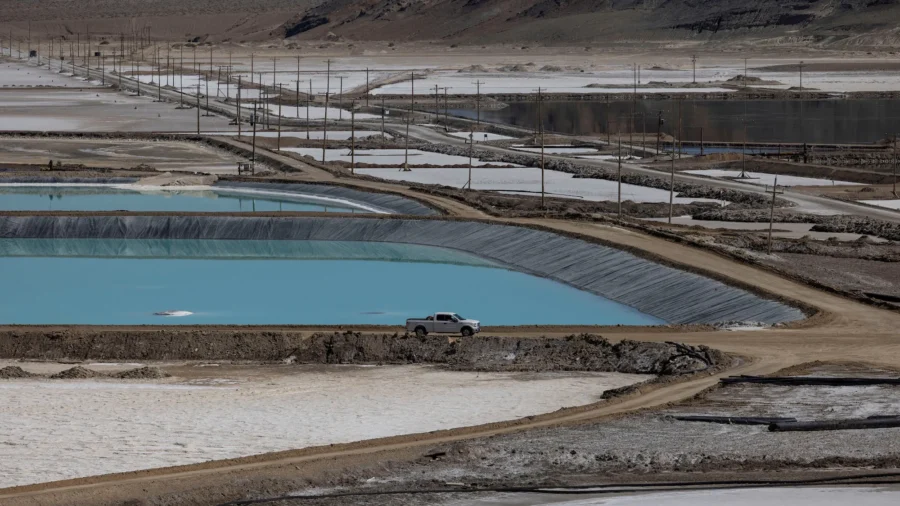
The United States has one active commercial lithium mine: Albemarle’s Silver Peak Mine in Nevada, and the nation relies on imports for more than half of its lithium supply. Australia is the world’s largest lithium producer, while China leads in global refining capacity, according to the USGS.
Ned Mamula, USGS director, said the research "shows that the Appalachians contain enough lithium to help meet the nation’s growing needs – a major contribution to U.S. mineral security, at a time when global lithium demand is rising rapidly.”
Mamula says workforce training will also be essential to support expanded domestic mining, alongside scientific mapping and policy efforts for "clean, responsible mining to 21st century standards."
“The United States was the dominant world producer of lithium three decades ago, and this research highlights the abundant potential to reclaim our mineral independence,” Mamula said.
The USGS estimates the southern Appalachian region, concentrated largely in North and South Carolina, contains about 1.43 million metric tons of lithium oxide, while the northern Appalachians, including parts of Maine and New Hampshire, hold about 900,000 metric tons.
Researchers said the lithium occurs in pegmatites, coarse-grained igneous rocks formed more than 250 million years ago during mountain-building events that created the supercontinent Pangea.
The findings could have economic implications for parts of the Appalachian region long associated with mining and manufacturing.
In North Carolina, the Kings Mountain area southwest of Charlotte has a long history of lithium mining and processing. It was the first large-scale lithium pegmatite mining in the country, according to the USGS.
Maine has also seen growing interest in lithium exploration as companies seek domestic battery supply chains.
According to the report, researchers identified parts of Maine, New Hampshire, and Vermont as the most prospective areas for undiscovered deposits, estimating the region could contain enough lithium to offset U.S. imports for more than 120 years at current consumption rates.
“Details from the southern assessment covering the Appalachians from Maryland to Alabama will be published later,” stated the USGS.