


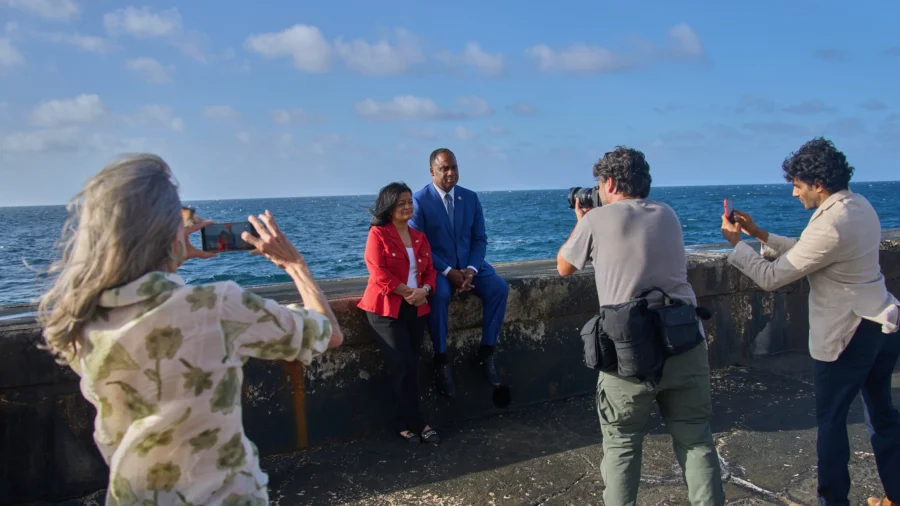
A White House official told The Epoch Times in an email that the United States was already engaged with Havana.
"As the President stated, we are talking to Cuba, whose leaders want to make a deal and should make a deal, which President Trump believes 'would be very easily made,'" the official said. "Cuba is a failing nation whose rulers have had a major setback with the loss of support from Venezuela."U.S. Reps. Pramila Jayapal (D-Wash.) and Jonathan Jackson (D-Ill.) met with Cuban President Miguel Díaz-Canel, Foreign Minister Bruno Rodríguez, and members of parliament during the trip, the pair said in a joint statement released on Sunday. The lawmakers condemned what they called an illegal U.S. fuel blockade.
"The illegal U.S. blockade of fuel to Cuba—90 miles south of the United States—adds to the longest embargo in world history and is causing untold suffering to the Cuban people," they wrote.
“The United States prevented a single drop of oil from entering Cuba for over three months. This is cruel collective punishment—effectively an economic bombing of the infrastructure of the country—that has produced permanent damage. It must stop immediately.”
In the joint statement from the Democratic lawmakers, Jayapal said she toured a neonatal intensive care unit at a maternity hospital during the trip, where power shortages threatened incubators and ventilators keeping premature babies alive.
The lawmakers called directly for talks. "The United States and Cuba must immediately enter into real negotiations that provide for the dignity and freedom of the Cuban people and the tremendous benefits to the American people that will accrue from a real collaboration between our two countries," they said.
Díaz-Canel wrote on X following the visit that he "denounced the criminal damage caused by the blockade" and "reiterated [the Cuban] government's willingness to engage in serious and responsible bilateral dialogue."
Cuba released more than 2,000 prisoners during the delegation's stay, which both lawmakers described as a signal of openness. Cuba also extended an invitation to the FBI to investigate a fatal shooting involving a U.S.-flagged boat in February.
Jayapal said Cuba's actions showed the two countries could move forward together. Steps taken by Cuba "indicate that the moment is here for us to have a real negotiation between the two countries and to reverse the failed U.S. policy of decades, a Cold War remnant that no longer serves the American people or the Cuban people," she told reporters.
Both lawmakers said they would prepare a formal report on the trip and continue working on House initiatives aimed at lifting Cuba sanctions.