


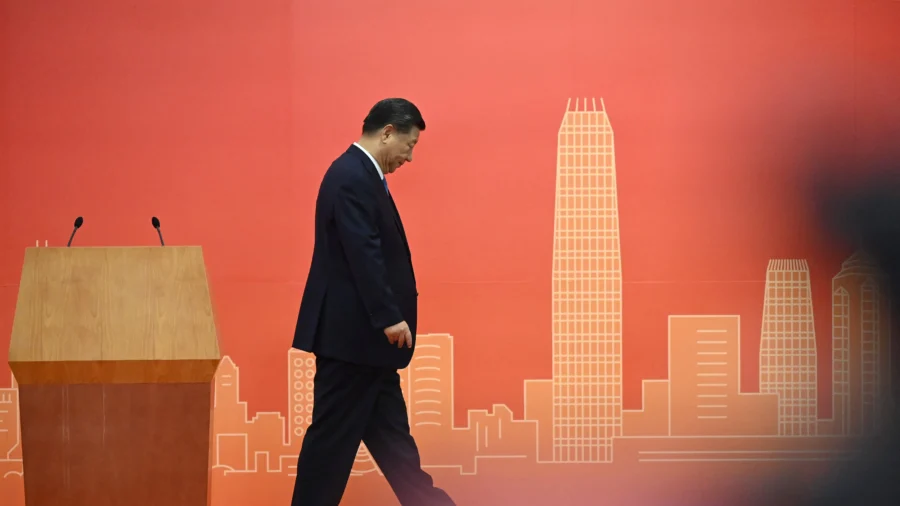
Chinese Communist Party leader Xi Jinping did not offer congratulations.
Instead, Beijing responded cautiously. China’s foreign ministry said on March 9 that Mojtaba Khamenei’s selection was an internal Iranian decision under the country’s constitution and warned against outside interference or targeting the new leader.
The contrast with Moscow’s response was notable. Putin also quickly expressed condolences over Khamenei’s death. China’s condolences were delivered more quietly: Vice Foreign Minister Miao Deyu visited the Iranian embassy in Beijing on March 5 to express sympathy, according to China’s foreign ministry.
Trump In the Background
Chinese officials publicly defended Iran’s sovereignty and called for a ceasefire. But at nearly the same moment, Foreign Minister Wang Yi was signaling how much Beijing values its relationship with Washington.Speaking during China’s annual parliamentary session on March 8, Wang called 2026 a potential “big year” for U.S.–China relations. He said preparations for high-level exchanges were already underway and urged both sides to create the right atmosphere and to remove “unnecessary disruptions.”
A Partner Beijing Could Not Fully Back
Relations between Beijing and the Khamenei family date back to at least 1989, when Ali Khamenei visited China as a senior Iranian leader—a trip Nakazawa says helped cement military and political ties between the two countries.Since then, China has supplied arms and dual-use materials to Iran, while Iran has sold large amounts of sanctioned crude oil to China. The relationship deepened further in 2021, when Wang Yi signed a 25-year cooperation agreement with Tehran covering energy, infrastructure, and strategic cooperation.
An analysis published by the news website Eurasia Review said China has cultivated close ties with countries that challenge Western influence, but those partnerships rarely come with security guarantees or military commitments. When crises escalate, Beijing often limits its role to diplomatic statements and calls for restraint.
Those relationships emphasize economic cooperation and diplomatic coordination, allowing Beijing to benefit from them while avoiding the risks of direct military involvement.
Beijing Left Looking Reactive
Some analysts say the episode has made China appear more reactive and strategically constrained.From Chen’s perspective, Beijing’s restraint looked less like prudence than softness toward Washington, a sign, he said, that Xi wanted a meeting with Trump badly enough to accept the optics of appearing hesitant toward Tehran.
That, Chen said, left Beijing looking weak and reactive rather than strategic: China could neither fully back a longtime partner nor openly challenge the U.S.–Israeli escalation.
Chinese officials would likely reject that interpretation. From Beijing’s perspective, the response reflects consistent diplomatic principles, including non-interference and calls for de-escalation, rather than hesitation.
Still, the handling of Mojtaba Khamenei’s succession underscores the competing pressures shaping China’s foreign policy. As Beijing tries to preserve ties with Tehran while stabilizing relations with Washington, the episode highlights how difficult it can be for Xi to manage both priorities at once.