

Your Electric Toothbrush Could Spark Trouble in Flight, TSA Explains How to Pack It

Traditional toothbrushes are allowed in both carry-on and checked luggage, but battery-powered models are treated differently due to fire risk.
Published: 9/4/2025, 10:21:37 PM EDT
Your Electric Toothbrush Could Spark Trouble in Flight, TSA Explains How to Pack It
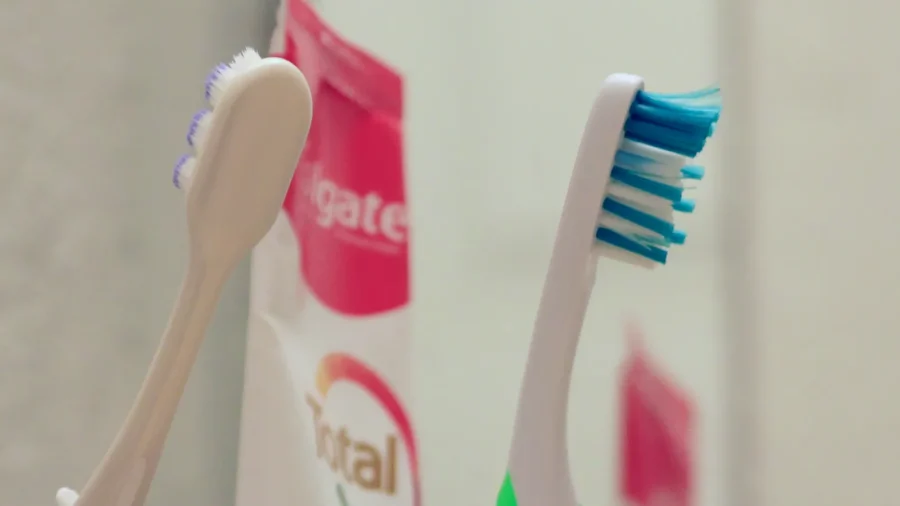
Toothbrushes and toothpaste on Sept. 4, 2025. (Cynthia Cai/NTD)

Travelers planning to pack an electric toothbrush for their next flight should take note: the Transportation Security Administration (TSA) says these devices require special handling.

On Sept. 4, the agency reminded passengers on social media: “Traveling with your electric toothbrush, or other items that buzz? If they have an installed lithium battery you should pack them in your carry-on bag. Any spare or uninstalled lithium batteries must be placed in a carry-on bag.”

Traditional toothbrushes are allowed in both carry-on and checked luggage, but battery-powered models, including electric toothbrushes, are treated differently due to fire risk. The Federal Aviation Administration (FAA) recommends carrying all devices with lithium-ion or lithium-metal batteries in carry-on luggage to reduce the potential for fires associated with battery malfunctions.

Packing lithium battery-powered devices in carry-on baggage is safer than placing them in checked luggage because if a device malfunctions, the crew and passengers can respond immediately. Flight attendants are trained to recognize and extinguish fires caused by overheating batteries, and passengers can alert the crew if they notice smoke, sparks, or unusual heat, according to the FAA.

Devices in checked bags are inaccessible during flight, which increases the risk that a fire could go undetected. Carrying devices in carry-on luggage also helps prevent accidental activation or damage, since carry-on bags are handled more carefully than checked luggage.

Other personal care devices, such as cordless hair curlers, also fall under specific safety rules. Many of these cordless hair tools are battery-powered or gas-fueled. Cordless gas curlers operate using small amounts of compressed butane to heat the curling barrel without an electrical outlet. These items must remain in carry-on bags, fitted with safety covers over heating elements, and any spare gas cartridges are not allowed, according to the TSA.

Emergencies Highlight Battery Risks

"Through June 30 of this year, the FAA has verified 38 lithium battery incidents involving smoke, fire or extreme heat on passenger and cargo aircraft, and a record 89 incidents occurred last year," according to the administration's recent blog post on preventing lithium battery hazards.
Airlines have experienced recent cases involving electronic devices malfunctioning and requiring flight diversions. On Aug. 23, an American Airlines Airbus A321, Flight 357 from Philadelphia to Phoenix, carrying 160 passengers and six crew members, made an emergency landing at Washington Dulles International Airport after a passenger’s electronic device caught fire, sending smoke through the cabin.

The FAA said the airline crew reported a fire in one of the passenger rows, and emergency personnel met the aircraft upon landing. American Airlines confirmed the device was “quickly contained by crew members prior to landing,” and that passengers were rebooked on alternative flights. One passenger described the experience on social media as scary.

In a previous report released in April 2022, the FAA reported at least 357 incidents involving lithium battery-powered devices on aircraft between January 2006 and April 2022. The incidents—often involving laptops, cell phones, power banks, e-cigarettes, and other personal electronics—included smoke, fire, or overheating. While the report did not capture every occurrence, it highlighted the risks and importance of handling battery-powered devices carefully during travel.