



"Operation Smooth Criminal" in Florida ended with a drug ring dismantled and eight arrests, among which was a $1 million lottery winner.
The Volusia County Sheriff's Office (VCSO) announced the conclusion of its year-long investigation on May 16 following 300 overdose deaths in the past two years. The operation effectively ended the drug ring's dealing of meth, heroin, cocaine, and fentanyl into the community.

Lottery Winner Faces Charges
Lottery winner Karlee Harbst, 27, was among the arrested. WESH 2 reported that she was charged with "solicitation to deliver heroin and unlawful use of a two-way communication device."In 2018, Harbst bought a scratch-off lottery ticket after seeing her favorite number. "When I saw the ticket was number 24, I had to get it; 24 is my favorite number," she was quoted saying in a lottery press release, according to WESH 2.
Extensive Criminal Histories
The charges laid against other suspects have also been excluded by VCSO, although names and addresses were provided. VCSO believes that the ring may be responsible for multiple overdose deaths which are under investigation.Green's ring distributed multiple kilograms of cocaine and heroin in Florida, reads the press release. Most members of the drug ring have an extensive criminal history.
Together, their criminal histories racked up more than 300 felonious charges and over 100 felonious convictions.
"We want to send the message loud and clear," said Chitwood. "These scumbags are out there dealing this poison on the street, and they know that their customers, in some cases, are using this stuff and dying, right where they're selling."
Opioid Epidemic
According to the Department of Health and Human Services (HHS), the opioid epidemic began in the late 1990s. That was when pharmaceutical companies began supplying opioids for pain relief, assuring the medical community that patients would not become addicted.But it later became clear that opioid medications were highly addictive, reports HHS.
The Center for Disease Control and Preventions (CDC) reports that nearly 400,000 people have died from an opioid-related overdose in the period between 1999 to 2017.
In 2017, more than 70,200 people died from a drug overdose, according to CDC. About 68 percent of them involved an opioid.
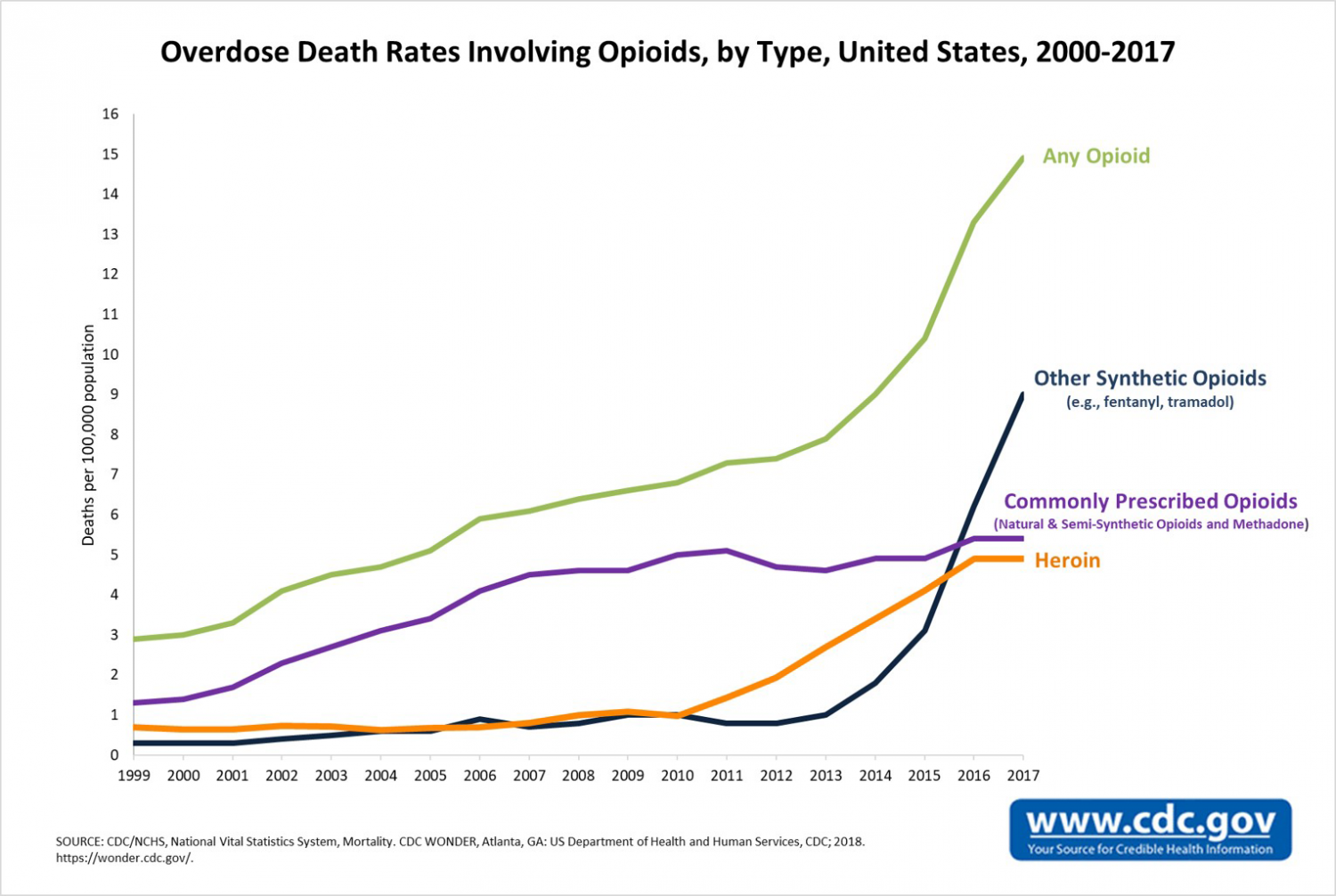
However, the CDC dashboard shows that after November 2017, the number of deaths by drug overdose began to fall.
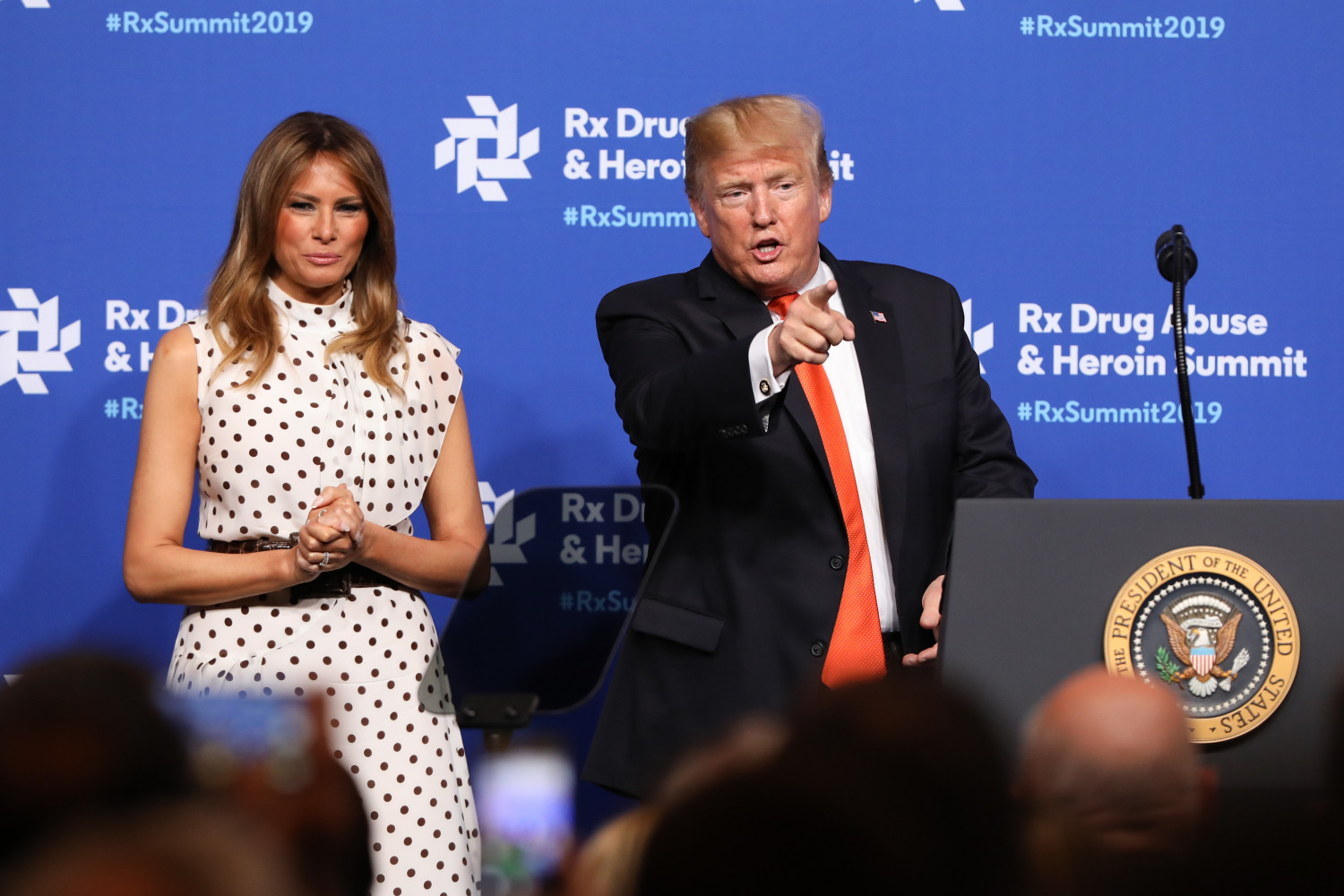
There, Trump introduced Monty Berks, the director of the Tennessee Department of Mental Health. Berks shared how he had also once suffered from drug addiction, but found recovery with the support from his hometown church 19 years ago.
“My administration is committed to ensuring that every citizen can live with dignity and purpose and proudly pursue the American dream,” said the president.