


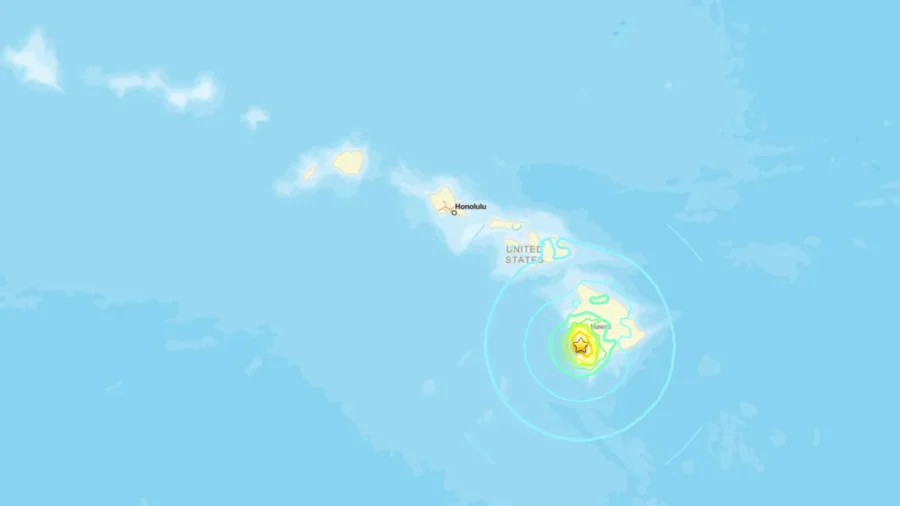
A powerful earthquake struck the west side of Hawaii's Big Island late on Friday night, rattling residents and visitors across the state and prompting officials to assess potential damage—though authorities confirmed no tsunami threat.
Shaking was felt well beyond the Big Island. Residents on Maui and Oahu also reported feeling the tremor, the observatory said.
Scientists at the observatory said the earthquake did not appear to be connected to volcanic activity. The depth, location, and recorded seismic wave patterns suggested the quake was caused by stress from the bending of the oceanic tectonic plate under the immense weight of the Hawaiian island chain—not by any volcanic processes. The HVO added that the earthquake had no apparent impact on either Mauna Loa or Kīlauea volcanoes.
“This earthquake is related to stress from the weight of the island on the underlying ocean crust and mantle,” said Hawaiian Volcano Observatory Scientist-in-Charge Ken Hon. “These earthquakes are relatively common and not directly related to volcanic processes.”
On the west side of the Big Island, the shaking reached intensity levels of VII on the Modified Mercalli Scale—described as "very strong"—according to both community reports and instrument data cited by the HVO. That level of shaking carries the potential for light to moderate infrastructure damage.
"Strong to very strong shaking was reported on the west side of the Island of Hawaiʻi during the earthquake that happened this evening and could have resulted in light to moderate damage to infrastructure," the agency stated. Officials urged anyone who observed damage to report it to the County of Hawaii Civil Defense Agency.
Meanwhile, aftershocks began occurring almost immediately. The HVO said most measured below magnitude-3. While additional aftershocks could continue over the coming days and weeks, officials said they are unlikely to be strong enough to be felt or cause further damage.
More than 2,662 people submitted felt reports to the USGS website within the first hour of the earthquake—data that helps officials map the affected area and gauge potential impacts.
The observatory said it continues to monitor Hawaii's volcanoes around the clock for any changes in activity.