


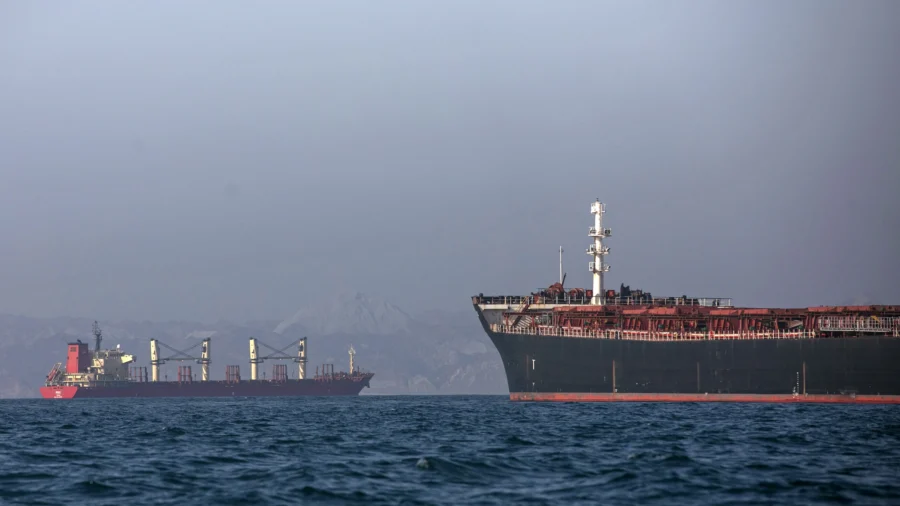
The United States revealed that it had blocked 100 commercial ships from entering and exiting Iranian ports and coastal areas in just over a month, according to a statement by U.S. Central Command (CENTCOM) on May 23.
The blockade, which began on April 13 following a proclamation by President Donald Trump, covered all Iranian ports on the Arabian Gulf and the Gulf of Oman.
Four of the ships were “disabled” during the period, while troops allowed 26 humanitarian aid ships to pass through.
“Our service members are doing extraordinary work,” CENTCOM commander Adm. Brad Cooper said in a statement on Saturday.
“They have been highly effective by executing the mission with precision and professionalism, allowing zero trade into and out of Iranian ports, which has squeezed Iran economically.”
Over 200 aircraft and warships and 15,000 soldiers, sailors, marines, and airmen contributed to rerouting 100 ships during the blockade.
U.S. ships that took part in the blockade included those that were part of the Abraham Lincoln Carrier Strike Group, George H.W. Bush Carrier Strike Group, and the Tripoli Amphibious Ready Group/31st Marine Expeditionary Unit.
U.S. Secretary of State Marco Rubio suggested this week that peace talks with Iran were making “slight progress” amid a fragile ceasefire.
Rubio’s optimism came days after Trump warned that negotiations were nearing a decisive moment and that, if an agreement wasn’t reached soon, attacks could resume.
The price for a regular gallon of gas is expected to dip as low as $3.88 this year and fall a few dimes more to $3.62 by 2027, according to the U.S. Energy Information Administration.
The agency predicted that the Strait of Hormuz would stay “effectively closed until late May, with shipping traffic beginning to pick up in June.”
But U.S. energy officials don’t expect that regular oil shipments will reach pre-conflict levels until later this year.