


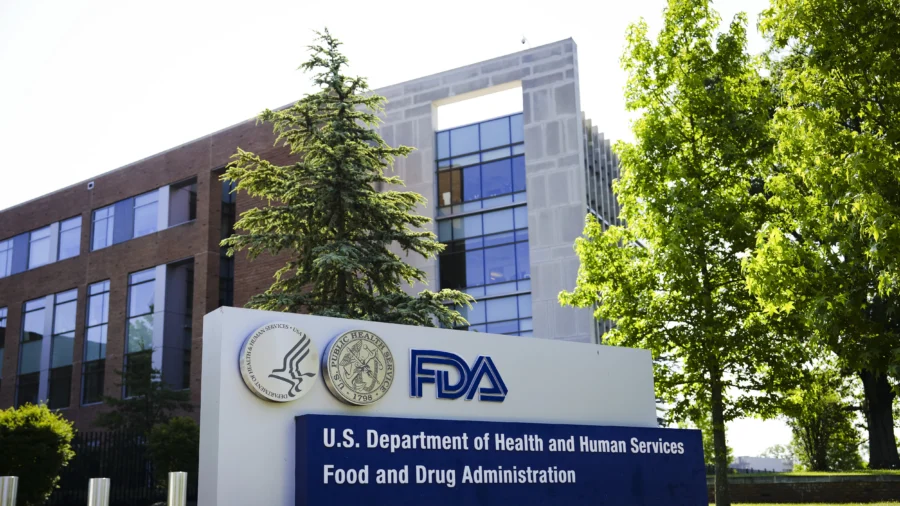
The U.S. Food and Drug Administration (FDA) classified more than 22,000 cases of recalled peanut butter products sold in 40 states as having one of its risk levels.
“During production, the firm found pieces of blue plastic in a filter,” FDA officials said.
The recall is applicable to single-serve peanut butter and peanut butter packaged with jelly combinations that were distributed under multiple brands, including Dyma, U.S. Foods, Gordon Food Service Wyoming, Katy’s Kitchen, and Sysco.
Flavors impacted are Dyma Brands Peanut Butter, Flavor Fresh Peanut Butter, Creamy Peanut Butter Poco Pac, Creamy Peanut Butter Grape Jelly Poco Pac, Creamy Peanut Butter/Strawberry Jam Poco Pac, U.S. Foods Creamy Peanut Butter, Sysco Corporation House Recipe Creamy Peanut Butter, Katy's Kitchen Smooth Peanut Butter, and Gordon Food Service Wyoming Peanut Butter Creamy.
The FDA said the peanut butter was distributed in Alabama, Arkansas, Arizona, California, Colorado, Connecticut, Florida, Georgia, Iowa, Idaho, Illinois, Indiana, Kansas, Louisiana, Massachusetts, Maryland, Michigan, Minnesota, Missouri, Mississippi, Montana, North Carolina, North Dakota, Nebraska, New Hampshire, New Jersey, New Mexico, Nevada, New York, Ohio, Oklahoma, Oregon, Pennsylvania, South Carolina, Tennessee, Texas, Utah, Virginia, Washington, and Wisconsin.
"While the U.S. Food and Drug Administration investigation and classification process is thorough and can take time to complete, that timeline did not impact our actions," Ventura Foods' Eniko Bolivar-Murphy told NTD. "At the time the recall was initiated, on April 30, 2025, we acted with urgency to remove all potentially impacted product from the marketplace. This includes urging our customers, their distributors and retailers to immediately review their inventory, segregate and stop the further sale and distribution of any products subject to the recall."
A Class 1 event is the FDA’s highest risk alert and is described on the FDA website as having a reasonable probability that the use of or exposure will cause serious adverse health consequences or death, while Class 3 involves products that violate regulations but are unlikely to cause health problems, such as minor labeling errors.
"Protecting consumers remains our top priority, and we will continue to act swiftly and transparently as the FDA review progresses," Bolivar-Murphy added.