


No, it's not a script from a horror movie. Rather, it is a scientific fact that scientists in the Arctic wastes of Alaska, deep in the permafrost, unearthed 40,000-year-old microbes and brought them back to life.
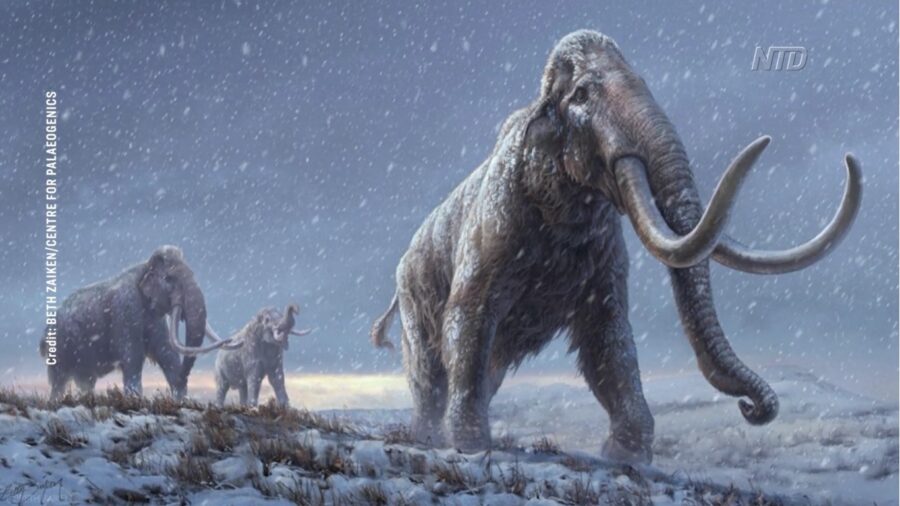
Conducting this research eventually took the Colorado team down a shaft, 350 feet below the surface of the iced earth. As they plunged ever deeper, a foul stench permeated the shaft, as it was clear that remains of mammoths and bison were being revealed, emerging from the frosted walls that had been the tomb for these prehistoric critters.
The team, led by Tristan Caro, the lead author of the study and graduate student in geological sciences at CU Boulder, said the stench is "very exciting" because "interesting smells are often microbial."
Once the team gathered the permafrost samples at the Fox, Alaska, site, just 10 miles north of the city of Fairbanks, the many millennia-old samples were brought to the lab and warmed up to as much as 53 degrees Fahrenheit.
The team went on to state that thawing subsurface permafrost leads to a slow "reawakening" of the microbes and added that "(m)icrobial communities that survive and proliferate after burial for thousands of years do not resemble those on the surface and exhibit reduced diversity."
Caro and his researchers said in their JGR Biogeosciences article that "microbes in subsurface permafrost rely on different kinds of lipids to construct their cell membranes: these compounds may have helped them survive freezing, dark conditions for millennia."