


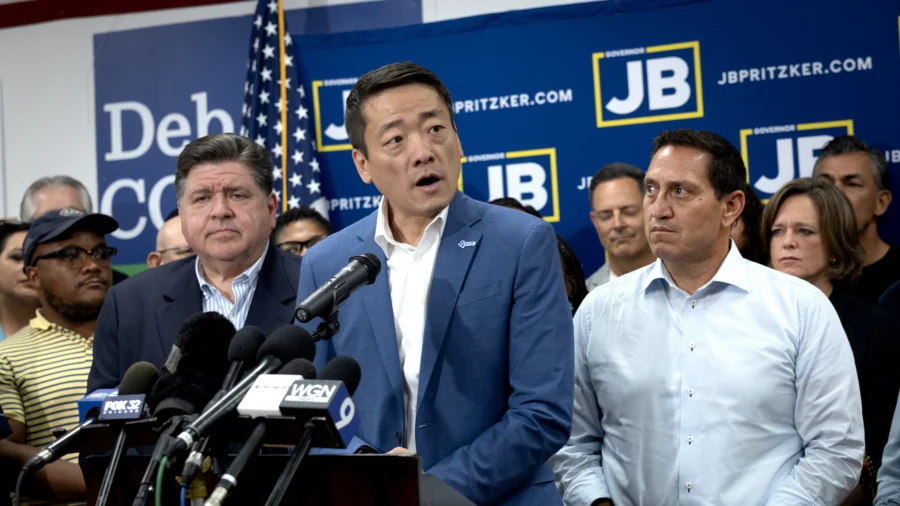
A Texas Democratic leader who drew backlash over remarks suggesting minority groups could “take over” the country has a documented history of participating in China-linked events, according to Chinese state media reports and photographs.
“If those communities realize that they share the same oppressor,” Wu said, “we start winning, because we are the majority in this country now.” He added that such unity would give them “the ability to take over this country and to do what is needed for everyone.”
Wu also said during the podcast that anxiety among some white Americans about becoming a demographic minority has fueled recent anti-immigration sentiment, describing it as driven by what he called “a sense of white nationalism.”
Past China Ties Revealed
As scrutiny over Wu’s podcast remarks intensified, additional reporting identified the lawmaker in Chinese state media coverage dating back to 2015.The U.S. government closed the Chinese Consulate in Houston in 2020, with officials citing concerns over espionage, economic theft, and intellectual property violations. At the time, U.S. authorities said the consulate had functioned as a hub for intelligence-related activity.
U.S. officials have not linked Wu to the consulate’s espionage or intelligence activities, and no evidence has been presented alleging wrongdoing by the lawmaker.
China-focused commentator and former journalist Jennifer Zeng cited Wu’s appearances in Chinese state media in a post on X, questioning the nature of his past interactions with Chinese officials.
Some experts note that attendance at diplomatic, cultural, or community events involving foreign officials is not uncommon for U.S. lawmakers, particularly in districts with large immigrant populations, and that such interactions alone do not establish improper conduct. Still, the renewed attention comes amid heightened sensitivity in Washington toward China’s overseas influence efforts.
Rhetoric Draws Comparisons to CCP Messaging
Zeng also criticized Wu’s political language, arguing that his framing of politics in terms of “oppressors” and “oppressed” mirrors concepts long promoted by the Chinese Communist Party.“The concepts of ‘oppressors' and ‘oppressed’ that he is now talking about—are these not exactly the same set of ideas pushed by the Communist Party?” Zeng wrote.
Wu has previously described himself as a victim of communism, saying his family suffered persecution during China’s political campaigns against landowners. Zeng questioned that contrast, arguing that Wu’s current rhetoric conflicts with those claims.
“Although I am also Asian, I firmly refuse to join the ‘majority’ he is talking about,” she wrote, adding that she viewed such language as racially divisive.
Wu Says Remarks Targeted Republicans, Not White People
Amid growing backlash, Houston Chronicle reporter Evan Mintz wrote that he contacted Wu directly to clarify whom the lawmaker meant by a “shared oppressor.” According to Mintz, Wu said he was referring to Republicans, not white people.“It is undeniable that Republicans have spent the past 50 years beating down communities,” Wu told the Chronicle, according to Mintz’s account.
Mintz also noted that Wu does not explicitly mention white people in the viral clip itself, though references to white Americans and demographic anxiety appear earlier in the full podcast interview.
As the debate continues, Wu remains in his leadership role in the Texas House Democratic caucus.