


A federal appeals court on Sept. 10 blocked the Trump administration’s attempted removal of a copyright official in the latest of many rulings questioning the president’s authority to fire government officials.
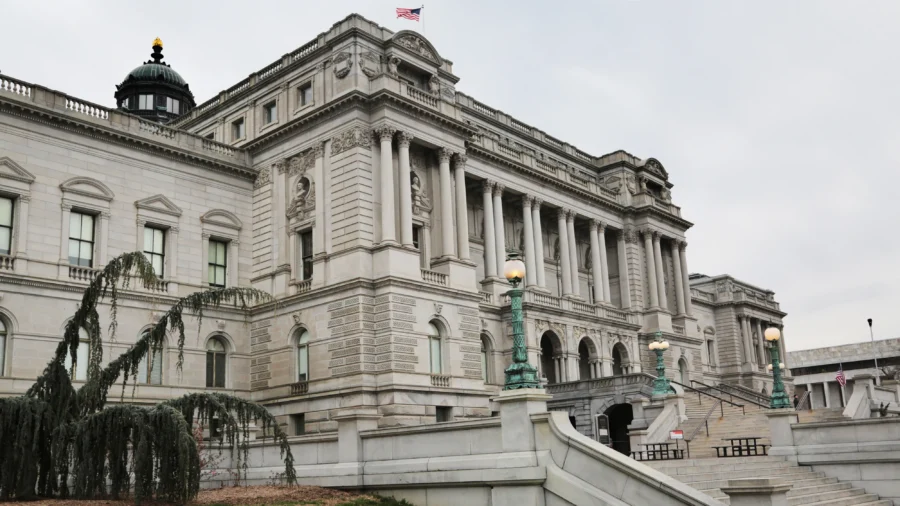
Earlier this year, the White House removed Shira Perlmutter from her position as director of the U.S. Copyright Office, which is housed in the Library of Congress and registers copyright claims.
U.S. District Judge Timothy Keller said in a July 30 opinion that Perlmutter, who also served as Register of Copyrights, could return to her job if she ultimately won in arguing that her removal was unlawful.
“The executive’s alleged blatant interference with the work of a Legislative Branch official, as she performs statutorily authorized duties to advise Congress, strikes us as a violation of the separation of powers that is significantly different in kind and in degree from the cases that have come before,” U.S. Circuit Judge Florence Pan said. She was joined by U.S. Circuit Judge J. Michelle Childs.
Pan had noted that Perlmutter’s purported dismissal came a day after she released a report on artificial intelligence that President Donald Trump disagreed with on substance.
U.S. Circuit Judge Justin Walker, who dissented from the decision, pointed to how the Supreme Court has issued many orders halting lower court blocks on Trump’s attempts to fire officials in his second term.
“Recently, repeatedly, and unequivocally, the Supreme Court has stayed lower-court injunctions that barred the president from removing officers exercising executive power,” Walker said in his dissent.
One of those cases involved Trump’s attempt to remove the heads of two labor boards.
The opinion in that case was relatively brief, and lower courts continued to block other removals, prompting a follow-up decision from the Supreme Court in July.
In a subsequent decision in September, the justices halted a lower court block on Trump’s attempt to remove a member of the Federal Trade Commission.
That case is awaiting more thorough analysis from the Supreme Court.
However, in both the labor boards and Consumer Product Safety Commission cases, the Supreme Court defended Trump’s firings by indicating that those officials exercised a certain degree of executive power.
So far, the top court’s decisions have been made on the emergency docket.
In those situations, the justices, as with Keller, weighed the potential for irreparable harm done to both parties without offering conclusions of law.
It weighed the harms by stating that the Trump administration faced a greater risk from a removed official continuing to exercise executive power when compared to the harm a wrongfully removed officer would face.
Pan had described Perlmutter as a legislative branch employee, but Walker was more skeptical.
He said that regardless of whether Perlmutter was best understood as a “Legislative Branch official,” the Library of Congress itself was housed within the executive branch.
He also indicated that the degree of executive power that Perlmutter exercised compared to others was irrelevant.
“Whether or not the Register of Copyrights exercises less executive power than do some other executive officers, Wilcox and Boyle cover any officer ‘exercising the executive power,'” he said, referring to the cases involving labor board members and the consumer safety commission.
Pan, meanwhile, said that the fact Perlmutter likely didn’t “exercise substantial executive power” was an unusual or extraordinary factor weighing in favor of her request for an injunction.
Beyond more preliminary appeals, questions about the degree of executive power that officials exercise will likely resurface when the court more thoroughly analyzes lawsuits over terminations.
The more “executive” power they exercise, the more likely it is that the president can remove them without congressional interference.