


A bipartisan group of lawmakers has introduced legislation to tighten export controls of key chipmaking equipment to China.
The proposed Multilateral Alignment of Technology Controls on Hardware (MATCH) Act was announced on late Thursday.
The measure seeks to prevent China from acquiring specialist semiconductor manufacturing tools that it cannot yet produce domestically. It also aims to create similar restrictions for companies in U.S.-allied countries.
In the House of Representatives, the bill is led by Rep. Michael Baumgartner (R-Wash.).
Companion legislation in the Senate is sponsored by Sens. Andy Kim (D-N.J.) and Pete Ricketts (R-Neb.).
The bill would impose country-wide bans on certain “chokepoint” technologies.
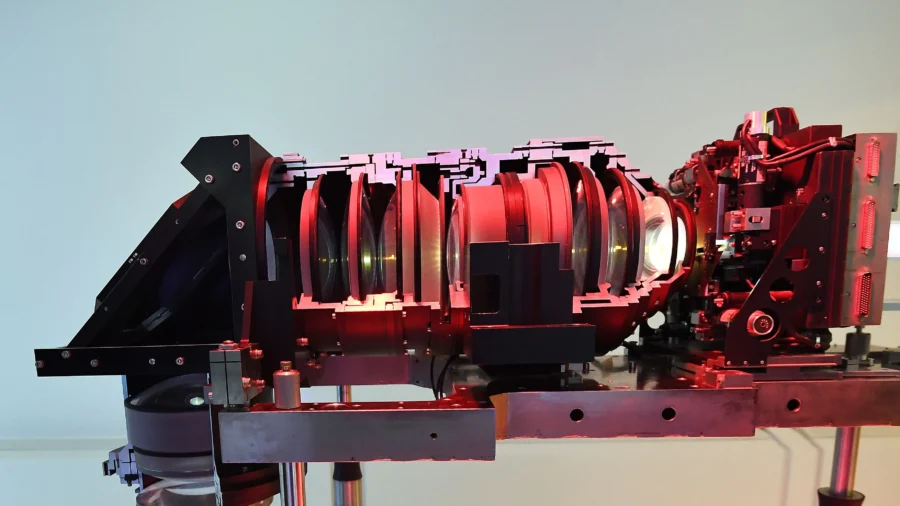
These include immersion deep ultraviolet (DUV) lithography machines used to etch microscopic circuits on silicon wafers for chip production. China still depends on imports for such advanced lithography equipment.
The restrictions would cover sales to any location in China, not only individual factories. Servicing and technical support for the equipment would also be prohibited under the new rules.
The legislation names five major Chinese semiconductor companies whose facilities would face tighter limits. These are SMIC, Hua Hong, Huawei, CXMT, and YMTC, including their subsidiaries.
The bill gives the U.S. government 150 days to work with allies such as the Netherlands and Japan on matching controls.
If allies do not adopt similar measures, the United States could apply unilateral restrictions. These could extend to foreign-made equipment that contains American technology.
Baumgartner said the MATCH Act would help America and its allies close existing gaps in export controls.
He added that the bill would defend America’s technological edge and protect supply chains for weapons and critical infrastructure.
Ricketts noted that semiconductor manufacturing equipment serves both civilian and military purposes. He said current rules have been too easy for China to bypass through front companies.
Existing U.S. export controls already ban the most advanced extreme ultraviolet machines from China. However, sales of older DUV equipment have continued in some cases.
China accounted for 33 percent of leading semiconductor manufacturing machine supplier ASML’s total sales in 2025, making it the Dutch company’s largest market that year.
ASML has forecast that China’s share will fall to around 20 percent in 2026.
A report by the House Select Committee on the Chinese Communist Party in October 2025 warned of remaining loopholes. The report said China spent 38 billion dollars on imported chipmaking equipment in 2024.
That amount equaled 39 percent of global revenue for the main tool suppliers.
The committee recommended broader bans on DUV immersion tools to slow China’s chip industry growth.
ASML said it would not comment on the proposed legislation.
The Dutch foreign ministry stated it does not comment on draft laws put forward by lawmakers in other countries.
The MATCH Act represents an effort by Congress to strengthen U.S. chip export policy.
If passed, it would shift from previous executive actions to a new law that requires the United States to seek coordinated rules with allies.
Reuters contributed to this report.
From The Epoch Times