


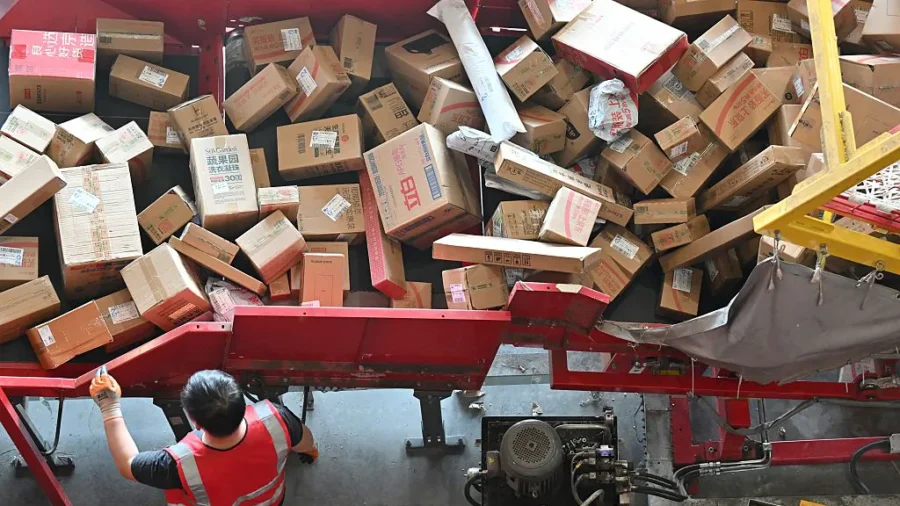
Amid economic downturn and consumption downgrade pressures, China’s biggest shopping season—Singles’ Day on Nov. 11—failed to ignite a shopping frenzy and instead invited consumers’ doubt the discounted products.
Singles’ Day was launched in 2009 by Chinese e-commerce giant Alibaba. Every year, online platforms and high-street stores across the country compete fiercely, offering hefty discounts and promotions to attract customers.
The events of recent years have all been notably sluggish, due to the mired property market, bleak job market, and deteriorated international trade environment.
Xu Zhen, a veteran capital markets expert on China, said some Chinese people are facing “survival pressures,” and domestic demand has shrunk dramatically. “This has caused retailer businesses to decline to varying degrees.”
In response, retailers have become more aggressive and kicked off this year's Singles' Day festival in the first half of October, making it the longest festival to date.
Major platforms like Alibaba and JD.com have not released total Singles' Day sales figures for several years.
Complicated Discounts
Consumers said some products are quietly marked up before the promotion, and in some cases, the final price is often higher than usual.A Hangzhou shopper, Mai, said: “The items I pre-added to my cart were getting more expensive at checkout.”
He said conditions like “discount thresholds,” “time limits,” and “category exclusions” make “horizontal price comparison nearly impossible.”
Huang also mentioned that some merchants charge loyal or high-end clients even more, while offering lower prices to shoppers who compare prices, but this tactic is hard for consumers to detect. “‘VIP benefits’ and ‘personalized recommendations’ might mean higher prices, but ‘a single user can’t compare multiple accounts at once,’” Huang said.
Consumer complaints on social media say: “Now buying something feels like solving a math problem—the rules are too messy.”
“Shopping is like passing one hurdle after another. After years of Singles’ Day, this is the first time I feel exhausted,” another said.