


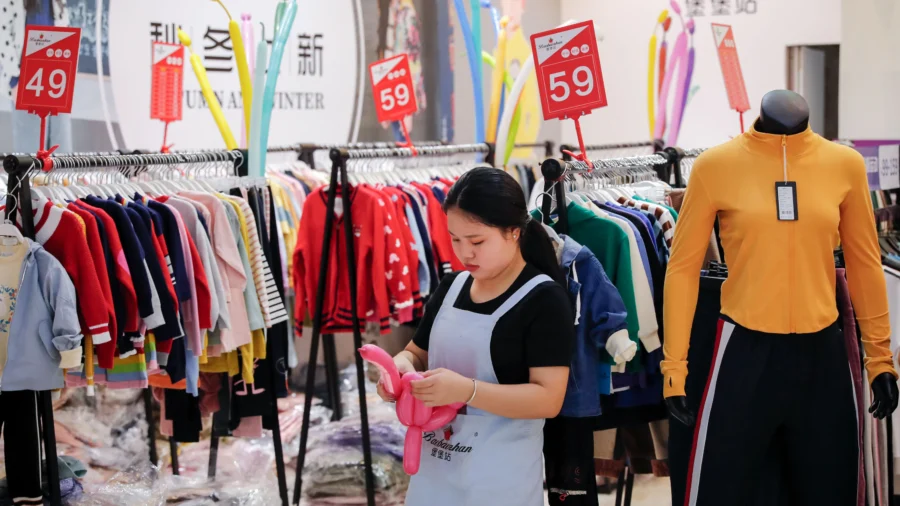
Chinese industrial production growth fell to a six-month low in May, while consumers eagerly purchased discounted home appliances and other goods through government-backed trade-in programs, according to data released Monday.
Data released earlier this month highlighted persistent economic difficulties in China, including subdued inflation and a slowdown in export growth, especially in direct shipments to the United States. While China's total exports increased by 4.8 percent in May, exports to the United States dropped sharply by 34.5 percent, the largest decline since February 2020.
The London agreement between the United States and China reinstated the trade terms established on May 12 in Geneva, where both nations agreed to reduce tariffs on each other's goods, previously escalated beyond 100 percent.
President Trump said that the trade truce results in a 55 percent tariff on Chinese exports to the United States, which, according to a White House official, includes the 25 percent levies imposed on Chinese imports during Trump's first term.
Though this agreement has temporarily eased U.S.-China trade tensions, both sides continue to use economic strategies to assert dominance and gain leverage.
"The U.S.-China trade truce was not enough to prevent a broader loss of economic momentum last month," said Zichun Huang, a China economist at Capital Economics. "With tariffs set to remain high, fiscal support waning and structural headwinds persisting, growth is likely to slow further this year."
However, China’s retail sales rose 6.4 percent, much quicker than a 5.1 percent increase in April and forecasts for a 5.0 percent expansion, marking the fastest growth since December 2023.
Robust retail sales were driven by heightened consumer spending during the Labor Day holiday and a government-backed trade-in program offering substantial discounts on new home appliances and other goods, aligning with the "618" shopping festival.
The "618" shopping festival, held annually around June 18 by Chinese e-commerce platforms, ignites a nationwide online shopping surge, comparable to Black Friday in the United States.
However, China’s consumer deflation is likely to persist due to subdued domestic demand.
"We find a general pattern that wherever there is stimulus, it works, like the home appliance sales; but wherever there is no stimulus, like the property development, it struggles," said Tianchen Xu, senior economist at the Economist Intelligence Unit.
"There are reasons for more caution going forward, especially regarding private consumption which could see a 'triple whammy' of tightening dining curbs on officials, the end of a front-loaded 618 shopping festival and the suspension of government consumer subsidies."