


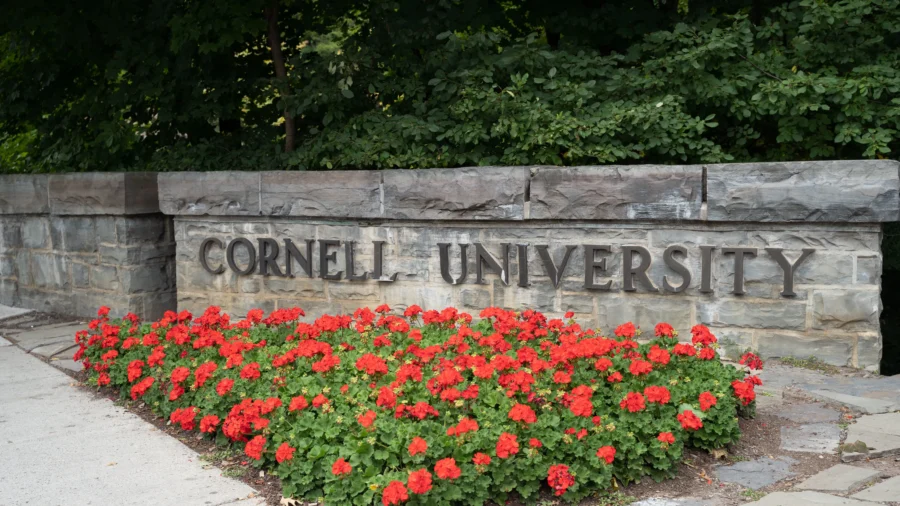
Under the agreement, Cornell President Michael Kotlikoff said the university will pay a $30 million fine to the federal government to end pending civil rights claims, though the institution is not admitting to any wrongdoing.
It will also commit $30 million for agricultural research aimed at building more successful and protective farms. All grants that were previously withheld have been unfrozen, and Cornell remains in good standing for future grant considerations.
Kotlikoff said Cornell maintains its independence for hiring, student admissions, and instruction, “without intrusive government monitoring or approvals,” though he is still required to regularly certify the school’s compliance with civil rights laws.
“The months of stop-work orders, grant terminations, and funding freezes have stalled cutting-edge research, upended lives and careers, and threatened the future of academic programs at Cornell. I am grateful for the dedication and resilience of the faculty, staff, and students who have found ways to continue moving critical work forward throughout these unprecedented events,” he said in a Nov. 7 letter to the campus community.
“With this resolution, Cornell looks forward to resuming the long and fruitful partnership with the federal government that has yielded, for so many years, so much progress and well-being for our nation and our world.”
In April, Cornell officials confirmed that the federal government was withholding $1 billion in grants to Cornell because of violations of federal law prohibiting discrimination based on race, color, or national origin in federally funded education programs.
At that time, Cornell officials indicated that the affected grants covered research into new materials for jet engines, propulsion systems, large-scale information networks, robotics, superconductors, and space and satellite communications, as well as cancer research.
Kotlikoff said research valued at about $250 million was disrupted by the freeze.
Trump previously issued an executive order prohibiting diversity, equity, and inclusion (DEI) activities on higher education campuses to include racial preferences in hiring and student admissions, mandatory diversity training, transgender ideology, and affinity groups by race, in accordance with existing civil rights laws and a 2003 U.S. Supreme Court decision that prohibits consideration of race in student admissions. He said the richest universities, which include Cornell University and all of the Ivy League schools, would be investigated.
Education Secretary Linda McMahon wrote on X: "The Trump Administration has secured another transformative commitment from an Ivy League institution to end divisive DEI policies. Thanks to this deal with Cornell and the ongoing work of DOJ, HHS, and the team at ED, U.S. universities are refocusing their attention on merit, rigor, and truth-seeking—not ideology. These reforms are a huge win in the fight to restore excellence to American higher education and make our schools the greatest in the world."