


Democratic senators took turns today advocating for why lawmakers should approve a hearing on a new war powers resolution.
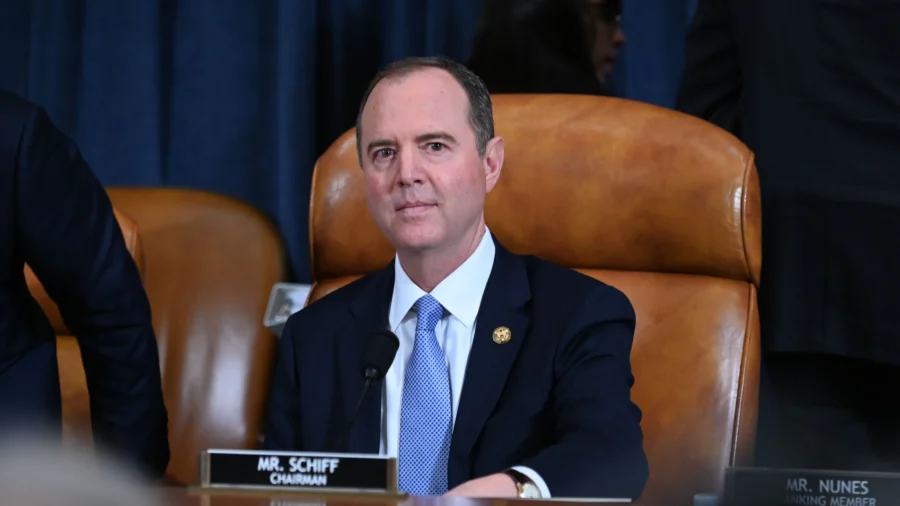
The Senate is currently voting on the latest war powers resolution introduced by Sen. Adam Schiff (D-Calif.).
If the procedural vote is successful, the resolution would coincide with the War Powers Act’s expiration date.
“Today's vote is simply to bring a resolution to the floor to discharge my resolution, SJ Res 184 from the Senate Foreign Relations Committee so that it can be debated by the Senate,” Schiff told his congressional colleagues. “That will happen well after the 60 day clock has expired.”
Trump informed Congress of the conflict on March 2.
House Speaker Mike Johnson (R-La.) told NBC on April 29 that the United States is not currently at war.
“I don’t think we have an active, kinetic military bombing, firing, or anything like that,” he said. “Right now, we are trying to broker peace. I would be very reluctant to get in front of the administration in the midst of these very sensitive negotiations, so we’ll have to see how that plays out.”
Operation Epic Fury stems from President Donald Trump pre-emptively striking Iran on Feb. 28, alongside Israeli Prime Minister Benjamin Netanyahu's Israeli Defense Forces.
The most recent peace proposal from Iran requires an end to the war and an end to the U.S. blockade in the Strait of Hormuz in exchange for Iran halting its maritime tolls through the channel while postponing discussions on its nuclear program.
“Some might argue that because we're not currently bombing Iran because there is a tentative ceasefire in place that somehow the War Powers Act no longer applies, that somehow the war powers clock stops ticking,” Schiff said. “But this is simply not true. We are still using our Navy to blockade Iran.”
Under the War Powers Resolution of 1973, the president is permitted to extend hostilities for an additional 30 days.
This is the sixth vote in 2026 on the Iran war powers resolution to limit U.S. military action in Iran. Five other attempts have failed mainly along party lines.
Iran has not given up their nuclear ambitions and still has thousands of missiles, according to Secretary of War Pete Hegseth, who defended Trump’s fiscal year 2027 budget request of $1.5 trillion before the House Armed Services Committee this week on April 29.
“We're rebuilding a military that the American people can be proud of, one that instills nothing less than unrelenting fear in our adversaries and the utmost confidence in our allies,” Hegseth said. “We fight to win in every scenario.”