


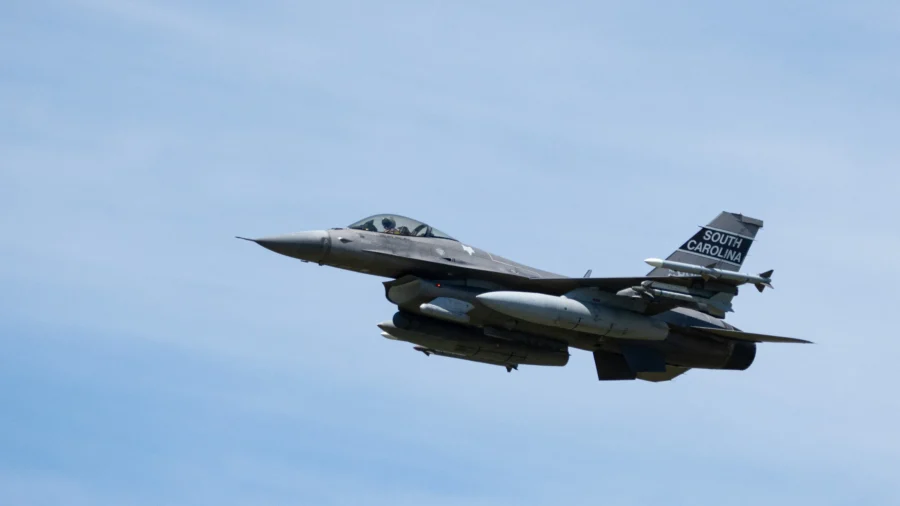
Fighter jets were scrambled Saturday afternoon over Palm Beach after a civilian aircraft strayed into restricted airspace protecting the Mar-a-Lago area.
The unauthorized plane entered the temporary flight restriction zone around 4:20 p.m. ET and was quickly escorted out by a F-16 fighter jet, the North American Aerospace Defense Command (NORAD) said Saturday. During the interception, the military jets used flares to signal the pilot about the violation.
Residents in the area may have seen the flares light up the sky, but officials say there's no cause for concern.
"The flares, which may have been visible to the public, are used with the highest regard for safety, burn out quickly and completely, and pose no danger to people on the ground," officials said in a statement.
The first violation happened around 11:05 a.m. ET, followed by the other incidents at 12:10 p.m. ET and 12:50 p.m. ET. All three planes were safely guided out of the restricted area, with flares deployed during two of those intercepts.
The repeated violations have prompted military officials to issue stern reminders to pilots about flight safety procedures.
Since President Donald Trump's inauguration in January, NORAD has tracked over 40 aircraft violating temporary flight restrictions in the West Palm Beach area.
The Federal Aviation Administration requires pilots to check all Notices to Airmen before every flight and follow temporary flight restriction procedures. For pilots who do accidentally stray into restricted airspace, NORAD provides clear instructions:
"Should NORAD aircraft intercept a general aviation aircraft, the pilot should immediately come up on frequency 121.5 or 243.0 and turn around to reverse course until receiving additional instructions on one of those frequencies," the agency said.
Pilots can find the latest temporary flight restriction information through the FAA's official TFR website. The military agency said that it will continue to respond to violations of restricted airspace to protect national security and aviation safety.
NORAD uses a network of radar systems, satellites, and fighter jets to monitor airspace over the United States and Canada.
Military officials are encouraging all pilots to avoid putting themselves in a position where they'll need an armed military escort out of restricted airspace.
"If required, NORAD jets will respond to aircraft violating the TFR and take the necessary action to gain compliance, a scenario we encourage all pilots to avoid," they said.