


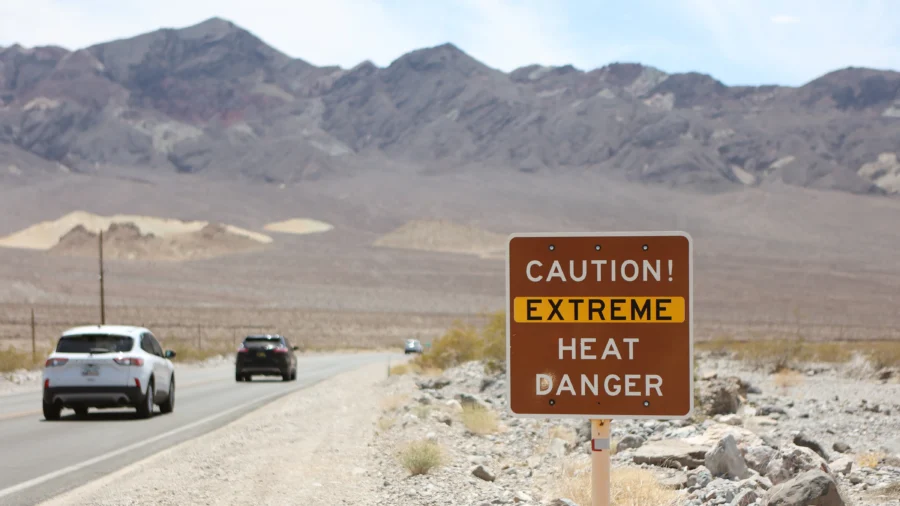
Pierre Michel Formosa, 68, was traveling with a companion—also a French national—on West Side Road on Aug. 17, when their vehicle got stuck in mud near Queen of Sheba Mine Road. With no other vehicles nearby, the two men set out on foot across the salt flats toward Badwater Road in search of help. Temperatures that day reached 116 degrees Fahrenheit, according to the park service.
After roughly 1.3 miles of walking, Formosa was no longer able to continue. His companion kept moving toward Badwater Road, where he was eventually picked up by a passing motorist and brought to the Furnace Creek Visitor Center, arriving shortly after 2 p.m. to report the emergency.
Park rangers and an Inyo County sheriff's deputy launched a search and rescue effort at about 2:13 p.m. A California Highway Patrol helicopter joined the search and found Formosa later that afternoon about 1.5 miles from Badwater Road. He was pronounced dead at the scene. The Inyo County coroner's office will determine the official cause and manner of death.
Death Valley National Park Superintendent Mike Reynolds expressed the park's condolences to the family and friends of the tourist who died.
"This is a heartbreaking reminder of how quickly conditions here can turn dangerous," he said. "Death Valley is an extraordinary place, but its heat, distances, and remoteness can be dangerous, regardless of experience. We're grateful to everyone who took part in the search, and our thoughts are with his loved ones."
The agency noted that Death Valley spans vast, isolated terrain where cellphone coverage is often weak or absent and rescue crews can take hours to reach stranded visitors. Officials urged travelers to map out routes beforehand and check current road and weather conditions, and to tell someone else their itinerary and expected return time.
The park also recommends visitors carry at least one gallon of water per person for every day of travel, plus a reserve supply in case of vehicle trouble. Officials stressed that backcountry roads frequently demand high-clearance or four-wheel-drive vehicles because conditions can shift abruptly. The National Park Service also advised bringing a satellite communicator or emergency beacon for areas without cell coverage.
If a vehicle breaks down, staying with it is typically the safer option since it offers shade and is easier for rescuers to spot than a lone hiker in open terrain. During extreme heat, visitors should stick to paved roads and skip hikes at lower elevations.
The park service announced in Sept. 2024 that the park had recorded its hottest meteorological summer on record that year, with an average 24-hour temperature of 104.5 degrees Fahrenheit, and that Furnace Creek logged nine consecutive days at or above 125 degrees that July. Rangers responded to several life-threatening, heat-related incidents that summer, including two deaths in which heat was a contributing factor.