


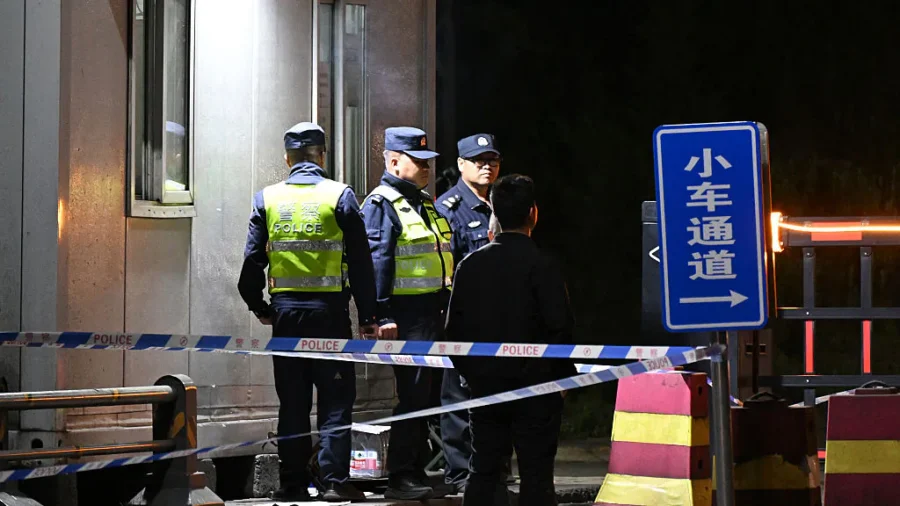
A catastrophic gas explosion in a coal mine in China has claimed at least 82 lives, marking China’s deadliest mining disaster in 17 years.
The blast occurred at about 7:30 p.m. local time on May 22 at the Liushenyu coal mine in the northern province of Shanxi. A total of 247 workers were underground at the time; the accident left 82 dead, 128 injured, and two others missing, reported the state-run Xinhua news agency.
The incident has triggered widespread public outrage over the reliability of official data, following a series of fluctuations in the reported casualty count within a 24-hour window.
In the immediate aftermath of the Friday night blast, local authorities issued a Saturday morning briefing stating that of the 247 miners on shift, 201 had “safely surfaced, eight were confirmed dead, and only 38 remained trapped.”
However, following high-level directives from Beijing—including orders from Chinese leader Xi Jinping to determine the cause and enforce strict accountability—the official death toll underwent a series of rapid increases.
On Saturday afternoon, the state-reported figures climbed from eight to over 50, then to 73, and eventually to 82. At around 2:00 p.m., state broadcaster CCTV reported that the death toll had reached 90.
By Saturday evening, local officials adjusted the narrative once more at a formal press conference, reversing the confirmed fatalities back to 82, alongside 128 hospitalisations and two missing.
Public Backlash
The shifting figures have fueled skepticism among the public, with many accusing local officials and the mine operator of cover-up or delayed reporting."It is hard not to question: Was there a delayed report, a cover-up, or distorted data in the initial briefing? The public has a right to know why only eight deaths were reported at first, only for that number to suddenly jump to 90. What exactly happened in between?"
Hundreds of thousands of netizens expressed shock at the sharp increase in the death toll and suspected that the initial figures were falsified.
One netizen said, “I want to know what exactly happened with that figure of '201 miners safely surfacing'—it makes absolutely no sense.”
Another person replied: “To put it mildly, they were talking nonsense; to put it bluntly, it was a cover-up.”
One person wrote, “Statistics must be treated with total seriousness.”
Severe Safety Violations Disclosed
Operated by the Tongzhou Group, the Liushenyu Coal Mine has a history of safety infractions. China’s National Mine Safety Administration designated the facility a "major hazard" in 2024, and regulatory records indicate the mine faced two subsequent administrative penalties in 2025 for recurring safety violations.Following the disaster, authorities placed responsible executives at Tongzhou Group under "restrictive measures" and ordered an immediate suspension of operations at all four of the company's coal mines in Shanxi Province.
Chinese media reports also uncovered multiple severe safety violations at the site.
Under standard protocols, miners must undergo facial recognition, pass through security gates, carry personnel location cards, and log their entry before going underground.
However, investigators found a massive discrepancy in the data: while the digital entry registry recorded only 124 personnel, 247 miners were actually underground when the blast occurred. This gap has prompted netizens to question how such a vast mismatch could occur under supposedly strict digital logging protocols.
Compounding the crisis, the structural blueprints that Liushenyu Coal Mine submitted to regulators did not match the actual underground layouts, creating more difficulties for emergency rescue teams attempting to navigate the shafts.
A report by China National Radio highlighted critical equipment failures during the evacuation. A surviving miner interviewed on Sunday said that his portable, self-contained self-rescuer (oxygen apparatus) ran out of oxygen after just seven to eight minutes of use. Under China’s Coal Mine Safety Regulations, such isolated self-rescuers must provide a protective duration of no less than 30 minutes.
The revelation of these safety failures has sparked widespread condemnation across Chinese social media platforms. On Weibo, one user said:
"This accident not only exposes that routine local supervision has become a mere formality and that the cost of violations is far too low, but it is also why enterprises repeatedly break the rules." Another user added:
"This is absolutely heartbreaking—so many precious lives lost. When will we finally, truly put safety first?"