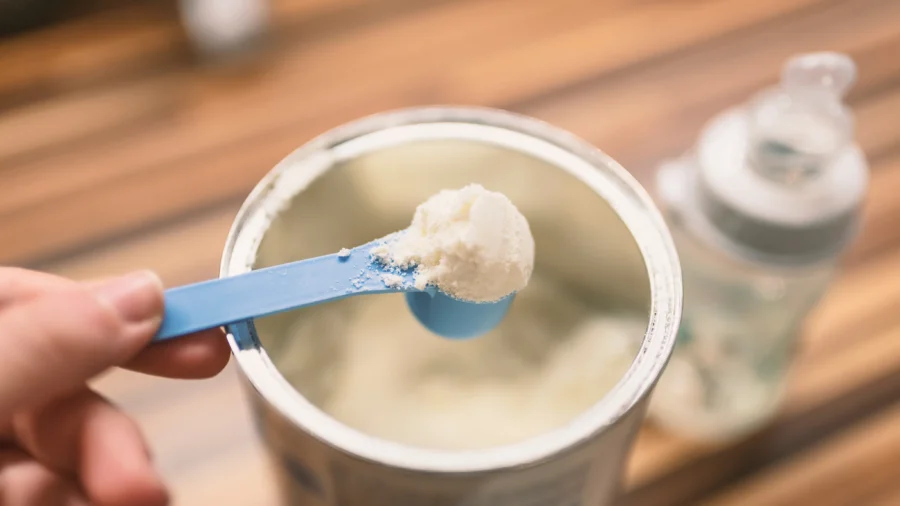
A contamination scare involving a toxin in a baby formula ingredient has triggered recalls spanning more than 60 countries and prompted French authorities to open investigations into the deaths of two infants.
The widening crisis centers on a bacterial toxin potentially found in arachidonic acid (ARA) oil, a fatty acid produced by a Chinese supplier, added to infant formula. The presence of the toxin cereulide can cause severe vomiting and other digestive upsets.
Nestlé
said it began reviewing its supply chain after “the detection of a quality issue in an ingredient provided by a leading supplier,” and has launched tests on all ARA oil and related oil mixes used in potentially affected infant formulas, according to a company advisory.
The batches subject to recall account for “significantly less than 0.5 percent of annual group sales” and the financial impact “is not expected to be significant,” the company said in that notice.
Cereulide is a
toxin of bacterial origin produced by certain strains of Bacillus cereus and can cause foodborne illness. The toxin is “highly heat stable,” meaning it is unlikely to be destroyed by boiling water or typical food preparation, including the making of baby bottles, according to descriptions from the
United Kingdom’s Food Standards Agency and
Ireland’s Food Safety Authority.
The main symptom parents should watch for is severe vomiting occurring 30 minutes to six hours after exposure, with possible secondary symptoms such as diarrhea and unusual lethargy, according to Nestlé’s advisory.
French authorities say the problem was first detected in December, when Nestlé’s internal monitoring found cereulide in a batch of unmarketed infant formula produced at a plant in the Netherlands, according to
joint statements on Jan. 22 from the French Ministry of Health, Families, Autonomy and Persons with Disabilities and the Ministry of Agriculture and Food Sovereignty. That discovery led to a first round of recalls of other batches made at the same facility and considered at risk, those ministries said.
Subsequent investigations, supervised by regulators, traced the contamination to an ARA-rich oil produced by a Chinese supplier, according to the French agriculture and health ministries. The same raw material is at the heart of a broader incident initially identified in China and linked to Jiabiyou, known internationally as Cabio Biotech, a key ARA supplier for Nestlé and a market leader in China, French newspaper
Le Monde reported on Jan. 23.
Le Monde reported that Cabio Biotech came under intense scrutiny from regulators and investors after Nestlé disclosed the recall on Jan. 6, saying a liquid ARA raw material from a “major supplier” posed a potential health risk including vomiting and diarrhea. Cabio Biotech’s share price fell 12.8 percent by Jan. 8, while rival supplier DSM-Firmenich publicly stated that its products were not affected.
The same Chinese-produced oil has also prompted
recalls at other manufacturers. French dairy group
Lactalis said its nutrition unit was voluntarily recalling six batches of Picot brand infant milk in 18 countries because of cereulide detected in an ingredient sourced from a supplier. Those batches were distributed in markets including France, Australia, Chile, China, Mexico, Greece, and Taiwan, local media reported.
Danone, another major formula maker, announced on Jan. 23 that it would withdraw a “very limited number” of specific batches from targeted markets, mainly in Europe, even as its “routine controls and additional targeted analyses” confirmed that its products “are safe and fully compliant with all applicable safety regulations,” according to a company
press release. Danone said the precautionary move followed some countries’ decisions to update food safety guidance.
Overall, Nestlé’s recall has affected products in over 60 countries. National
recall notices have been issued across much of Europe—including France, Germany, Italy, Austria, Denmark, Finland, Ireland, and Switzerland—and in Latin America, Africa, the Middle East, and Asia-Pacific, including Argentina, Brazil, Chile, Mexico, Peru, Australia, China, Hong Kong, Singapore, South Africa, Taiwan, and Vietnam.
French authorities say all infant formula manufacturers worldwide that have used ARA-rich oil from the implicated supplier must conduct risk analyses to assess the safety of every batch placed on the market. The ministries said that “at this stage, no causal link has been identified between the consumption of the infant milk concerned and the occurrence of symptoms in infants,” France’s health ministry said in a
statement, translated from French.
Prosecutors in France have opened two investigations into the recent deaths of infants who consumed recalled Nestlé products.
“We are thinking of all those affected and express our sincerest condolences to the families who are grieving,” Nestlé
said, while noting that “at this stage nothing indicates any link between these tragic events and the consumption of our products,” according to the company’s advisory.
Nestlé said it is working “in close alignment with authorities” in affected countries to remove potentially contaminated products and is “committed to listening attentively to parents and caregivers to treat each individual inquiry with care.”
Consumers are urged to check batch numbers on packaging against recall lists on local Nestlé or brand websites, stop using any impacted products immediately, and follow instructions for refunds.
Regulators in France advised parents who bought recalled formula not to use it and to consult a doctor if infants experience persistent digestive problems after consumption.
Reuters contributed to this report.