

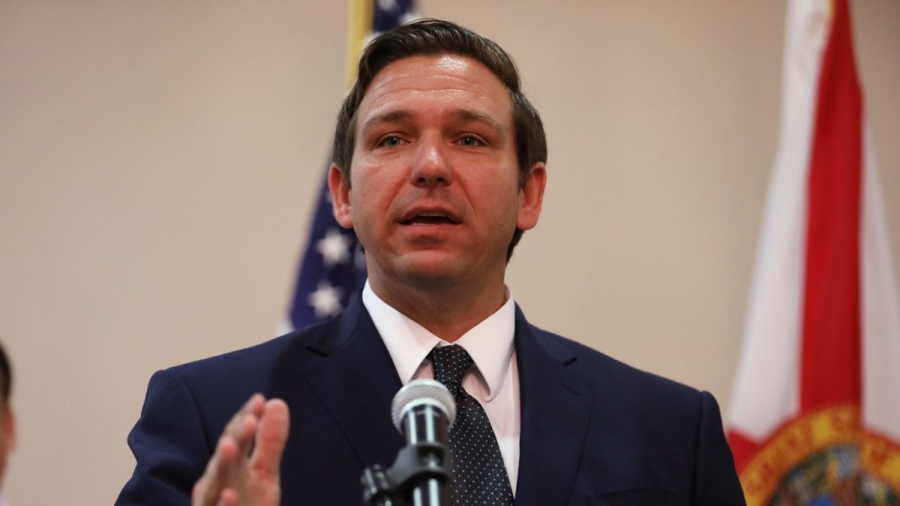
Governor Ron DeSantis signed a heavily contended bill that bans so-called sanctuary cities in the state of Florida on Friday. He did so, uttering the words, “We’re delivering on the promises that we made to the people of Florida.”
Sanctuary cities are cities that have decided to deviate from federal immigration legislation, by not complying with immigration detainers and serve as a sanctuary haven for undocumented immigrants. They have long been an issue of debate between left-leaning cities and more conservative Republican-backed regional areas.
Florida, the predominantly conservative panhandle, has none, and DeSantis, who vowed in his 2018 election campaign to inhibit their formation in the state, is sticking by his promise.
When the bill takes effect next month, local governments will be obliged to "use their best efforts to support the enforcement of federal immigration law." This means they are expected to fully comply with federal immigration detainers and honor federal immigration authorities requests for any available information of undocumented immigrants in custody.
The ceremony took place during an event in a packed Okaloosa County. DeSantis was joined by Sen. Joe Gruters, a Sarasota Republican who doubles as chairman of the Republican Party of Florida, and Rep. Cord Byrd (R-Neptune Beach) and by U.S. Rep. Matt Gaetz, a Northwest Florida Republican who is a close ally of the governor, as well as the House and Senate sponsors of the measures.
“I said we were going to do certain things, and I’m happy to report after having just one legislative session under our belt we’re delivering on the promises we made to the people of Florida,” DeSantis said to the enthusiastic audience.
“This is about the rule of law; It’s also about public safety,” he added.
“The room was busting at the seams. When was the last time you’ve seen 300-plus people for a bill signing?” Gruters remarked of the broad support for DeSantis and Bill (S.B. 168).
Opponents criticized DeSantis for signing the measure, arguing it will lead to an increased number of illegal immigrants in detention and needing deportation. They said that some of these illegal aliens include people stopped by police for minor offenses.
The policy may provoke a legal battle to challenge its constitutionality, as contended by the Southern Poverty Law Center, which issued a statement on Friday alleging that the measure violates the U.S. Constitution’s Fourth Amendment ban on unreasonable seizure.