


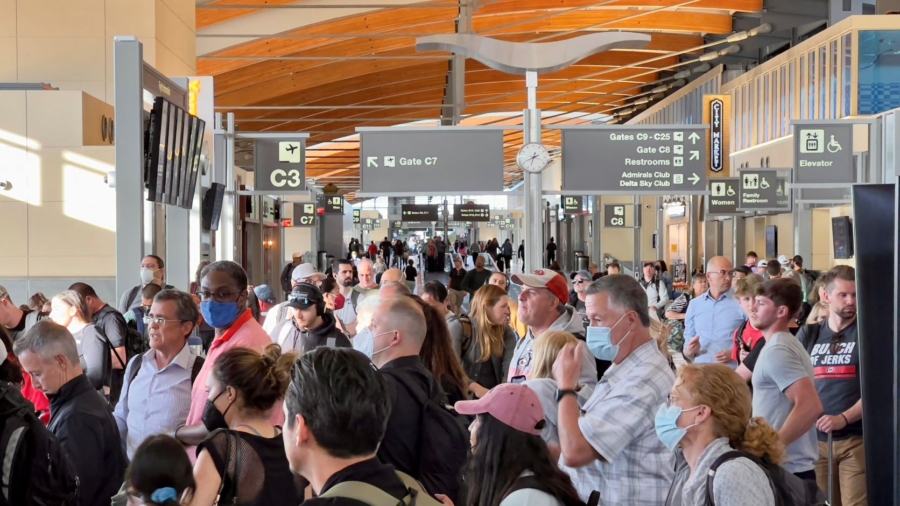
Health officials are urging travelers who visited Raleigh-Durham International Airport last week to be aware of potential measles exposure. State public health authorities confirmed that an infected passenger passed through Terminal 2 on Dec. 10. This incident occurred amid the nation's largest surge in confirmed measles cases in more than thirty years.
The traveler, who was visiting from out of state, arrived at Terminal 2 for an early morning flight on Dec. 10, according to officials. Anyone who was in the terminal between 4 and 8 a.m. that day should monitor for measles symptoms through Jan. 1 and reach out to their local health department with any questions or concerns.
Passengers who shared flights with the infected individual are being notified directly, according to DHHS.
“Measles is a highly contagious disease and it spreads quickly in children and adults who are not vaccinated,” said State Epidemiologist Zack Moore, M.D., MPH, in the DHHS release. “All North Carolinians should ensure that they and their families are up to date on their MMR vaccine.”
DHHS said that there is no ongoing health risk at Raleigh-Durham International Airport, and public health authorities stressed that the risk remains low for most travelers.
Measles is a highly contagious respiratory virus that spreads through the air when an infected person coughs or sneezes. The virus can remain suspended in the air for up to two hours after the person has left the area.
Symptoms typically develop 7 to 14 days after exposure and may include fever, cough, runny nose, red eyes, and a characteristic blotchy rash.
Officials stressed that vaccination remains the most effective defense against serious illness and community outbreaks.