


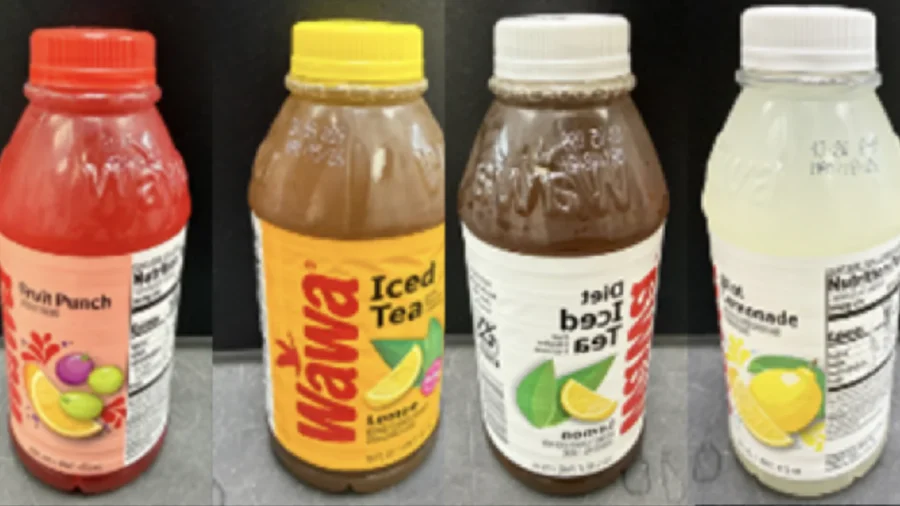
Wawa has issued a recall of several of its bottled beverages sold in Pennsylvania, Delaware, Maryland, New Jersey, and Virginia after discovering that some may contain an undeclared milk allergen.
The recall covers 16-ounce pints of Wawa Iced Tea Lemon, Wawa Iced Tea Diet Lemon, Wawa Diet Lemonade, and Wawa Fruit Punch. The company said the products, produced by the Wawa Beverage Company, were distributed to a limited number of stores before the issue was discovered.
According to the FDA, people with milk allergies are at risk of experiencing “serious or life-threatening allergic reactions” if they consume any of the affected drinks. Wawa said it has already removed and disposed of the products from shelves in the impacted stores.
The recall was initiated after the company found and corrected what it described as “a temporary equipment issue” that may have led to traces of milk left in products that were not labeled as containing it. No illnesses have been reported so far.
- Wawa Iced Tea Lemon (16 oz), UPC 726191018425, with a code date of May 15, 2026, sold in 123 stores across Delaware, Maryland, New Jersey, Pennsylvania, and Virginia.
- Wawa Iced Tea Diet Lemon (16 oz), UPC 726191018548, code date May 18, 2026, sold in eight stores in New Jersey and Pennsylvania.
- Wawa Diet Lemonade (16 oz), UPC 726191055901, code date May 18, 2026, sold in 12 stores in Delaware and New Jersey.
- Wawa Fruit Punch (16 oz), UPC 726191018432, code date May 19, 2026, sold in 53 stores across Delaware, Maryland, New Jersey, Pennsylvania, and Virginia.
How the Immune System Could React
Milk allergy, which triggers the immune system to mistakenly identify proteins found in milk as harmful, can lead to symptoms such as wheezing, hives, vomiting, and digestive issues—sometimes escalating to anaphylaxis, a life-threatening reaction that restricts breathing and requires emergency medical treatment, according to the Mayo Clinic.The condition, one of the most common food allergies in children, occurs when the body reacts to milk proteins like casein or whey. Unlike lactose intolerance, a milk allergy involves the immune system and must be managed through complete avoidance of milk and milk-based products.