


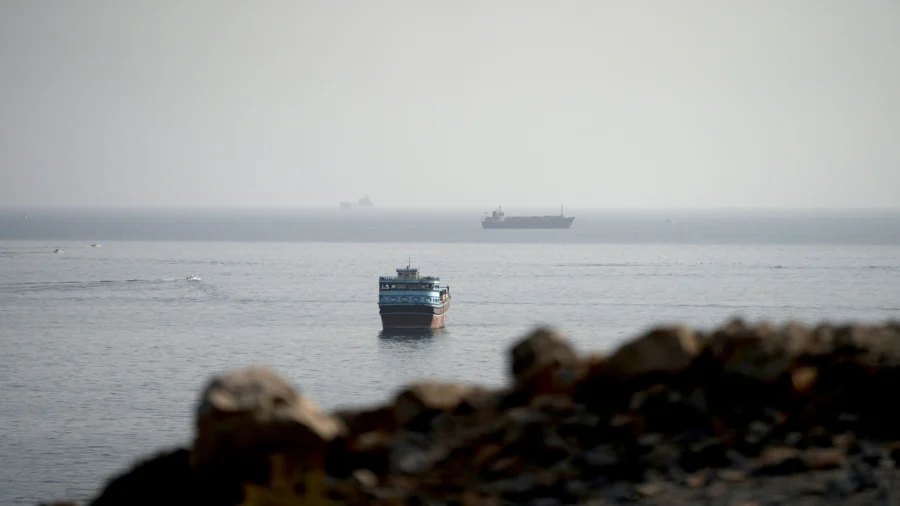
DUBAI/WASHINGTON/CAIRO—Iran said on Sunday that a deal with Oman defining new shipping lanes in the Strait of Hormuz was in its final stages but reiterated that the waterway would only reopen once the United States met other conditions.
Iranian Foreign Minister Abbas Araqchi said on Sunday an agreement on the strait that lies between the two countries was in the "final stages" but repeated comments made on Saturday that it would not reopen it unless other conditions were met.
The agreement would set out the new shipping lanes to be used once the U.S. fulfills those conditions and the strait is reopened, Iran's Mehr news agency quoted him as saying.
Iran Seeks US Compensation and End to Sanctions
The United States began air strikes on Iran in late February saying it aimed to ensure the Islamic Republic could not acquire nuclear weapons or threaten the region with missiles or proxies.It agreed a ceasefire with Iran in June, but reimposed a blockade on Iranian shipping in the Gulf in July, which Tehran said was a violation of the truce that had already broken down.
The latest status of the agreement was not clear and Iran's response suggested other factors would also come into play.
Araqchi said reopening the strait would depend on conditions including U.S. compensation to Iran for its widespread attacks.
The secretary of Iran's top national security body, Mohammad Baqer Zolqadr, also listed ending U.S. threats against Iran, stopping aggression against Iran and its Lebanese, Palestinian, Yemeni and Iraqi allies, lifting a blockade and sanctions on Iran and freeing Iranian assets.
Ultimate decision-making in Iran rests with the Supreme Leader Mojtaba Khamenei, who has not been seen in public since an air strike killed his father and predecessor on Feb. 28, the first day of U.S.–Israeli air strikes on Iran.
State media said on Sunday that President Masoud Pezeshkian had met Khamenei in late July and a paramilitary leader promised footage of the supreme leader, who was reportedly injured in the strike that killed his father, out in public.
Houthis Attack Saudi Refinery
Iranian strikes on Strait of Hormuz shipping have been coupled with increased attacks by its Yemen-based allies, the Houthis, who have targeted ships at another oil chokepoint on the other side of the Arabian Peninsula between the Red Sea and Gulf of Aden.The Houthis also declared a naval blockade against Saudi Arabia in the Red Sea last month in response to what they said was a Saudi siege on them in Yemen, an allegation denied by Riyadh, which backs Yemen's internationally recognized government.
The group said they had attacked Saudi Aramco's Jazan refinery on Sunday, two days after the kingdom signed a defense pact with Sunni Muslim allies Turkey and Pakistan in response to growing regional instability from the U.S.–Israeli war on Shi'ite Iran.
The Saudi energy ministry said a fire had broken out at the refinery but was later extinguished with no injuries and authorities were dealing with the incident, without giving a cause.
The Houthis used a drone to target the refinery, military spokesperson Yahya Saree posted on X. They had struck Aramco sites before in Jazan, which processes 400,000 barrels of crude oil per day in southwestern Saudi Arabia.
It was not clear whether or how either Pakistan or Turkey would join in any Saudi response to the latest attack.
Turkish Foreign Minister Hakan Fidan said the new alliance was not directed against Iran or any other country, but rather served as a general pledge to support security. The allies would decide through consultations what degree, form, and format of support they would ask for in the event of an attack, he said.