

ISIS Commander Known as 'Prince of Battles' Captured

Published: 2/27/2019, 7:21:51 AM EST
ISIS Commander Known as 'Prince of Battles' Captured
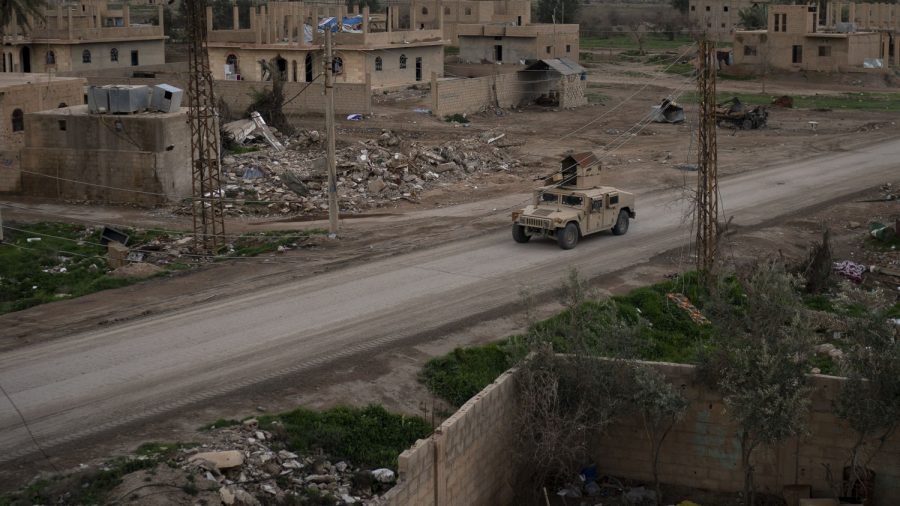
A Humvee drives in a village recently retaken from ISIS by U.S.-backed Syrian Democratic Forces (SDF) near Baghouz, Syria, on Feb. 17, 2019. (Felipe Dana/AP)

An ISIS commander known as the "Prince of Battles" was captured by forces in Iraq.

Iraqi forces arrested the high-profile commander during an operation on Feb. 24 in Mosul.

"The so-called Islamic State’s prince of battles was apprehended in Rabia district, west of Mosul, as he has just returned from Syria, where he escaped after the liberation of Iraqi territories from the terrorist group," the Iraqi Military Intelligence Directorate stated, reported the Alghad Press, according to Iraqi News.

The terrorist was given the code name of "Prince of Battles" because of how many battles he'd been involved in with Iraqi forces.

The capture comes as the Islamist terror group gets hemmed in by United States, Iraqi, Kurdish, and other forces. ISIS has been largely decimated, with continued losses in recent months.

The group's last holdout in eastern Syria was on the verge of defeat in mid-February. Civilians have been fleeing parts of Syria, with some ISIS terrorists trying to sneak out among them.

Khatib Othman, a Syrian defense fighter, said that fighters are biding their time before hitting the terrorists holed up in the small town of Baghouz.

“We want to take revenge. We will not let the blood of our martyrs go to waste,” Othman said. “We are waiting for the civilians to go out, and we will go in and attack. It is a matter of days. They are under siege, no food or no water. They are encircled from four sides. They have to give up.”

ISIS Terrorist Seen in Execution Videos Reportedly Killed

An ISIS terrorist who was seen beheading a foreigner in 2016 reportedly died in Syria amid a battle with U.S.-backed forces.
Muhammad Saifuddin, also known as Abu Walid and Mohammed Karim Yusop Faiz, was confirmed dead by police and family members this week, reported the Daily Mail. He originally hailed from Indonesia.

Saifuddin was killed in eastern Deir Ezzor province in Syria, where a coalition of forces is trying to take back the last ISIS-held area in the country.

“Abu Walid (Saifuddin) was a veteran terrorist. In Syria, he was known as an executioner and he has influence and a big role among Indonesian militants in Syria. We hope the death of Abu Walid will demoralize militants in Syria and at home,” Indonesian National Police spokesman Dedi Prasetyo said, according to The Australian newspaper.

He added, “He was killed by shrapnel from a Syrian forces tank in the battle.”

Muinudinillah Basri, his brother, said the family learned of his death via an instant messaging app, saying, “There was a photo of his body and I can recognize it,” the Mail reported.

His family said they haven’t heard from him since he went to Syria to join the terrorist group.

The 40-year-old Saifuddin was also a recruiter for ISIS and appeared in videos for the terrorist organization.

In one video, he is seen with two other terrorists killing three prisoners who were clad in orange jumpsuits. The prisoners were forced to kneel before they were killed.
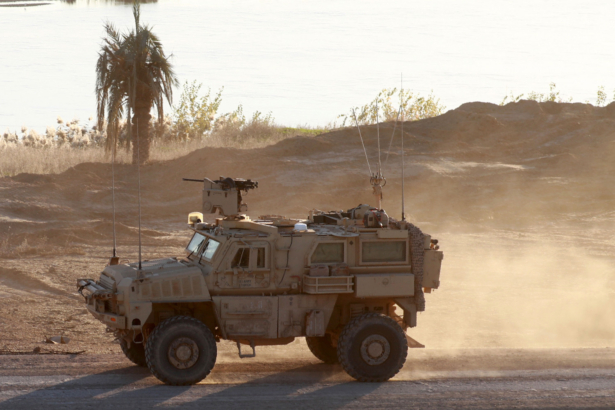
A U.S. army vehicle supporting Syrian Democratic Forces (SDF) in Hajin, Deir Ezzor Province, eastern Syria, on Dec. 15, 2018. Kurdish-led forces seized ISIS's main hub from Hajin on Dec. 14, 2018. (Delil Souleiman/AFP/Getty Images)
A U.S. army vehicle supporting Syrian Democratic Forces (SDF) in Hajin, Deir Ezzor Province, eastern Syria, on Dec. 15, 2018. Kurdish-led forces seized ISIS's main hub from Hajin on Dec. 14, 2018. Delil Souleiman/AFP/Getty Images
His death, according to terrorism analyst Adhe Bhakti, should serve as a major blow to ISIS and Indonesian terrorists.

“Indonesian fighters in Syria have lost one of their last remaining figureheads and for aspiring jihadists back home, they lost a key recruiter and a role model,” Bhakti told The Australian.

“They are starting to feel the heat at home. They are closely monitored both online and off, hampering their ability to get together and plot an attack and were thinking about going to Syria,” Bakhti said. “But Abu Walid’s death means they have lost another channel to get to Syria and it makes them think twice about going. His death will seriously demoralize them.”

Epoch Times reporter Jack Phillips contributed to this report.