


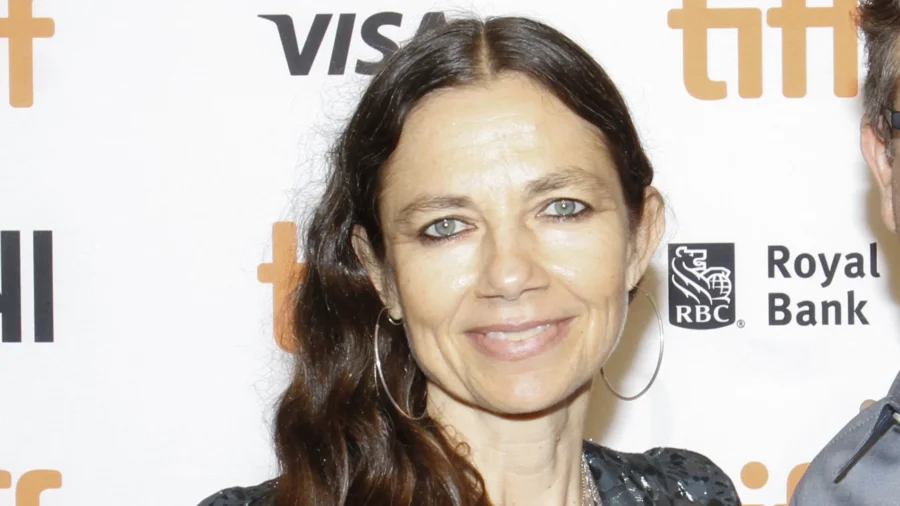
Actress and filmmaker Justine Bateman knocked the idea of using artificial intelligence (AI) in films.
This comes after Bateman said earlier this year that the idea of an actor licensing their voice, appearance, or physical performance for AI remixing was “quite soul sucking” and removes purpose for an actor.
Bateman, widely regarded as one of the entertainment industry's most vocal critics of AI in film, has drawn a stark distinction between genuine human creativity and artificial imitation. Generative AI is when new content, like text, images, music, code, and video, is created by analyzing massive amounts of existing data.
"It was clear, to me, over two years ago, that AI was going to be part of the demise of our business," Batemen said in a recent Zoom call. She said that there are other factors, but AI is the “nail in the coffin.”
She compared generative AI to a blender that digests decades of films and then spits out content. “It’s not generating anything new,” she said, calling AI-driven output “basically vomit” and theft.
Opposing Digital Replacement
In a mid-2025 CNBC interview, Bateman was asked if she'd consider allowing her work to be remixed with AI for potential royalty income. Bateman said it would never be of interest to her, “I think it’s quite soul sucking to do that sort of thing”.She said as an actor, “If you love acting, all you have is your voice, how you look, and the way your body moves. If you just licensed that out, then it’s like you’ve given away your entire purpose.”
Over the past two years, Bateman has repeatedly argued that generative AI, from de-aging tools to digital “actors,” threatens the industry at its foundation. She once warned in October 2024 that AI could burn down the business, eliminating jobs for actors, crews, writers, and the entire structure would collapse.
Bateman also launched Credo 23, a nonprofit that awards a “non-AI” stamp to films and series that rely solely on human creators. “Films and series are Art Forms,” states the Credo 23 About webpage. “We are committed to filmmakers who reflect that in their work. With the increasing proliferation of generative AI video, we differentiate ourselves by making very human, very raw, very real films/series that respect the process of filmmaking.”
To earn the Credo 23 stamp, filmmakers must ensure that their project is entirely free of AI involvement: no artificial intelligence can be used at any stage—writing, directing, acting, or post-production. Every creative element must be “100 percent human.” Only minimal CGI or VFX are permitted, limited to minor fixes or effects. The film must also be a union film. The non-profit is also putting on a film festival in Los Angeles from March 27-29, 2026.