


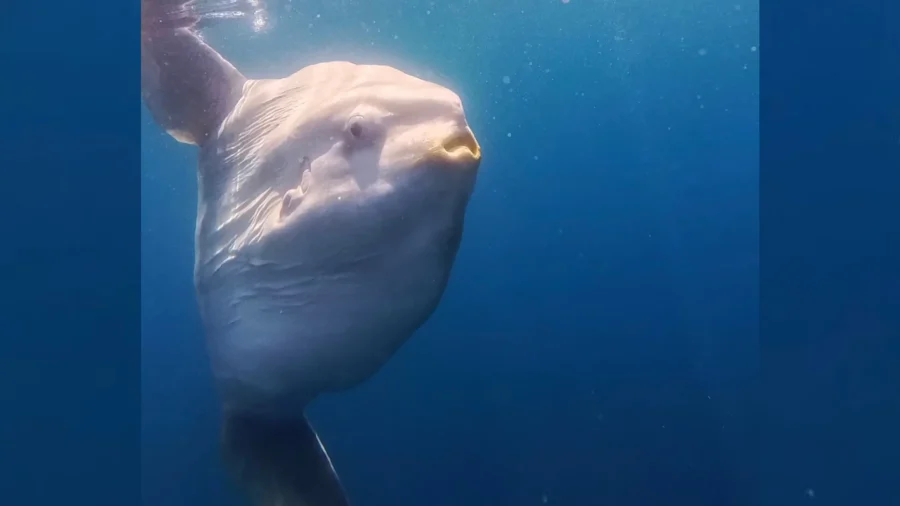
A large ocean sunfish surfaced off Cardiff State Beach, San Diego, on Tuesday, catching surfers and beachgoers by surprise before it ultimately perished and washed up on shore.
"It’s the heaviest bony fish on earth and can weigh over 2,000 lbs. It mostly snacks on jellyfish and loves sunbathing on the surface," said part of the post.
Eyewitness accounts on social media described the ocean sunfish's final hours, with Michelle Bowman commenting on the lifeguards' post saying that the fish drifted south from Swami's, a popular surfing location north of Cardiff Beach.
Bowman said that the ocean sunfish appeared to be struggling before reaching the shore. "It sat under a few surfers at dawn, but once it floated into the impact zone, I knew it was dying," she said, adding that many onlookers initially mistook the creature's distinctive flopping dorsal fin for a shark fin.
The San Diego State Lifeguards made efforts to protect the vulnerable fish as it moved through the surfing lineup.
Pipes Surf Photography on Instagram praised the lifeguards' intervention, writing, "Was hoping it made it. Thanks to your team for escorting it through the lineup while it was still hanging on out there."
One of a Kind
Ocean sunfish possess a distinctive circular, flattened body shape that makes them nearly impossible to confuse with any other ocean dweller. Their most prominent features include a small mouth, large eyes, and what appears to be a missing tail—replaced instead by a rounded, scalloped structure called a clavus that functions as a rudder.Despite their awkward appearance, ocean sunfish are far more active than their leisurely surface behavior might suggest.
The largest ocean sunfish ever recorded was discovered by researchers near the Azores in the North Atlantic. That specimen, a bump-head sunfish species, measured 11.8 feet long and weighed 6,036 pounds.
The ocean sunfish's surface-basking behavior serves multiple purposes beyond relaxation. According to wildlife experts, the fish use the sun's warmth to prepare their bodies for deep dives into colder waters and to eliminate parasites through exposure to ultraviolet light.
The creatures are notorious for hosting up to 40 different parasite species simultaneously, creating what researchers describe as a complex ecological relationship where cleaner fish and seabirds remove parasites in exchange for food.
The ocean sunfish's diet consists primarily of jellyfish and other gelatinous organisms that few other marine animals consume.
The International Union for the Conservation of Nature and Natural Resources lists the ocean sunfish as "vulnerable," citing threats from drift gillnets used in commercial fishing and discarded plastic bags that resemble the fish's natural prey and can cause fatal blockages in their digestive systems.