


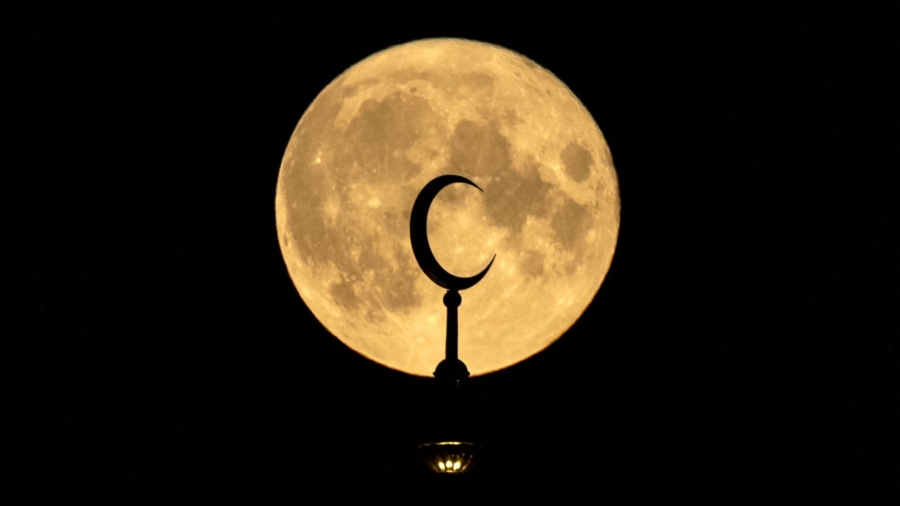
Total lunar eclipses, a multitude of meteor showers and supermoons will light up the sky in 2022.
The new year is sure to be a sky-gazer's delight with plenty of celestial events on the calendar.
Full Moons and Supermoons
There are 12 full moons in 2022, and two of them qualify as supermoons.Some astronomers say that the phenomenon occurs when the moon is within 90 percent of perigee—which is its closest approach to Earth in orbit. By that definition, the full moon for June as well as the one in July will be considered supermoon events.
Jan. 17: Wolf moon Feb. 16: Snow moon March 18: Worm moon April 16: Pink moon May 16: Flower moon June 14: Strawberry moon July 13: Buck moon Aug, 11: Sturgeon moon Sept. 10: Harvest moon Oct. 9: Hunter's moon Nov. 8: Beaver moon Dec. 7: Cold moon
Lunar and Solar Eclipses
There will be two total lunar eclipses and two partial solar eclipses in 2022, according to The Old Farmer's Almanac.Partial solar eclipses occur when the moon passes in front of the sun, but only blocks some of its light. Be sure to wear proper eclipse glasses to safely view solar eclipses, as the sun's light can be damaging to the eye.
A partial solar eclipse on April 30 can be seen by those in southern South America, the southeastern Pacific Ocean, and the Antarctic peninsula. Another one on October 25 will be visible to those in Greenland, Iceland, Europe, northeastern Africa, the Middle East, western Asia, India, and western China. Neither of the partial solar eclipses will be visible from North America.
When the full moon moves into Earth's shadow, it darkens, but it won't disappear. Sunlight passing through Earth's atmosphere lights the moon in a dramatic fashion, turning it red—which is why this is often referred to as a "blood moon."
Depending on the weather conditions in your area, it may be rusty, brick-colored or blood red.
This happens because blue light undergoes stronger atmospheric scattering, so red light will be the most dominant color highlighted as sunlight passes through our atmosphere and casts it on the moon.
A total lunar eclipse will be visible to those in Europe, Africa, South America and North America (excepting northwestern regions) between 9:31 p.m. ET on May 15 and 2:52 a.m. ET on May 16.
Meteor Showers
The new year kicks off with the Quadrantid meteor shower, which is expected to peak in the overnight hours between Jan. 2 and 3 for those in North America, according to the American Meteor Society.It's the first of 12 meteor showers throughout the year—although the next one, the Lyrid meteor shower, doesn't peak until April.
Lyrids: April 21–22 Eta Aquariids: May 4–5 Southern delta Aquariids: July 29–30 Alpha Capricornids: July 30–31 Perseids: August 11–12 Orionids: Oct. 20–21 Southern Taurids: Nov. 4–5 Northern Taurids: Nov. 11–12 Leonids: Nov. 17–18 Geminids: Dec. 13–14 Ursids: Dec. 21–22
If you live in an urban area, you may want to drive to a place that isn't littered with city lights that will obstruct your view. If you're able to find an area unaffected by light pollution, meteors could be visible every couple of minutes from late evening until dawn.