


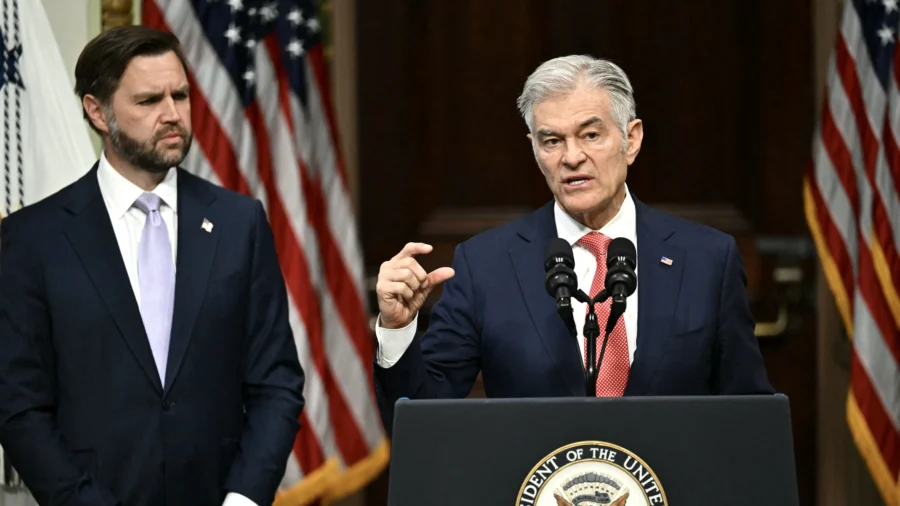
A pause has been placed on new Medicare enrollments for home health care and hospice providers for at least six months as part of a large-scale anti-fraud effort led by Vice President J.D. Vance’s White House Task Force to Eliminate Fraud.
It will not affect providers already registered with Medicare, according to the Centers for Medicare & Medicaid Services (CMS), which oversees the program.
Officials describe it as a wider crackdown on health care fraud, particularly in hospice and home health care billing. The pause is intended to allow CMS time to review spending and tighten oversight procedures.
“This is about protecting patients, restoring integrity and safeguarding taxpayer dollars,” CMS Administrator Dr. Mehmet Oz said.
“We believe that at least half of the hospices in the entire area around Los Angeles are fraudulent,” Oz said.
He said that 800 of those hospices have been suspended. According to Oz, there is "$100 billion of estimated theft just from Medicare and Medicaid."
"If they do not aggressively prosecute Medicaid fraud, we are going to turn off the money going to these anti-fraud units," Vance said.
Vance expressed concern that, despite the removal of hundreds of providers, the suspended hospice centers had not contacted CMS.
“So you're saying that we kicked off 800 fraudulent health care providers off of the Medicare system, and not a single one of them called the government and said, 'hey, you made a mistake?'” Vance said to Oz.
Oz said officials had received fewer than 20 inquiries from the suspended providers.
“We've had a handful of calls. We're not sure they're legitimate yet, but it's less than 20 out of 800, and we're auditing them,” Oz said.
“Those are businesses that we were giving hundreds of millions, in some cases billions of dollars to, not to provide services, but to make a fraudster rich. It's just completely insane,” Vance said.
In 2024, 1.8 million Medicare beneficiaries received hospice care at a cost of $28.3 billion, according to the Medicare Payment Advisory Commission. That same year, 2.7 million people on Medicare received home health care at a cost of $16 billion, according to the agency that advises Congress on health care spending.
Vance's task force has recently taken action against hospice services, particularly in California, where the state auditor said in 2022 that lax oversight enabled large-scale fraud.
The National Partnership for Healthcare and Hospice Innovation said in March it supported temporarily pausing hospice provider enrollments. The National Alliance for Care at Home warned against overly broad action that could discourage doctors and patients from recommending or seeking care.
Tens of billions of dollars are estimated to be lost in the United States through health care fraud each year, resulting in higher costs for patients and employers, according to the National Health Care Anti-Fraud Association.