


Banned by the Environmental Protection Agency last December, the cancer-causing, industrial chemical solvent trichloroethylene (TCE), has been shown to likely lead to Parkinson's disease following exposure, a new report has shown.
Parkinson's disease, a neurological condition, includes symptoms such as stiffness, tremors, balance issues, difficulty walking, slurred speech, memory loss, and reduced cognitive functions.
Since the 1920s, TCE has been used as a chemical solvent that was used for everything from dry cleaning and metal degreasing to metal degreasing and being added in cleaning wipes and carpet cleaners. That toxic chemical was later found to leach into the water and sicken nearby residents with varying ailments, including Parkinson's, as well as liver cancer, kidney cancer, and non-Hodgkin's lymphoma.
TCE also causes damage to the central nervous system, liver, kidneys, immune system, reproductive organs, and fetal heart defects. These risks are present even at very small concentrations.
It was due to these serious health issues that the Biden administration's EPA made the decision to ban TCE.
Recent Research
Meanwhile, researchers from the Barrow Neurological Institute in Phoenix, Arizona, examined the link between TCE-contaminated sites and the risk of Parkinson’s disease in nearby residents.Led by Dr. Brittany Krzyzanowski, with Barrow's Department of Neurology, the four-person team examined data from 221,000 Medicare beneficiaries with Parkinson’s disease, comparing them with more than 1.1 million control patients.
Krzyzanowski’s team used census tract residential data and compared that to the EPA’s National Air Toxics Assessment program to calculate exposure to ambient TCE. They mapped ambient TCE patterns for the 10-mile radius around the top three TCE-emitting facilities from the EPA’s Toxic Release Inventory in 2002.
The Barrow team was able to collect data that showed people exposed to higher levels of TCE "had an increased risk of developing Parkinson's disease."
Said Krzyzanowski: “Despite limitations, our study provides new evidence of the potential importance of ambient TCE exposure on PD risk and identifies specific areas of the nation that may be targets for exposure remediation.”
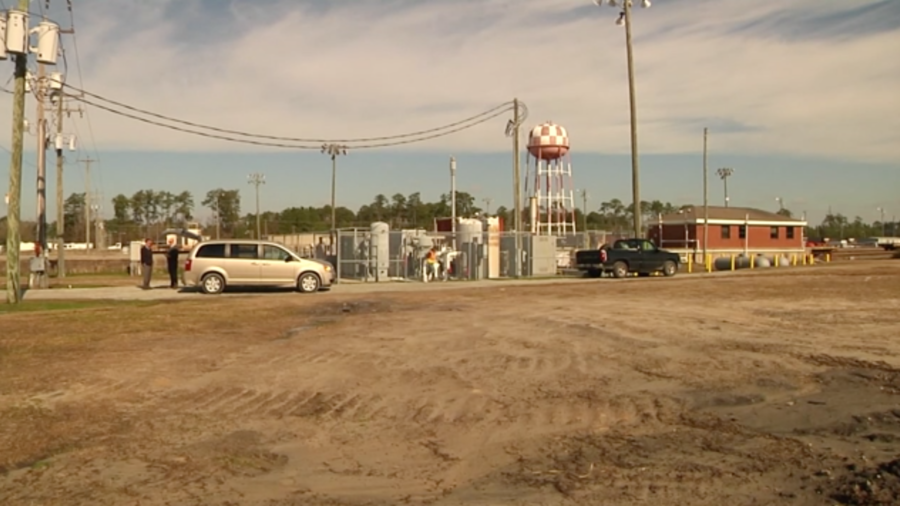
One of the most TCE-contaminated areas has been at the U.S. Marines-operated Camp Lejeune in North Carolina.
There have been reports in recent years about the side effects of TCE exposure, particularly after "more than a million Marines and their family members" were likely exposed to TCE in the water at Camp Lejeune between the early 1950s and late 1980s. Research revealed that those Camp Lejeune residents had a 500 percent increased risk of Parkinson's disease.