


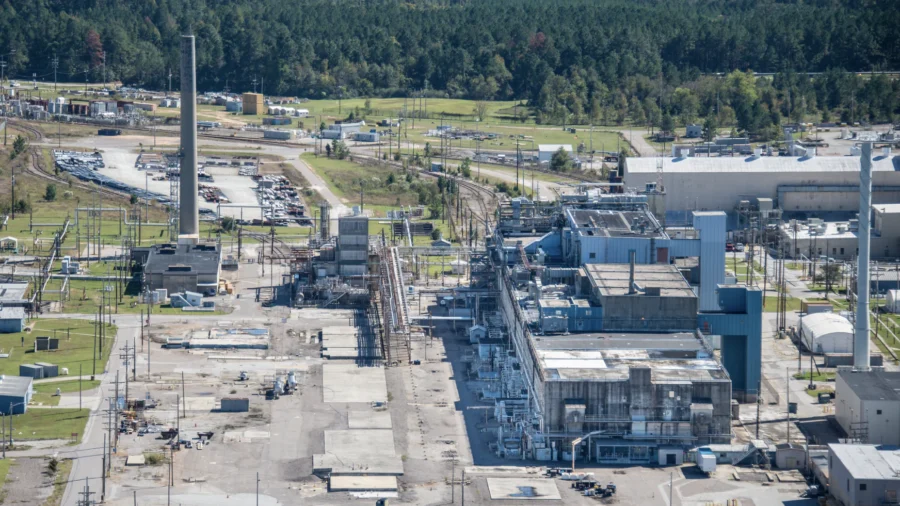
A radioactive wasp nest was discovered earlier this month at the Savannah River Site (SRS), a former Cold War nuclear weapons facility near Aiken, South Carolina.
The Department of Energy (DOE) confirmed the finding in a final occurrence report, stating the nest emitted beta/gamma radiation levels exceeding 100,000 disintegrations per minute per 100 square centimeters. This amount is ten times the federal contamination limit.
The radioactive wasp nest was found by radiation safety personnel of the Radiological Control Operations team. The nest was found in an area of the SRS known as the F-Area Tank Farm. This section contains underground storage tanks currently holding about 34 million gallons of liquid nuclear waste. All the waste is left over from decades of nuclear weapons production.
The wasp nest was sprayed to kill wasps, then bagged as radiological waste. The ground and surrounding area did not have any contamination, according to the DOE.
The DOE attributed the contamination to “legacy onsite radioactive contamination,” which is residual radiation from the site's Cold War-era mission to produce plutonium for nuclear weapons. Although the nest’s radiation levels exceeded federal limits by more than ten times federal limits, it wasn’t linked to any leaks or operational issues, according to the DOE.
The tank farm is well inside the boundaries of the site and wasps generally fly just a few hundred yards from their nests, so there is no danger they are outside the facility, according to a statement from Savannah River Mission Completion, which now oversees the site.
While officials stressed that no public health risk exists, environmental watchdogs have voiced skepticism. The watchdog group Savannah River Site Watch said the report was incomplete since it doesn’t detail where the contamination came from, how the wasps might have encountered it, and the possibility that there could be another radioactive nest if there is a leak.
Knowing the type of wasp nest could also be critical , as some wasps make nests out of dirt and others use different material which could pinpoint where the contamination came from, Tom Clements, executive director of the group, wrote in a text message.
“I’m as mad as a hornet that SRS didn’t explain where the radioactive waste came from or if there is some kind of leak from the waste tanks that the public should be aware of,” Clements said.
The wasp nest was discovered on July 3 and logged as a Level I incident in a federal occurrence report. A Level I is one of the most serious contamination designations under DOE guidelines. The contaminated structure sits within a restricted and heavily monitored zone.
Today, the SRS has shifted its focus toward environmental cleanup and nuclear fuel production for commercial and defense reactors. Over the decades, the site generated more than 165 million gallons of liquid nuclear waste. That number is now reduced to roughly 34 million gallons through extensive processing and evaporation. Forty-three underground tanks remain active, while eight have been permanently closed.