


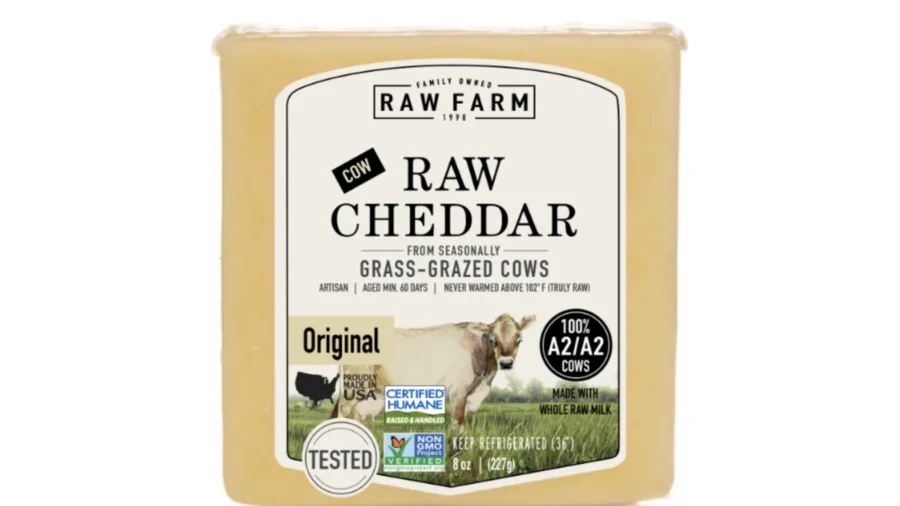
Nine people across three states have fallen ill—more than half of them young children—in a multistate E. coli outbreak tied to Raw Farm-brand raw cheddar cheese, as the company continues to defy federal recall recommendations.
Nine Sick, Three Hospitalized
As of March 26, 2026, nine people infected with the outbreak strain of E. coli O157:H7 have been reported from California, Florida, and Texas, according to the FDA and the Centers for Disease Control and Prevention (CDC). Three people have been hospitalized, and one developed hemolytic uremic syndrome, or HUS—a serious condition that can lead to kidney failure. No deaths have been reported.Illnesses began as far back as Sept. 1, 2025, with the most recent illness onset recorded on Feb. 20, 2026. More than half of the cases have involved children under the age of five.
Of the eight ill people interviewed by state and local health officials, all eight reported consuming raw dairy products. Seven of those eight had brand information available, and all seven identified Raw Farm-brand dairy products. Five of those cases in 2026 specifically involved Raw Farm-brand raw cheddar cheese, while two 2025 cases involved Raw Farm-brand raw milk.
Company Pushes Back
Raw Farm has refused to cooperate with the recall. In a March 16 post on X, the company said: "WE 100% DISAGREE WITH THE FDA'S FALSE 'POSSIBLE LINK,' AND EXTREME ALLEGATIONS. All of our products have been CONFIRMED to be negative for all harmful bacteria, including Ecoli 0157-H7.”The company continued, saying that the “FDA has found NO Raw Farm products to be tested positive for Ecoli in the marketplace. Inaccurate statements made by the FDA and CDC linking our brand to an outbreak is egregious and extreme harassment towards our brand."
The FDA acknowledged in its March 30 update that it is not aware of any Raw Farm-brand raw cheddar cheese products from this time period that have tested positive for E. coli, but said its investigation and onsite inspection is ongoing.
"The FDA recommended that Raw Farm voluntarily remove its raw cheese products from sale after they determined it was the likely source of an ongoing E. coli outbreak," the caucus members said. "Raw Farm refused. We have one message for Raw Farm and FDA: get it off the shelves—now."
What Consumers Should Do
The FDA and CDC said consumers should not eat, sell, or serve any Raw Farm-brand raw cheddar cheese—in block or shredded form—purchased on or after Jan. 4, 2026. Ill people have reported purchasing the cheese at Sprouts Farmers Market and H-E-B, though the FDA said other retailers may also carry the product.Anyone who has the product should throw it out immediately. Any surfaces or containers that came into contact with the cheese should be thoroughly cleaned and sanitized.
E. coli symptoms—which can appear anywhere from a few days to nine days after consuming contaminated food—include severe stomach cramps, diarrhea, fever, nausea, and vomiting. Some infections cause bloody diarrhea and can escalate to life-threatening conditions including HUS, high blood pressure, chronic kidney disease, and neurological problems.
The CDC advises consumers to contact a healthcare provider immediately if symptoms appear, and urges parents of young children in particular to choose pasteurized dairy products, as children under five face a higher risk of severe illness from raw dairy.