


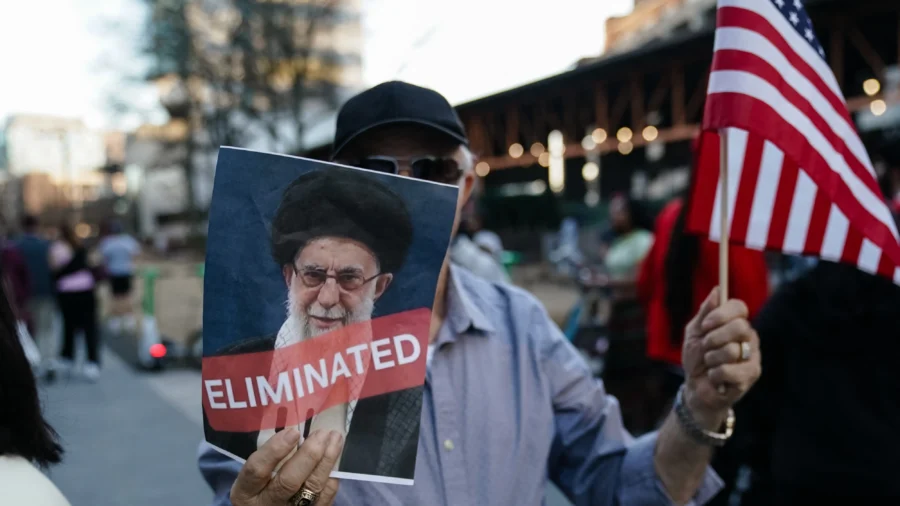
The strikes hit Tehran and several other key cities, killing Khamenei—who had ruled Iran for 36 years—along with Iran’s defense minister and more than 40 senior officials. Iran has since declared a 40-day national mourning period, while countries across the Middle East and beyond assess the consequences of one of the most dramatic blows to Iran’s leadership in decades.
Beijing Expected Limited Escalation
In the days leading up to the strikes, Chinese officials believed the United States and Israel were unlikely to directly target Iran’s supreme leader, one of the sources cited in the report said. Instead, internal assessments concluded the confrontation would remain a campaign of pressure and deterrence rather than an attempt to eliminate Iran’s top leadership.“Beijing’s assessment was based heavily on past patterns,” the source said. “Iran had faced years of pressure from the United States and Israel without a full-scale strike on the leadership. That precedent shaped the judgment.”
The assumption influenced Beijing’s preparations.
Chinese diplomatic personnel in Iran had not completed evacuation arrangements about 10 days before the attack, reflecting the belief that a major escalation remained unlikely, the source said, according to the report.
But China’s advisory came after Western governments had already begun similar evacuation efforts, the report said, citing the source.
The number of Chinese diplomatic personnel withdrawn from Iran before the strikes was reportedly smaller than the number China evacuated from Venezuela during earlier political unrest, The Epoch Times report said.
Beijing’s Tone Shifts After Strike That Killed Khamenei
China’s initial public response also appeared restrained.The language reflected multiple revisions during internal discussions, according to another source cited in the report.
Earlier drafts of the statement included language explicitly blaming Washington and Israel, but those passages were removed during internal discussions.
“The guidance that came out of the internal meeting was to avoid directly confronting the United States and Israel,” the source said.
China’s rhetoric hardened after the scale of the strike became clear.
Strike Exposes Limits of China-Iran Security Ties
The operation also raised uncomfortable questions in Beijing about the effectiveness of security cooperation with Tehran, according to the same source cited in the report.Khamenei had maintained close ties with China, and Iranian security agencies had received Chinese technical support in recent years, particularly in surveillance and security systems.
But those measures failed to prevent the attack.
“The result also shattered Beijing’s long-held confidence in its own technological cooperation capabilities,” the source said in the report.
U.S. and Israeli forces reportedly relied on intelligence and surveillance to identify leadership locations, striking compounds and command facilities in Tehran and other cities during the coordinated operation.
Beijing Avoids Direct Clash With Washington
Some analysts say Beijing’s cautious early response reflects broader strategic considerations.Zhong Liang, an independent Chinese scholar, told The Epoch Times that Chinese leaders are reluctant to escalate tensions with Washington over Iran.
“Beijing’s real concern is not the survival of the Iranian government,” he said. “It is avoiding a direct confrontation with the United States.”
China is already navigating disputes with Washington over trade, technology controls, and financial sanctions. Zhong said a potential meeting between Chinese leader Xi Jinping and President Donald Trump could involve negotiations on those issues, which are central to Beijing’s economic interests.
“In that calculation,” Zhong said, “even a so-called strategic partner can be downgraded if necessary.”
The strike on Iran’s leadership could reshape the Middle East’s political landscape. For Beijing, it also underscores the challenge of managing ties with partners such as Iran while avoiding deeper confrontation with the United States.
“The lesson from this,” Zhong said, “is that China’s partnerships are ultimately secondary to its own strategic and economic interests.”