


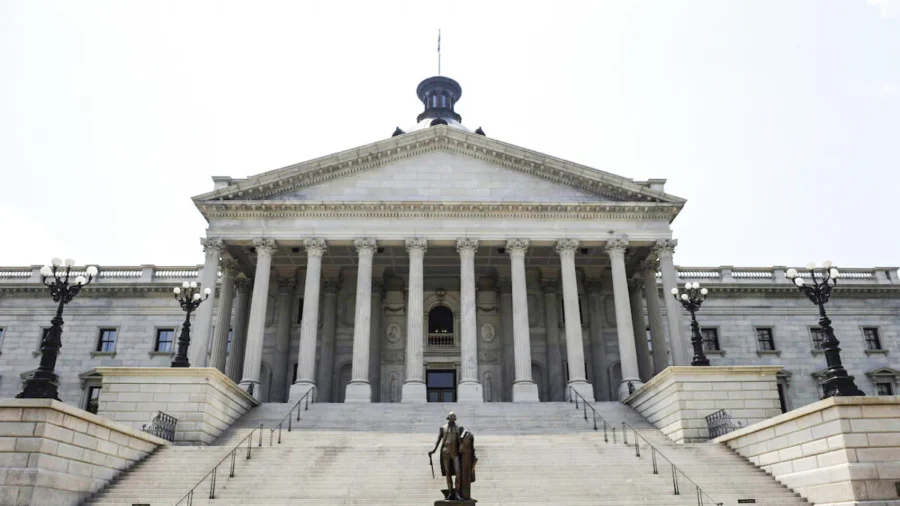
New penalties for receiving and performing an abortion are advancing through the South Carolina legislative process.
State Sen. Richard Cash (R-Anderson), who proposed the bill, said he believes human life begins at conception and deserves legal protection.
“It's a generational issue,” he said. “It's not going to be solved today or tomorrow all across this country. But that doesn't mean we shouldn't be trying to talk about it and trying to move the line of protecting human life forward. And that's what this bill attempts to do is protect the sanctity of human life in the womb."
After hearing testimony from medical professionals, faith leaders, and state residents, the Medical Affairs Committee approved the measure in an 8-4 vote on April 21 and moved it onto the Senate floor.
Critics consider the bill to be a total ban on abortion.
"This law is so out of step of where South Carolinians are," said state Sen. Tom Davis (R-Beaufort), who sits on the Medical Affairs Committee and voted against the bill. "It does not create a culture of life."
Currently, South Carolina law imposes a six-week ban with exceptions.
If SB 1095 is approved, anyone who performs or helps perform an abortion could face felony charges and up to 20 years in prison and a woman receiving an abortion would be charged with a misdemeanor and face up to two years in prison.
The bill also allows the attorney general, mother or father of the person who obtained an abortion, and grandparents of the unborn child to bring a civil action if they believe an illegal abortion was performed.
A Senate hearing has yet to be scheduled.
Tennessee is another red state seeking to impose more restrictions on abortion.
Tennessee state representative Jody Barrett (R-Dickson) proposed HB 570 and critics believe it potentially exposes pregnant women seeking an abortion to the death penalty.
Current penalties in Tennessee only apply to abortion doctors. However, there are still situations in which there is no recourse under the law, criminal or otherwise, to stop abortions from happening, according to Barrett.
“There's still thousands and thousands and thousands of abortions that are occurring in Tennessee,” he said. “Some through the mail with the drugs and medications that are being ordered and mailed directly to these mothers.”