


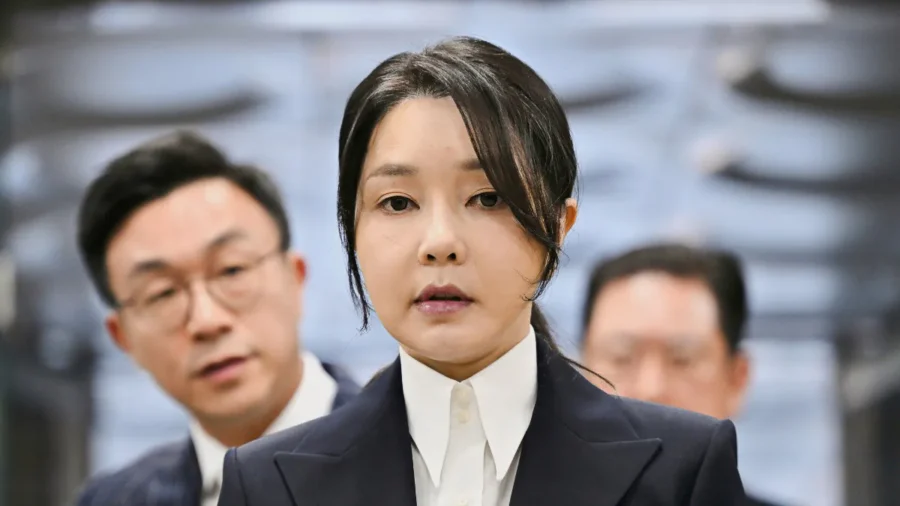
A South Korean appeals court on April 28 raised the prison sentence of former First Lady Kim Keon Hee from 20 months to 4 years in prison, after convicting her of further charges.
Both Kim and prosecutors appealed the ruling, and on Tuesday, the Seoul High Court raised her jail term to four years after convicting her of the stock manipulation charge and of receiving another Chanel bag from the Unification Church.
The former first lady's defense team has argued the prosecution's investigation was politically driven. The team of independent counsel Min Joong-ki had earlier requested a 15-year prison sentence.
‘Damaged Public Trust’
The Seoul High Court said that, as first lady, Kim was closest to the president and had significant influence over him.Due to her position and actions, Kim failed to meet public expectations for her integrity, instead exploiting her high-profile status.
"Kim exerted her influence as first lady and committed the bribery," the lead judge said. "She damaged public trust in government transparency and caused a rift in public opinion over national affairs."
The former first lady denies all charges, and her lawyers said they would appeal Seoul High Court's ruling. Both Kim and prosecutors have one week to appeal the decision at the Supreme Court, South Korea's top court.
Insurrection Conviction
Yoon attempted to impose martial law on Dec. 3, 2024, but backed down after six hours, following parliament’s vote to overturn the decree.He said he imposed the measures in order to protect the South Korean constitution because the opposition, which controlled the parliament, was sympathetic to communists and North Korea. He had told the court that it was within his powers as president to call for a state of emergency, meaning that declaring martial law could not constitute an insurrection.
On Feb. 19, Seoul Central District Court found Yoon guilty on charges of abuse of authority and orchestrating an insurrection, and he was sentenced to life in prison.
Prosecutors had sought the death penalty, though no one has been executed in South Korea since 1997, following the introduction of a moratorium on capital punishment in 1998.
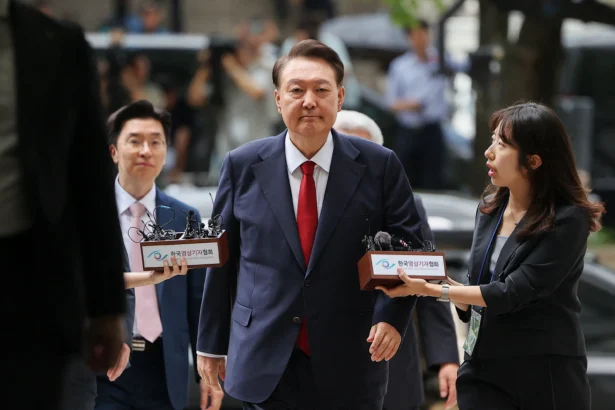
Another of Yoon's trials recently closed, during which the former president faced charges of benefiting an enemy and of abuse of power.
South Korean prosecutors accuse Yoon of trying to escalate tensions with North Korea by allegedly flying drones over Pyongyang in a bid to create justification for later imposing martial law.
Prosecutors requested on April 24 a 30-year prison sentence for the conservative politician, if found guilty.
Seoul Central District Court is expected to make a ruling on the case at a later date.
Yoon and his lawyers have denied all charges he faces.