


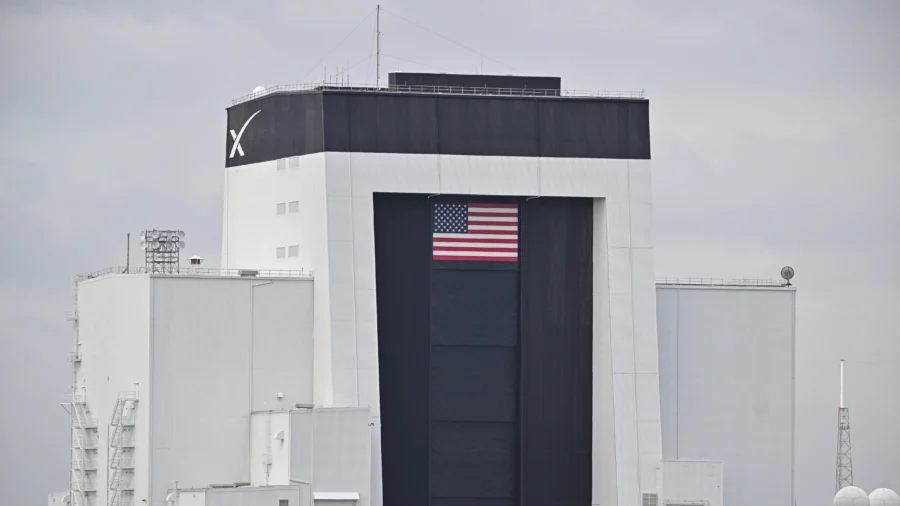
As part of Amazon’s Project Kuiper, the e-commerce giant’s highly anticipated initiative to provide low-cost, high-speed internet to millions worldwide, the KF-01 mission was launched at 2:30 a.m. ET on SpaceX’s reusable Falcon 9 booster rocket at the Cape Canaveral Space Force Station in Florida.
This was the first flight for the Falcon 9 first-stage booster supporting this mission, which added 24 satellites to Project Kuiper’s constellation. The Falcon 9 booster made history in 2020 as the first commercial rocket to launch humans into orbit. To date, it has completed 502 missions.
In highlighting the launch, Amazon said Falcon 9 deployed the satellites at an altitude of 289 miles above Earth, at which point the Kuiper team took over command of the mission from the company’s operations center in Redmond, Washington.
“From there, we began to perform initial satellite health checks as we prepare to raise the satellites to their assigned altitude of 392 miles (630 km), where they will be fully commissioned as part of our operational satellite constellation,” the company said.
To date, a total of 78 Kuiper spacecraft have been launched. Earlier in April, Amazon sent its first 27 satellites into space via United Launch Alliance as part of the Seattle-based e-commerce giant’s goal of deploying an initial satellite constellation of 3,200 spacecraft to support the company’s global broadband network.
Unveiled in late 2022, Project Kuiper aims to reach 400 million to 500 million households currently without internet access with 1,600 satellites by July 2026 and 3,200 satellites by 2029, Amazon CEO Andy Jassy previously stated. So far, no pricing details or firm date for commercial broadband service have been announced.
Just last month, Project Kuiper signed an agreement with the National Science Foundation (NSF) to support both expanding global broadband access and advancing astronomical science.
The coordination agreement establishes clear protocols and processes to ensure that Project Kuiper’s satellite constellation can deliver fast, reliable internet across the globe, while also minimizing interference with astronomical observations. Amazon said this balanced approach recognizes that both connectivity and scientific discovery represent crucial priorities for technological advancement and human knowledge.
“We’ve been engaged with the astronomy community since the initial design and development of Project Kuiper, and we’re pleased to build on that collaboration with a formal coordination agreement with NSF,” said Chris Hofer, head of international spectrum management and strategy at Project Kuiper.
“This agreement underscores our commitment to responsible space operations and our belief that satellite broadband and ground-based astronomy can successfully coexist, and we look forward to continuing that work as we deploy our full satellite constellation.”
Amazon’s Project Kuiper subsidiary is based in Redmond, Washington, the Seattle suburb where Amazon mainly focuses on research and development. The company’s satellite manufacturing plant is nearby in Kirkland, Washington, with the capacity to produce up to five satellites daily.
In addition, Amazon operates a satellite processing facility at the Kennedy Space Center in Florida, where engineers, programmers, and support staff prepare and integrate Kuiper satellites with rockets from SpaceX, Blue Origin, and United Launch Alliance before launch.
Amazon isn’t the only company working with SpaceX to expand broadband coverage. In late April, T-Mobile CEO Mike Sievert announced that the cellphone giant’s partnership with Elon Musk and SpaceX, first announced in late 2022, is now in the beta-launch phase. According to Sievert, T-Mobile is testing its T-Satellite mobile service with active customers, who are seamlessly making calls and sending texts across SpaceX’s Starlink to other cellphone users, including those on AT&T and Verizon.
Leveraging Starlink’s constellation of satellites in low orbit, T-Mobile stated it aims to provide near-complete wireless and internet coverage across the United States. T-Satellite has been in beta testing since December 2024, with nearly 1.8 million users signing up so far. The service is planned to launch on July 23.