


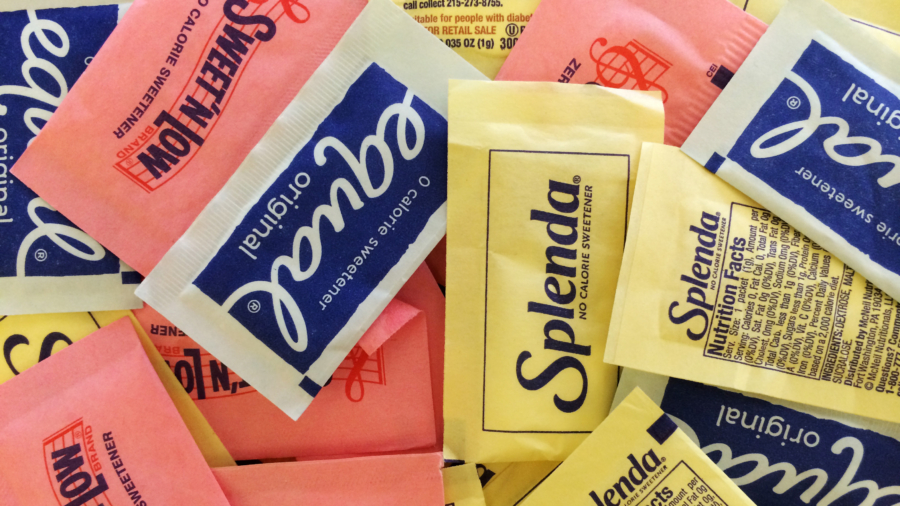
The research tracked 12,772 Brazilian civil servants with an average age of 52 over eight years, examining their consumption of seven low- and no-calorie sweeteners commonly found in diet sodas, flavored waters, energy drinks, yogurt, and low-calorie desserts.
Participants who consumed the highest amounts of artificial sweeteners showed cognitive decline 62 percent faster than those who consumed the least. The middle consumption group showed decline rates 35 percent faster than the lowest group, equivalent to about 1.3 years of cognitive aging.
The study looked at aspartame, saccharin, acesulfame-K, erythritol, xylitol, sorbitol, and tagatose. Researchers divided participants into three groups based on consumption levels, with the lowest group consuming an average of 20 milligrams daily and the highest consuming 191 milligrams daily. For context, the highest consumption level equals approximately one can of diet soda containing aspartame.
Cognitive testing occurred at three intervals during the study period, looking at verbal fluency, working memory, word recall, and processing speed. After adjusting for factors including age, sex, high blood pressure, and cardiovascular disease, researchers found the strongest associations with cognitive decline in participants under 60 years old.
The connection between artificial sweetener consumption and cognitive decline was most evident in participants with diabetes. Such a finding has implications for a population that frequently relies on sugar substitutes.
"While we found links to cognitive decline for middle-aged people both with and without diabetes, people with diabetes are more likely to use artificial sweeteners as sugar substitutes," Suemoto said.
When examining individual sweeteners, researchers found that consuming aspartame, saccharin, acesulfame-K, erythritol, sorbitol, and xylitol was associated with a faster decline in overall cognition, most notably affecting memory and verbal fluency. Researchers found no connection between tagatose consumption and cognitive decline.
Dr. Thomas Holland, an Associate Professor of Medicine, Division of Infection Diseases, at Duke University, said in an editorial posted the same day that "the widespread assumption that LNCS (low- and no-calorie sweeteners) represent a safe sugar substitute may be misguided, especially given their ubiquity in products marketed as 'healthier' alternatives."
Holland noted the long-term implications of the research, stating that "this suggests that midlife dietary exposures, decades before cognitive symptoms emerge, may carry life-long consequences for brain health."
He suggested the findings "may prompt neurologists to reconsider standard dietary recommendations, particularly for patients with diabetes, metabolic syndrome, or cerebrovascular risk factors."
The study's methodology involved analyzing data from the Brazilian Longitudinal Study of Adult Health across three waves from 2008 to 2019. Participants completed food frequency questionnaires detailing their dietary intake over the previous year, with researchers calculating combined and individual consumption of the seven sweeteners.
Among the study population, which was 54.8 percent female and 43.2 percent black or mixed race, the average daily consumption of artificial sweeteners was 92.1 milligrams. Sorbitol showed the highest individual consumption at an average of 64 milligrams daily.
Researchers acknowledged several study limitations, including reliance on self-reported dietary information and the exclusion of some artificial sweeteners from the analysis. The observational nature of the study means it shows correlation rather than causation between artificial sweetener consumption and cognitive decline.
"More research is needed to confirm our findings and to investigate if other refined sugar alternatives, such as applesauce, honey, maple syrup or coconut sugar, may be effective alternatives," Suemoto said.
The research was supported by the Brazilian Ministry of Health, the Ministry of Science, Technology, and Innovation, and the National Council for Scientific and Technological Development.