

The 5 Most Expensive States to Fill Your Gas Tank

A combination of logistical factors and policy choices ramp up costs at the pump in these five Western states.
Published: 2/21/2026, 3:15:20 AM EST
The 5 Most Expensive States to Fill Your Gas Tank
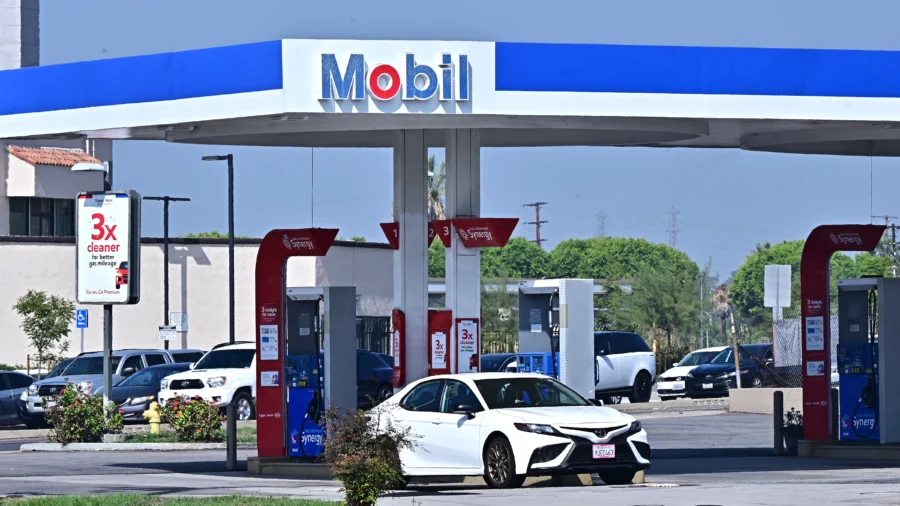
Vehicles pass an ExxonMobil gas station in Rosemead, Calif., on Sept. 23, 2024. (Frederic J. Brown/AFP via Getty Images)

The five most expensive states for gas are California, Hawaii, Washington, Oregon, and Nevada.

According to AAA, the national average for a gallon of gas sits at $2.934 on Feb. 20. But a combination of logistical factors and policy choices ramp up costs at the pump in these five Western states.

California's gas price is impacted by the state's strict regulatory environment and lack of internal production.

According to data from the Energy Information Administration (EIA), California's oil production has been cut by about 75 percent, from just under 400,000 barrels per day in 1985 to just under 110,000 in 2024.

It is also in the midst of losing another 17 percent of its existing refinery capacity after the Phillips 66 Wilmington refinery closed in late 2025, and the Valero Benicia refinery is set to close in April 2026. These closures are part of a broader trend of refinery closures in California; Phillips 66's Rodeo refinery closed in 2024, and Marathon's Martinez refinery closed in 2020.

California lacks consistent supply lines to other refinery hubs around the country. It also requires a unique blend of gasoline to comply with its environmental regulations. As such, it will likely have to be supplied by imports from Asia and elsewhere on the West Coast.

Then there's California's gas tax, the highest in the country at $0.596 per gallon, and on top of that the state charges sales tax of 7.25 percent at the pump. These factors combine to make California's gas the most expensive in the nation with an average price of $4.593 per gallon.

Hawaii's logistical challenges are even greater. The archipelago sits more than 2,500 miles away from the West Coast, and nearly all of its goods are imported. Grassroot Institute of Hawaii notes that domestic shipping runs into the Jones Act, a 1920 law that requires all shipping between U.S. ports to be carried by ships built in the U.S.; these ships must fly the American flag and be owned and operated by a majority American crew.

Hawaii has a 16-cent gas tax, but it also has a statewide general excise tax imposed on "all business activities." The tax is 0.5 percent for wholesaling and manufacturing, and a 4 percent tax on other activity. Counties are also allowed to impose surtaxes on top of the state tax, and businesses are allowed to pass those costs to consumers. As a result of these factors, Hawaii's average gas price sits at $4.404 per gallon.
Washington State's high gas prices are caused largely by its tax scheme. According to KIRO NewsRadio, Washington's gas tax sits at $0.55 a gallon. It also has a carbon tax that accounts for an additional $0.40 to $0.50 of the cost per gallon. Washington's state average gas price is $4.234 per gallon.
Washington and Oregon both suffer from the same logistical challenges as California. But a 2022 report from the EIA notes that both states produce zero barrels of oil per day. In fact the Oregon Department of Energy said in a 2020 report said that there are no oil and natural gas deposits in the Pacific Northwest. Oregon also has a strict clean fuels requirement, and a 40-cent per gallon gas tax. Oregon drivers pay an average of $3.803 per gallon.

Nevada does not produce much oil at all, and also suffers from the logistical challenges of the West Coast. Nevada relies on supplies from California refineries and is affected by the price shocks. It has a $0.23805 per gallon gas tax. A gallon of gas on average costs $3.652 in the state.