


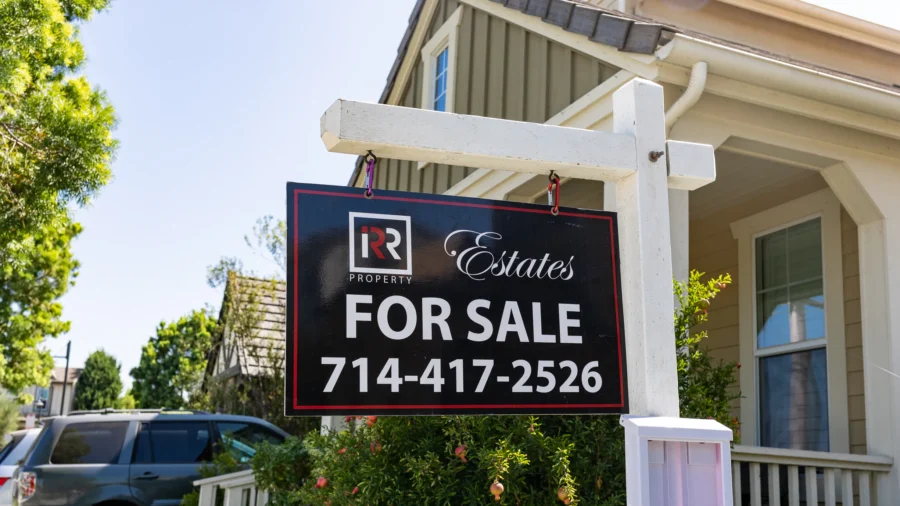
First-time homebuyers looking for a good deal should avoid the Pacific Northwest and move to the Southeast.
That’s one takeaway from a new Lending Tree study that identifies the worst and best U.S. housing markets in mid-2025. The study comes when first-time homebuyers feel increasingly shut out of the residential housing market due to high prices, high mortgage rates, low inventory, and escalating home ownership costs beyond sales prices.
The Lending Tree study, which tracked 100 U.S. metro areas, draws some clarity in a bleak real estate picture.
According to the study, the Pacific Northwest has the worst housing outlook in the United States, factoring in key metrics like vacancy rates, housing unit approvals, and home value-to-income ratios.
Portland, Oregon, tops the list of worst cities to buy a house right now, primarily because of low housing availability and affordability issues. Boise, Idaho, Bridgeport, Connecticut, Spokane, Washington, and Salt Lake City all round out the study’s “bottom five” rankings. Portland earned its low ranking due to having the fourth-lowest vacancy rate and the 13th-highest home value-to-income ratio.
"The vacancy rates in Portland and Boise are less than half of those in many other big metros,” said Matt Schulz, chief consumer analyst at Lending Tree, in a statement. “When that happens, prices rise, making things even more expensive.”
That scenario isn’t likely to shift in many of the most troubled metros due to thin inventories and low new building activity. “That’s not the case in Boise, where new permits are among the highest in the nation, but it’s the case in Portland, Bridgeport, and other metros with similar rankings,” Schulz said. “That doesn’t bode well for the near future.”
On the upside, the Lending Tree study points new buyers to the South and Southeast, where the home purchase outlook is decidedly more bullish.
McAllen, Texas, Wilmington, North Carolina, and Winston-Salem, North Carolina, earn the study’s highest marks due to their highest housing unit approval and vacancy rates. Home value-to-income ratios are also robust in the South, with Durham, North Carolina, and Charlotte, North Carolina, (7.20 percent) having the best ratios.
Additionally, a slowdown in real estate investor purchases has also opened up buying opportunities. “Many investors have also taken a step back,” said Ben Mizes, co-founder of Clever Real Estate in St. Louis, Missouri, via email to NTD. “During the boom, institutional buyers flocked to these cities; now, many are sitting tight or selling off properties. This shift has created space for regular buyers to jump back in.”
For hopeful homebuyers, getting ready to strike when a good deal arises is best.
“Depending on the property size, location, condition, and price point, there are always opportunities,” said Michael Shapot, a real estate broker and Keller Williams in New York City, New York, by email to NTD. “A buyer willing to do renovation work on a property will have many more options and little competition from other buyers.”
It’s also a good idea to work with a seasoned homebuyer’s broker, be prepared with your financing, and have your home purchase documents in order (your broker can help with that).
“It’s also a good idea to expand your search to include properties that might be a tad more expensive than you would have hoped, and concentrate on those that have been on the market for a while,” Shapot added. “There may be certain price points, locations, or types of properties that are in more or less demand or supply, and therein may lie an opportunity.”
The views and opinions expressed are those of the interviewees. They are meant for general informational purposes only and should not be construed or interpreted as a recommendation or solicitation. NTD does not provide investment, tax, legal, financial planning, estate planning, or any other personal finance advice. NTD holds no liability for the accuracy or timeliness of the information provided.