


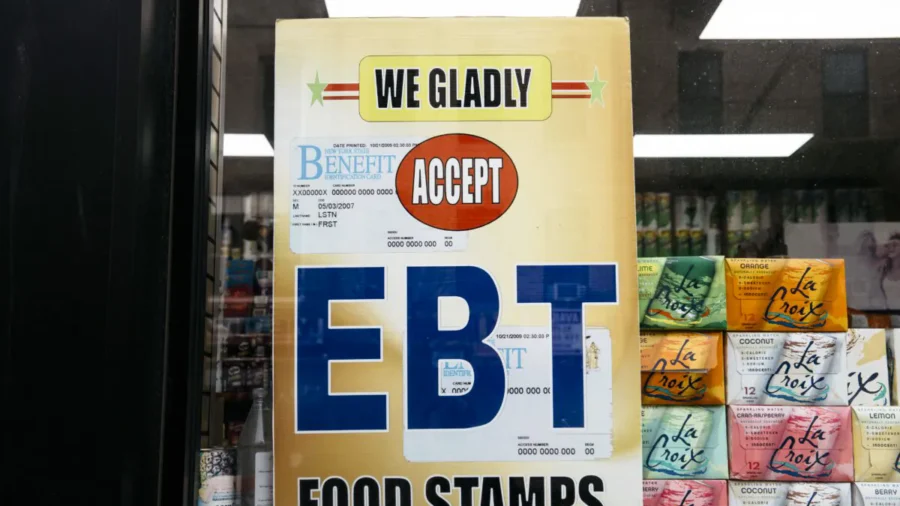
Millions of able-bodied Americans who have been depending on government food assistance will face new rules for eligibility this month, as expanded work requirements for the Supplemental Nutrition Assistance Program (SNAP) take effect across a growing number of states.
Beginning Sunday, able-bodied recipients in New York, Nevada, and Rhode Island must meet stricter employment or volunteer thresholds or risk losing their benefits within months—the latest wave of enforcement stemming from sweeping changes President Donald Trump signed into law last July as part of the One Big Beautiful Bill Act of 2025.
Those who fall under the requirements must work, volunteer, or participate in job training for a minimum of 80 hours per month—or roughly 20 hours per week. Fail to do so for three consecutive months within any three-year period and benefits are cut off.
State-by-State Scramble
Texas began enforcing the updated requirements rules back in October 2025, meaning some able-bodied residents there who are not working or volunteering may have already exhausted their three-month window by January. Alaska, Colorado, Georgia, and Hawaii started their clocks in November. Illinois and Ohio launched enforcement on Feb. 1, giving able-bodied recipients in those states until May to comply."The Nevada Division of Social Services has been working with various community partners to identify volunteer opportunities to help those impacted individuals," DSS Deputy Administrator Kelly Cantrelle said. "DSS remains committed to supporting Nevadans with accessing the benefits they need while also helping them overcome barriers to employment."
Meanwhile, California's exemption stretches through January 2027, and several states with relatively high unemployment have received temporary waivers delaying implementation.
According to the Congressional Budget Office, the expanded requirements are projected to reduce the average monthly number of SNAP recipients by about 2.4 million over the next decade. Currently, roughly 42 million Americans—about one in eight—receive benefits averaging approximately $190 per month. According to the Center on Budget and Policy Priorities, a majority live below the poverty line, and nearly two in five beneficiaries reside in households where someone already holds a job.
Starting in October, states will be required to shoulder three-fourths of SNAP's administrative costs, up from the current roughly even split with the federal government. Beginning in 2027, states with higher payment error rates will face penalties and be required to cover some benefit costs.
For those who lose eligibility, the door is not permanently closed. According to the Food and Nutrition Service, recipients can regain benefits once they meet the work requirement for 30 consecutive days or qualify for a new exemption. The 80-hour monthly threshold can be satisfied through paid employment, unpaid volunteer work, or participation in approved training and employment programs.