

Tourist Loses Both Hands in Shark Attack in Turks and Caicos

Published: 2/18/2025, 6:03:31 AM EST
Tourist Loses Both Hands in Shark Attack in Turks and Caicos
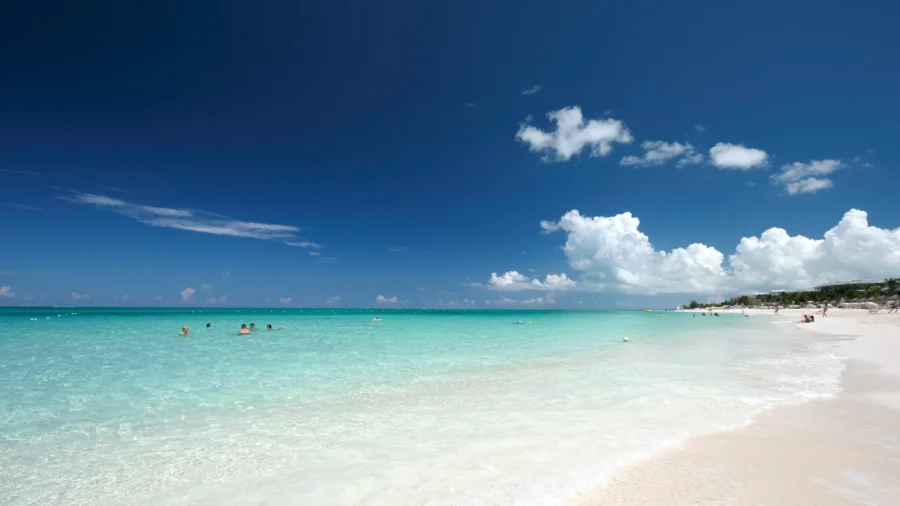
A beach in Providenciales, Turks And Caicos Islands, on Sept. 25, 2016. (Dimitrios Kambouris/Getty Images for Beaches Turks & Caicos)

A tourist has been severely injured after attempting to take photos with a shark off the coast of Providenciales in the Turks and Caicos Islands earlier this month, local authorities announced last week.

According to a Feb. 12 press release from the Department of Environment & Coastal Resources (DECR), the attack occurred in the waters adjacent to Blue Hills, Providenciales. The victim, a 55-year-old female tourist whose identity was not disclosed, was stabilized at Cheshire Hall Medical Centre before being airlifted off the island for further treatment.
As a result of her injuries, the woman lost both her hands, according to an update on the Turks and Caicos Islands tourism website. A spokesperson for Experience Turks and Caicos didn’t immediately return a request for comment.

The DECR reported that the shark involved in the attack was estimated to be about 6 feet in length. The tourism website said the shark species was likely a bull shark or tiger shark.

In response to the incident, officials closed beaches from Thompson's Cove Beach to Froggies ATV in Blue Hills as a precaution. The beaches were reopened on Sunday, Feb. 9, after authorities determined that the shark had moved to deeper waters.

The DECR urged the public to be cautious when entering the water and respect marine life, advising swimmers to use designated areas, avoid murky waters, never swim alone, and avoid feeding marine wildlife under any circumstances.

The same day in a separate incident, two American women on vacation in the Bahamas were bitten by a shark and needed to be airlifted for their injuries, police said.

The Royal Bahamas Police Force said in a news release the incident occurred in the Bimini islands on Feb. 7 around 6:30 p.m. local time. Police said the two women were swimming in the Bimini Bay, 50 miles off the coast of Florida, when they were attacked. Both sustained injuries, one of them severe.
Days prior in an incident on Feb. 3, a 17-year-old Australian girl lost her life after being bitten by a shark at Bribie Island, north of Brisbane, Australia. A month prior, a 28-year-old surfer went missing in South Australia at the same location where another person was killed by a great white shark in 2023.
The series of latest attacks comes amid a global decrease in unprovoked shark attacks, according to the International Shark Attack File (ISAF) maintained by the Florida Museum of Natural History. The ISAF's 2024 shark attack report, released Feb. 12, showed a large drop in unprovoked shark bites worldwide, with only 47 confirmed cases in 2024, down from 69 in the previous year and well below the 10-year average of 70.

According to the ISAF report, the Turks and Caicos Islands had reported a single non-deadly incident in 2024 prior to this attack. The report also noted that swimmers and waders accounted for 50 percent of unprovoked bites globally, while surfers represented 34 percent.

"We're interested in the natural patterns of shark behavior so that we can understand why people occasionally get bitten by these animals," Gavin Naylor, director of the Florida Program for Shark Research, said on the report.

Researchers highlighted that despite media attention on shark attacks, the risk of being bitten by a shark remains extremely low. In 2024, there were only four fatalities from unprovoked attacks worldwide, according to the ISAF.